Government Releases Draft Rules For No-Fly List Of Unruly Passengers
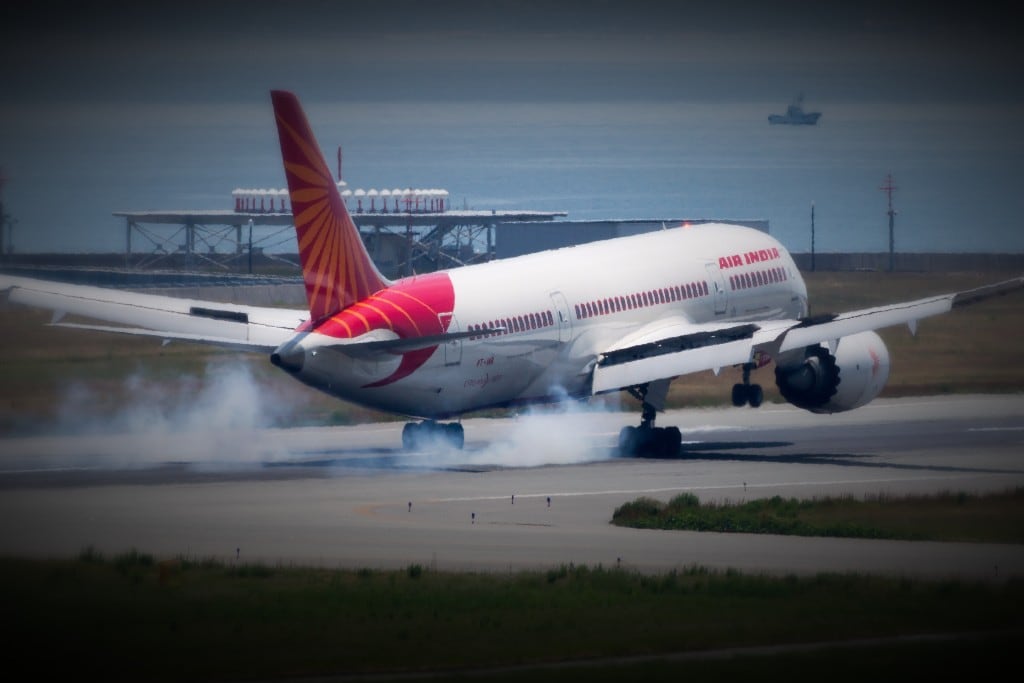
The Centre, on Friday, released draft rules for a "national no-fly list" of unruly passengers for all domestic carriers, proposing a ban on flying, from three months up to an indefinite period.
The move follows an incident involving Shiv Sena MP Ravindra Gaikwad who hit an Air India staffer "25 times" with a slipper for not being allowed to fly business class in an all-economy plane.
The Ministry of Civil Aviation has proposed a "national no-fly list" which will comprise passengers identified as unruly after an inquiry by a committee constituted by that particular airline. A person identified as a threat by security agencies will also be included in this list.
While the list is characterised as "national" and will compile data on disruptive passengers from all airlines, the ban recommended by the committee is not mandatory for all airlines to follow.
Minister of State for Civil Aviation Jayant Sinha termed this move a trailblazer. "There is no other country in the world with a no-fly list based on safety. There are no-fly lists based on security where people are seen as grave threats and they are not allowed to fly. India is blazing a new trail in this regard," Sinha said at a media briefing.
The government has recommended three levels of unruly behaviours, each with a corresponding duration of flying ban.
- The first level of misdemeanour includes disruptive behaviour such as physical gestures, verbal harassment and unruly behaviour because of inebriation. This level of offence will carry a flying ban of three months.
- The second level comprises physically abusive behaviour such as pushing, hitting, grabbing, inappropriate touching or sexual harassment. This degree of misconduct will carry a ban of six months.
- The third category consists of life threatening behaviour such as damage to aircraft operating system, physical violence such as choking or murderous assault and attempted breach of flight crew compartment. This will carry a flying ban of two years or more without limit.
If a passenger repeats the same degree of offence he/she will be banned for twice the period of the previous ban.
"It is open to other airlines to use that list and simultaneously prohibit that person from flying for that period. It is not mandatory for other airlines," Civil Aviation Secretary RN Choubey said.
The nature of misdemeanour and the punishment will be decided by a standing committee constituted by an airline. The committee will have to come out with its findings within 10 days during which time the passenger will not be allowed to fly with the airlines.
It will be a three-member committee comprising a retired district/sessions judge, representative of a different airline and a member from passengers' association/consumer association/a retired consumer forum official.
A passenger can also challenge the ban and approach an appeals committee which will be set up by the civil aviation ministry and headed by a high court judge.
However, passengers blacklisted from flying because of a security threat do not have the provision of approaching this committee.
The government is also examining ways to track passengers recognised as unruly through an identity document. There is, however, a lack of consensus on whether an Aadhaar card will be used for this purpose.
We will be identifying passengers on the basis of identity verification, either through an Aadhar card or passport. This will ensure that we have a secure way of identifying a passenger and linking their secure authentication to their PNR.Jayant Sinha, Minister of State, Civil Aviation
However, Choubey said that this is still being examined.
"We are examining this. It should be possible for us to do this with any detail of passenger document, not necessarily Aadhaar," Choubey said.
While the no-fly list is applicable for domestic carriers, Choubey said there was nothing to stop international airlines from implementing it.
The draft is an amendment to the existing Civil Aviation Requirement, a set of rules on unruly and disruptive passengers.
These are being placed in the public domain for 30 days for comments and feedback from stakeholders following which the government will come out with final amendments by June 30.

-
Why Amazon And Flipkart Are Struggling To Beat Meesho In India's Smaller Cities

With 274 million users and lowest-cost logistics, Meesho is defending its value commerce crown against giants like Amazon and Flipkart.
-
High US Salaries, No Green Card Certainty: The Financial Calculation Facing Indian H-1B Families
The suspension of PERM processing at eight technology employers does not cancel existing H-1B visas. What it does is force a question many Indian families have been avoiding: is the US salary worth tying your career and family plans to one employer?
-
Swiggy vs Eternal: Food Delivery's Two Rivals Are No Longer In The Same Race
Eternal is building a private AI assistant, dark.ai. Swiggy is still working out how to make Instamart pay, with an operating loss of Rs 895 crore in the July-September quarter while Blinkit stayed profitable.
-
Where You Live Shapes How You Get To Work | The Reason Why
Two-wheelers are the most popular way to get to work in India, accounting for nearly 43% of workplace commutes.
-
Unhedged Position: Can India See An Indonesia-Style Time Correction?
The Nifty is trading below levels it first clocked in 2024. Is there, then, as I have suggested in the headline, potential that the current time correction drags on painfully for the next three-five, even ten years?
-
Navigating Friction And Energy Realities: An Analysis Of Marco Rubio's October Visit To India
Occurring at a critical juncture marked by stalled trade negotiations and escalating geopolitical pressures over global energy supplies, the visit offers a profound window into modern US-India relations.
-
India Exports Capital. Why Not Export Trusteeship?
The big question, then, is whether India can build an institution that global borrowers, investors, banks, and lawyers can trust, even without an Indian connection.
-
France's Economy & Politics Are In Crisis | The Reason Why
Let's look at how the French economy and politics evolved under Nicolas Sarkozy, Franois Hollande and Emmanuel Macron.
-
You May Inherit The Business. You Must Earn Its Credibility.
Succession tests the founder's ability to share authority as much as it tests the next generation's readiness to assume it.
-
Signing Deals Is One Thing; Making Them Work Is Another | The Week In Whys
Sometimes, things don't turn out as planned. Indian companies have lost some bids to rivals, some projects won't produce until 2030.










