Government Puts On Hold Proposal To Cut Import Tax On Edible Oils: Report
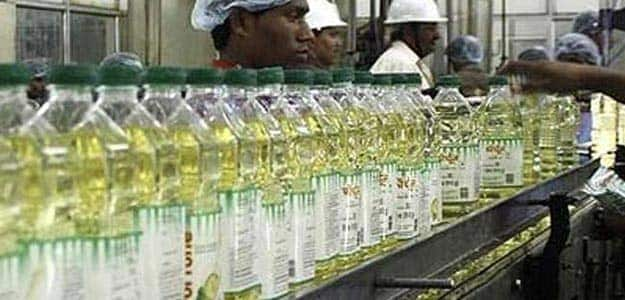
India has put on hold a proposal to reduce import duties on edible oils as cooking oil prices started to fall in the world market after hitting record highs, two government and one industry officials told Reuters.
The world's biggest vegetable oil importer was considering reducing duties after domestic soyoil and palm oil prices more than doubled in the past year, hitting consumers already stung by record fuel prices and reduced incomes amid the COVID-19 pandemic.
"We are not cutting import duties now, a more longer term solution has to be found. Cutting duties is not a sustainable solution," said a government official with knowledge of the matter who asked not to be identified.
A second official, who also requested anonymity, said the decision to leave the import duty structure unchanged was taken as prices were now cooling in the overseas market, pulling the domestic prices lower too.
"The idea is to keep a close watch on international prices and global supplies, and if the situation warrants it, we'll revive the proposal for a reduction in the duty to protect the interests of both consumers and farmers," this official said.
Yet even after the recent correction of more than 20 per cent, Indian edible oil prices are still around double their levels a year ago.
Household consumption is expected to decline the longer prices remain elevated.
Demand from bulk buyers like hotels, restaurants and bakeries had already dropped after authorities imposed local lockdowns in response to a devastating second wave of coronavirus infections over recent months, dealers said.
While India deliberated lowering import duties on vegetable oil, benchmark palm oil prices in Malaysia fell nearly a quarter in the last one month, giving some respite to importing countries.
India meets nearly two-thirds of its edible oil demand through imports, levying a 32.5 per cent duty on palm oil imports, while crude soybean and soy oil are taxed at 35 per cent.
It buys palm oil from Indonesia and Malaysia, and soy oil and sunflower oil come from Argentina, Brazil, Ukraine and Russia.
Aside from reducing government revenues, any reduction in import duty could give overseas suppliers an opportunity to raise prices, as palm oil exporters have done in the past, the first official said.
"This should not be repeated,” the official said.
New Delhi has been trying hard to increase oilseed production and reduce dependency on expensive imports.
"We told government this is not the right time to cut taxes. Farmers have started soybean and groundnut sowing. The duty cut would give them a wrong signal," said a senior industry official.
Indian farmers have started sowing soybean and groundnut in southern and western parts of the country as the monsoon has covered around two-third of the country.

-
High US Salaries, No Green Card Certainty: The Financial Calculation Facing Indian H-1B Families

The suspension of PERM processing at eight technology employers does not cancel existing H-1B visas. What it does is force a question many Indian families have been avoiding: is the US salary worth tying your career and family plans to one employer?
-
Unhedged Position: Can India See An Indonesia-Style Time Correction?
The Nifty is trading below levels it first clocked in 2024. Is there, then, as I have suggested in the headline, potential that the current time correction drags on painfully for the next three-five, even ten years?
-
Navigating Friction And Energy Realities: An Analysis Of Marco Rubio's October Visit To India
Occurring at a critical juncture marked by stalled trade negotiations and escalating geopolitical pressures over global energy supplies, the visit offers a profound window into modern US-India relations.
-
India Exports Capital. Why Not Export Trusteeship?
The big question, then, is whether India can build an institution that global borrowers, investors, banks, and lawyers can trust, even without an Indian connection.
-
France's Economy & Politics Are In Crisis | The Reason Why
Let's look at how the French economy and politics evolved under Nicolas Sarkozy, Franois Hollande and Emmanuel Macron.
-
You May Inherit The Business. You Must Earn Its Credibility.
Succession tests the founder's ability to share authority as much as it tests the next generation's readiness to assume it.
-
Signing Deals Is One Thing; Making Them Work Is Another | The Week In Whys
Sometimes, things don't turn out as planned. Indian companies have lost some bids to rivals, some projects won't produce until 2030.
-
FOMC Wall, PERM Suspension, Hospital Stocks | Talking Points This Week
A PERM suspension would directly affect green-card sponsorship rather than H-1B visas, so the near-term earnings impact could remain relatively limited. The key question is whether this marks a new phase in US scrutiny of Indian IT.
-
Everything, Everywhere, All At Once: Dalal Street's Week To Forget | Joining The Dots
Visa curbs, a Starlink spat and cancer drug caps: what connects this week's shocks for Indian markets
-
India Is Going Abroad For Critical Minerals. But It May Take Years To Pay Off | The Reason Why
Although India's steps are in the right direction, they remain modest compared with India's growing dependence.









