Government Panel On Online Gaming, Casinos, Horse Racing Broadly Agree On 28% GST
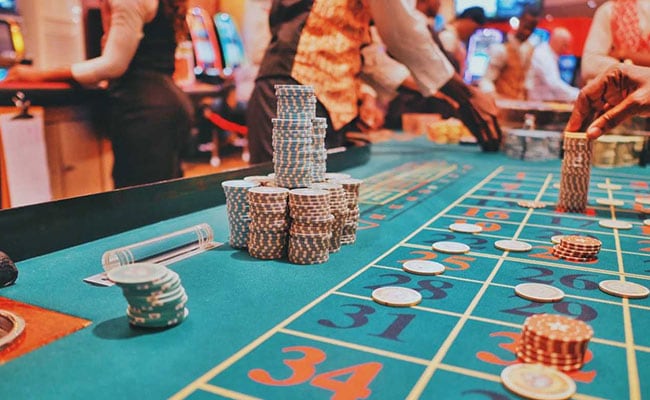
The GoM on online gaming, horse racing and casinos had a broad agreement that a 28 per cent GST should be levied on all the three supplies, but a consensus eluded on taxability of online games, as Goa suggested an 18 per cent tax on platform fees, sources said.
A final view on taxation rate as well as whether tax is to be levied on gross gaming revenue (GGR) or fees charged by the platform; or on the full face value of bets put in by players of online gaming, horse racing and casinos would be taken by the GST Council on July 11.
Also, the Council, chaired by the Union Finance Minister and comprising state counterparts, has to decide on whether these three activities fall under the category of actionable claim of betting and gambling, sources told Press Trust of India.
The Group of Ministers, convened by Meghalaya Chief Minister Conrad Sangma, has members from eight states-- West Bengal, Uttar Pradesh, Goa, Tamil Nadu, Telangana, Gujarat and Maharashtra.
Of the eight states, West Bengal and Uttar Pradesh were of the view that a 28 per cent GST should be levied on all three supplies on full face value of the bets placed. Gujarat, however, was of the view that 28 per cent tax should be levied on platform fees.
Meghalaya was of the view that 28 per cent tax should be levied on GGR or platform fees or commission charged by casinos, online gaming and horse racing. It also suggested that a special mechanism to carve out an 'Escrow Account' for the purpose of pooling in prize money for payout to winners would make administration of the tax easier.
While Goa suggested a 28 per cent tax on gross gaming revenue of casinos, it said an 18 per cent GST on platform fee/service charge levied by platform operators, Goa said.
Goa also suggested that contributions to the prize pool may be treated as supply not liable for GST levy.
Tamil Nadu and Telangana have suggested that if the GST Council decides that the three activities are not actionable claims of betting and gambling, then 28 per cent tax should be levied on GGR.
Maharashtra, while suggesting a 28 per cent rate for all three supplies, said there should also be no differentiation in taxation on the basis of whether the activities are games of skill or chance and the valuation rules should reflect the same.
It proposed that a suitable abatement be provided for determining the taxable value of supply of the actionable claim. An actionable claim is typically referred to as a claim of debt.
In view of the divergence in views of the members, the GoM has left it on the GST Council to decide on the final taxation rate as well as valuation.
The GoM in its first report submitted to the GST Council in June 2022, had suggested that 28 per cent Goods and Services Tax (GST) be levied on full value of the bets placed. However, in its 47th GST Council in June last year, Goa raised certain reservations on the report and some other states too demanded that the report be revisited.
The GST Council then asked the GoM to relook into all the issues in the report. Following that the GoM met thrice and also conducted field visits and interacted with industry.
(Except for the headline, this story has not been edited by NDTV staff and is published from a syndicated feed.)

-
Navigating Energy Crossroads: S Jaishankar's Call For Diversified Supply Chains At G20 Ministerial Meeting

As geopolitical fault lines continue to test maritime trade routes and commodity flows, Jaishankar's message remains pertinent: true economic resilience requires open markets, protected transit lines, and a genuine commitment to multilateral cooperation rather than coercion.
-
Indians Are Travelling, But Not Every Journey Is A Holiday | The Week In Whys
Pilgrims, patients and working women are the real travellers, and the system hasn't quite caught up with them.
-
Getting To Work Costs Women More | The Reason Why
It is not just about women paying more than men. It is about women paying much more in cities than in villages.
-
AI Bias In Investing Cannot Be Eliminated, But It Can Be Governed
Framing is a particularly important example as identical financial information presented in terms of gains rather than losses can lead an LLM to reach a different assessment.
-
Joining The Dots | Dark Skies, Steady Diya: Why Hope Holds This Diwali
With war, a weak rupee and foreign outflows weighing on sentiment, policymakers at the NDTV World Summit and market veterans at NDTV Profit Ignite: Diwali Edition offered the same advice: stay invested and filter out the noise.
-
The Curious Case of Equitas Small Finance Bank And A CEO Who Quit For Stock
PN Vasudevan believes persistent investor concerns over a perceived conflict of interest had become a governance overhang on Equitas Small Finance Bank's stock, even as the lender improved profitability and asset quality.
-
Talking Points This Week: AI Cash Burn, A Tiger Comeback And An India That Still Finds Its Own Path
India is not immune to higher oil or tighter global liquidity, yet its earnings base is broader, its domestic policy levers are still available.
-
Foreign Investors Own Half Of HDFC Bank and ICICI Bank. An LTCG Cut Could Matter Most Here
Foreign portfolio investors have US$115 billion parked in HDFC Bank, ICICI Bank. If the government cuts long-term capital gains tax, Jefferies says returning foreign money could land here first.
-
'Never Seen This Level Of Negativity': Sandeep Tandon Says The Next Rally May Be Closer Than You Think
Veteran investor Sandeep Tandon says foreign selling is easing, large-caps are due a comeback and mid-caps are crowded, while he turns positive on gold, power and pharma this Diwali.
-
Indians Stay With Family, Not In Hotels | The Reason Why
India still lacks enough clean, reliable and affordable hotels for budget-conscious travellers.










