Government Officials Seek Zero Import Tax On LNG In Budget 2017
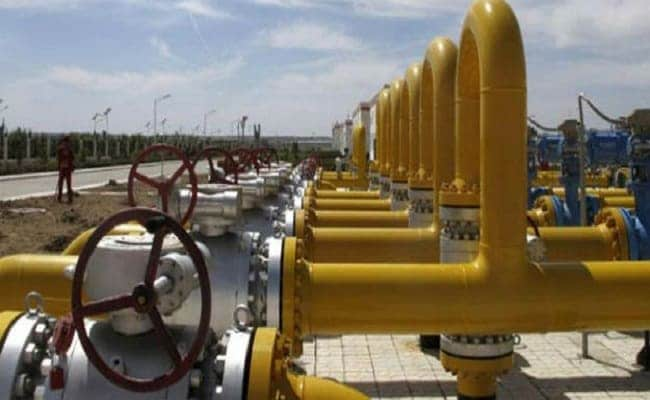
New Delhi: Energy and environment ministries want the government to scrap an import tax on liquefied natural gas (LNG) and impose a levy on use of pet coke and furnace oil to promote cleaner fuel, they said in a presentation to Prime Minister Narendra Modi.
India is the world's third largest emitter of greenhouse gases and relies heavily on coal, gas and oil imports to meet its energy needs and fuel its economic expansion.
Its energy consumption is bound to grow as it targets 8-9 percent economic growth from around 7 percent in 2016/17.
To cut the country's carbon footprint, New Delhi wants to raise the use of gas in its energy mix to 15 percent in three to four years from 6.5 percent now.
LNG imports, which account for 44 percent of gas use in the country, are duty free only if shipped in for the power sector.
At a meeting with PM Modi on Wednesday, top officials from the power, coal, mines, oil and gas, renewables and environment ministries made a series of demands and suggestions ahead of budget on February 1, in a presentation seen by Reuters.
The group asked for a tax on furnace oil/pet coke to promote use of biofuels. They also sought continuation of tax incentives and benefits for the renewable energy sector beyond March.
In late October, PM Modi set up 10 groups of senior officials to "undertake a critical review" of the government's work in a number of areas, including energy, transport and agriculture.
India, the world's third biggest oil consumer, has also tasked its state-run oil companies to set up ethanol plants at 12 locations within a year.
Among other "key planned actions", the group has asked for long-term loans and introduction of interest subsidies of 4 percent in six months for hydro projects with more than 100 megawatts (MW) of annual capacity.
To curb diesel consumption, government wants to raise the number of electric vehicles on roads to 7 million by 2020 from just around 20,000 now. The group proposed the use of electric vehicles in public transport and for government vehicles within three years.
The bulk of goods in India are transported by road in diesel-guzzling trucks because of higher rail freight costs that compensate for low passenger fares and account for about two-thirds of railways' revenue.
To further restrict diesel use, the panel proposed indexing passenger fares in railways to fuel costs, within a year.

-
High US Salaries, No Green Card Certainty: The Financial Calculation Facing Indian H-1B Families

The suspension of PERM processing at eight technology employers does not cancel existing H-1B visas. What it does is force a question many Indian families have been avoiding: is the US salary worth tying your career and family plans to one employer?
-
Unhedged Position: Can India See An Indonesia-Style Time Correction?
The Nifty is trading below levels it first clocked in 2024. Is there, then, as I have suggested in the headline, potential that the current time correction drags on painfully for the next three-five, even ten years?
-
Navigating Friction And Energy Realities: An Analysis Of Marco Rubio's October Visit To India
Occurring at a critical juncture marked by stalled trade negotiations and escalating geopolitical pressures over global energy supplies, the visit offers a profound window into modern US-India relations.
-
India Exports Capital. Why Not Export Trusteeship?
The big question, then, is whether India can build an institution that global borrowers, investors, banks, and lawyers can trust, even without an Indian connection.
-
France's Economy & Politics Are In Crisis | The Reason Why
Let's look at how the French economy and politics evolved under Nicolas Sarkozy, Franois Hollande and Emmanuel Macron.
-
You May Inherit The Business. You Must Earn Its Credibility.
Succession tests the founder's ability to share authority as much as it tests the next generation's readiness to assume it.
-
Signing Deals Is One Thing; Making Them Work Is Another | The Week In Whys
Sometimes, things don't turn out as planned. Indian companies have lost some bids to rivals, some projects won't produce until 2030.
-
FOMC Wall, PERM Suspension, Hospital Stocks | Talking Points This Week
A PERM suspension would directly affect green-card sponsorship rather than H-1B visas, so the near-term earnings impact could remain relatively limited. The key question is whether this marks a new phase in US scrutiny of Indian IT.
-
Everything, Everywhere, All At Once: Dalal Street's Week To Forget | Joining The Dots
Visa curbs, a Starlink spat and cancer drug caps: what connects this week's shocks for Indian markets
-
India Is Going Abroad For Critical Minerals. But It May Take Years To Pay Off | The Reason Why
Although India's steps are in the right direction, they remain modest compared with India's growing dependence.









