Government May Give Reprieve To Solar Projects Delayed By Coronavirus Fallout
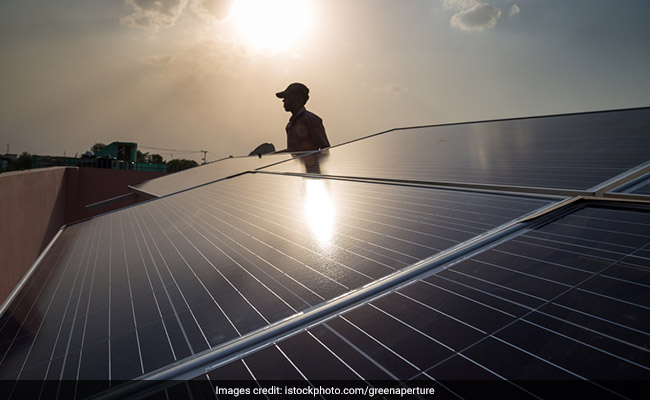
The government will consider extending deadlines for completing solar energy projects to shield developers from stiff penalties after the coronavirus outbreak hit component supplies from China, a top government official said on Tuesday.
Ratings agency Standard and Poor's Indian unit, Crisil, warned on Monday that nearly three gigawatts of solar power projects worth $2.24 billion could be at risk of penalties for missing a July 2020 completion deadline as the coronavirus hit solar industry supplies.
India buys about 80 per cent of its solar modules from China, which has shut down some factories, restricted transport and implemented other measures to combat the spread of the virus that has killed 1,868 people in China and infected 72,436 others.
Anand Kumar, renewable energy secretary, said all contracts have a 'force majeure' clause that companies can invoke to secure an extension on the project schedules.
"We will definitely consider the applications of developers for extension of timelines provided there is evidence (to prove that the project has been affected due to coronavirus)," Kumar told Reuters.
Some companies running up against the July 2020 deadline include Acme Solar, Aditya Birla Renewables and SoftBank-backed SB Energy.
"None of our projects are affected due to the coronavirus," said a spokesman for Acme Solar.
"We have executed all our projects on time always and we will continue to execute our projects in the pipeline on time," the spokesman said.
Aditya Birla Renewables and SB Energy did not respond to emails on Tuesday asking if they would meet the project completion deadlines.
India imposes monetary penalties for a three-month delay in commissioning of a project, while projects delayed further also face downward revisions in tariffs.
Tariffs at which a company will sell the power to customers are quoted when the developer bids for a project.
"We cannot predict when China will start production of solar modules and cells," said C. Narasimhan, president of the Indian Solar Association. "The government should look at extending the deadline without renegotiating the tariff."
Purchasing of solar modules from elsewhere would be between 15 per cent and 20 per cent more costly, and could erode returns from the affected projects, said Crisil, without identifying individual projects.
Orders for modules are mostly placed six months ahead of the start of commercial operations.
Narasimhan, who also heads Raasi Group, which is building a 100-megawatt solar power project at Tamil Nadu, said Raasi was also requesting an extension to avoid facing any penalties, including a downward revision in tariffs.
"We're discussing it with state government officials ... as this particular situation is beyond our control." he said.

-
Blue Wave Will Derail the AI Trade but Won't Dismantle the AI Era | Unhedged Position

The Democrats' sweep of the US Congress will see politics collide with economic forces both over the long and short term.
-
It's Time To Take The GST Council's Bet On Trust Global
Payment records can prove India's services exports, and clear, proportionate rules can bring foreign digital sellers into the tax net.
-
Opinion | India at 38: From Innovation Overperformer to Innovation Powerhouse
India now has 453 VC-backed deep science startups, 18 of them late-stage, after 117 percent growth since 2020. Laurus Labs, at USD 9.3 billion, is the most valuable deep science company in any middle-income economy outside China.
-
Navigating Energy Crossroads: S Jaishankar's Call For Diversified Supply Chains At G20 Ministerial Meeting
As geopolitical fault lines continue to test maritime trade routes and commodity flows, Jaishankar's message remains pertinent: true economic resilience requires open markets, protected transit lines, and a genuine commitment to multilateral cooperation rather than coercion.
-
Indians Are Travelling, But Not Every Journey Is A Holiday | The Week In Whys
Pilgrims, patients and working women are the real travellers, and the system hasn't quite caught up with them.
-
Getting To Work Costs Women More | The Reason Why
It is not just about women paying more than men. It is about women paying much more in cities than in villages.
-
AI Bias In Investing Cannot Be Eliminated, But It Can Be Governed
Framing is a particularly important example as identical financial information presented in terms of gains rather than losses can lead an LLM to reach a different assessment.
-
Joining The Dots | Dark Skies, Steady Diya: Why Hope Holds This Diwali
With war, a weak rupee and foreign outflows weighing on sentiment, policymakers at the NDTV World Summit and market veterans at NDTV Profit Ignite: Diwali Edition offered the same advice: stay invested and filter out the noise.
-
The Curious Case of Equitas Small Finance Bank And A CEO Who Quit For Stock
PN Vasudevan believes persistent investor concerns over a perceived conflict of interest had become a governance overhang on Equitas Small Finance Bank's stock, even as the lender improved profitability and asset quality.










