Government Bets on Toll Operate Transfer Model To Monetise Highways, Know What It Is Here
Aiming to generate funds to propel the economy, the Centre plans to monetise several of its big-ticket infrastructure across sectors in the next five years under its Asset Monetisation Programme. Under this, it aims to generate Rs 85,000 crore from the highways sector alone by 2024-25.
While around Rs 10,250 crore worth of highways were to be monetised in 2020-21 (though the target could not be achieved), in 2021-22 the Government plans to monetise Rs 10,000 crore of highways. Similarly, the target for 2022-23 is Rs 20,000 crore, for 2023-24 the aim is to generate Rs 20,000 crore by monetisation, while for 2024-25 the objective is to generate Rs 24,750 crore through monetising highways.
In 2020-21 till January 31, 2021, the Ministry of Road Transport and Highways had managed to monetise 566 km of roads worth Rs 5,011 crore through the ToT route.
Highways under this plan, are to be monetised through the Toll Operate Transfer (ToT) or the Infrastructure Investment Trusts or InvIT route.
While under InvITs, the land assets are transferred to a trust providing investment opportunity for institutional investors, in the ToT model, public funded projects which are operational for two years, are put up for bidding.
What is ToT model?
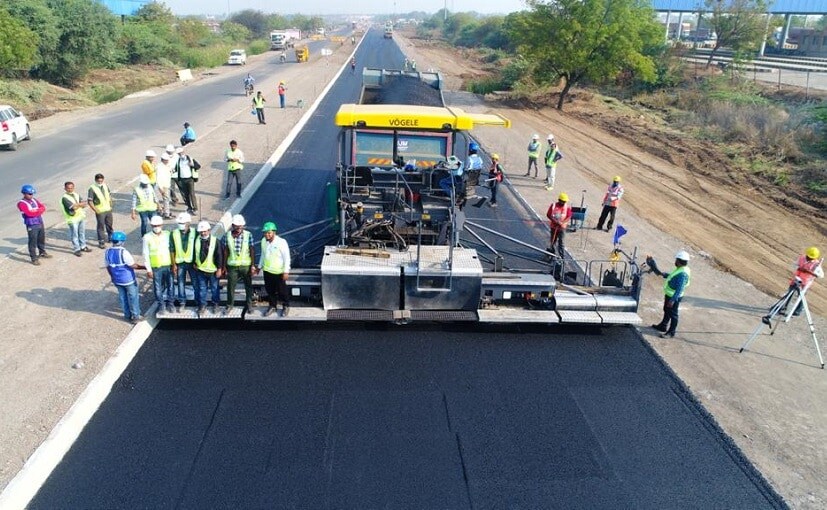
In 2016, the Cabinet Committee on Economic Affairs (CCEA) authorised National Highway Authority of India (NHAI) to monetise public funded national highway projects and approved the ToT model. Under this model, public funded projects, operational for two years, are put up for bidding, wherein the right of collection and appropriation of fee is assigned for a predetermined concession period (30 years) to concessionaires (developers or investors) against the upfront payment of a lump sum amount to NHAI.
Why ToT model was implemented?
The Government is of the view that the TOT model will provide an efficient operation and maintenance (O&M) framework which would reduce NHAI's involvement in projects post construction completion.
Also the model will help in utilisation of the corpus (generated from proceeds of such project monetisation) by the Government to meet fund requirements for future development and O&M of highways in the country, including in unviable geographies.
Another reason behind kickstarting this model was to facilitate efficient toll realisation through private sector and to create new business opportunities.

-
Talking Points This Week: Tech Nerves, FII Buying, And A Faraway Banking Shock

The global markets are not shining this Diwali. The exception in the large markets is, India.
-
Midterm Rally Lasted A Day. The Hard Reality Of A Divided US May Last Two Years | Opinion
Between a contested AI boom, a debt ceiling that arrives in 2027 and a president with every incentive to act alone, the next two years may prove more volatile than the first day's rally suggests.
-
Blue Wave Will Derail the AI Trade but Won't Dismantle the AI Era | Unhedged Position
The Democrats' sweep of the US Congress will see politics collide with economic forces both over the long and short term.
-
It's Time To Take The GST Council's Bet On Trust Global
Payment records can prove India's services exports, and clear, proportionate rules can bring foreign digital sellers into the tax net.
-
Opinion | India at 38: From Innovation Overperformer to Innovation Powerhouse
India now has 453 VC-backed deep science startups, 18 of them late-stage, after 117 percent growth since 2020. Laurus Labs, at USD 9.3 billion, is the most valuable deep science company in any middle-income economy outside China.
-
Navigating Energy Crossroads: S Jaishankar's Call For Diversified Supply Chains At G20 Ministerial Meeting
As geopolitical fault lines continue to test maritime trade routes and commodity flows, Jaishankar's message remains pertinent: true economic resilience requires open markets, protected transit lines, and a genuine commitment to multilateral cooperation rather than coercion.
-
Indians Are Travelling, But Not Every Journey Is A Holiday | The Week In Whys
Pilgrims, patients and working women are the real travellers, and the system hasn't quite caught up with them.
-
Getting To Work Costs Women More | The Reason Why
It is not just about women paying more than men. It is about women paying much more in cities than in villages.
-
AI Bias In Investing Cannot Be Eliminated, But It Can Be Governed
Framing is a particularly important example as identical financial information presented in terms of gains rather than losses can lead an LLM to reach a different assessment.