Google Suffers Blow In Fight Over EU’s 4.1 Billion-Euro Android Fine
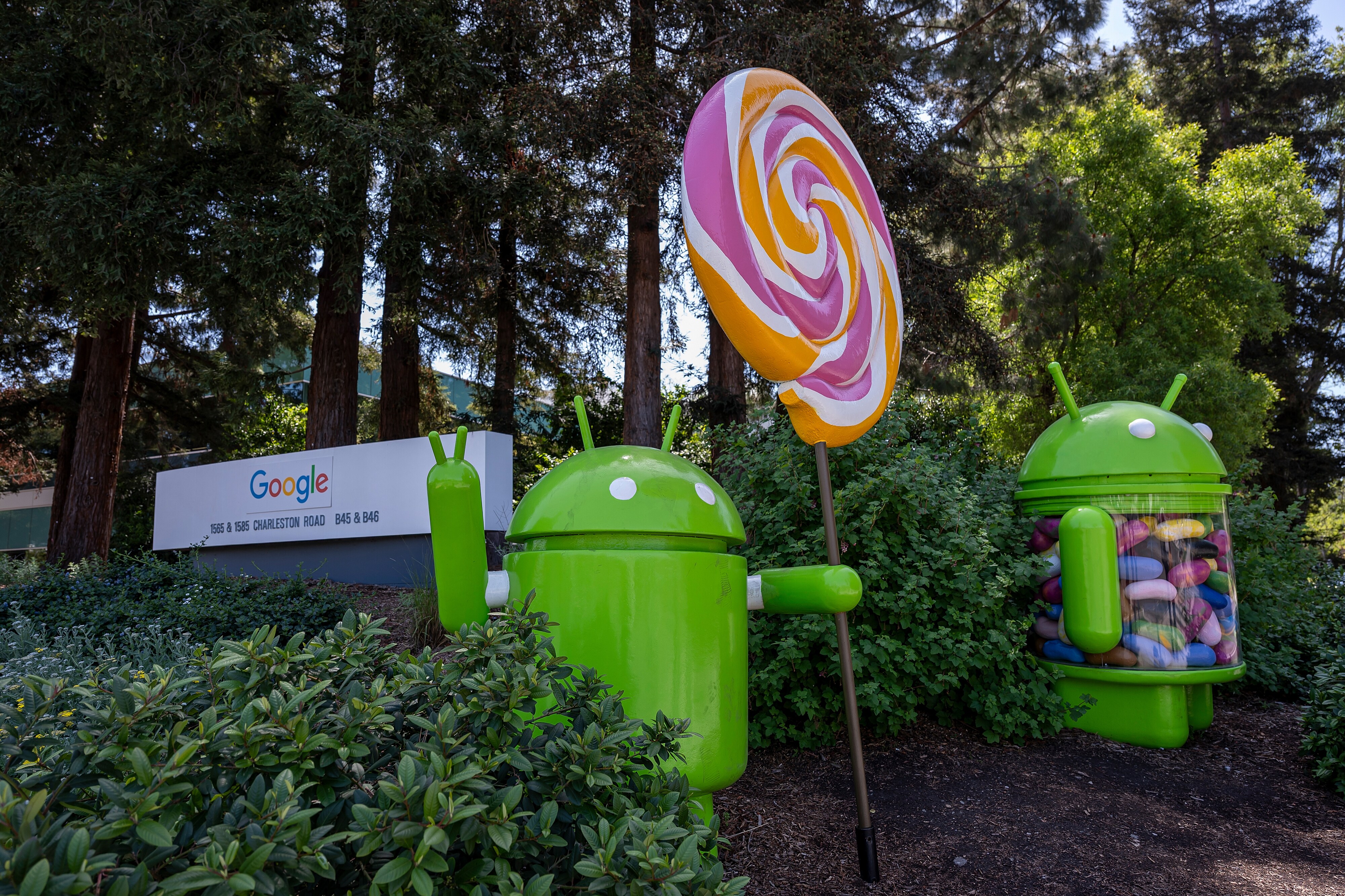
Google's fight against a record 4.1 billion euros ($4.7 billion) European Union antitrust fine suffered a blow after an adviser to the bloc's top court said regulators were right to punish the US giant for abusing Android's market power.
Advocate General Juliane Kokott of the EU's Court of Justice said in a non-binding opinion that Google's appeal should fail because the legal arguments put forward by the US tech giant fell short.
“Google held a dominant position in several markets of the Android ecosystem and thus benefited from network effects that enabled it to ensure that users used Google Search,” Kokott said. “As a result, Google obtained access to data that enabled it in turn to improve its service.”
The bloc's top court often heeds the opinions of its advisers in its final rulings, which typically follow in several months.
The Android fine — which was originally €4.3 billion before being slightly reduced by the EU's General Court in 2022 — is among a slew of EU penalties targeting Big Tech that has provoked a a conflict between EU watchdogs and Silicon Valley executives, with US President Donald Trump slamming the fines as tariffs against American firms.
The Android case was one of four that formed the centerpiece of erstwhile EU competition chief Margrethe Vestager's efforts to crack down on the growing power of big tech companies.
Before being replaced as the EU's antitrust commissioner by Spanish socialist Teresa Ribera, Vestager fined Google more than €8 billion also echoed the US Department of Justice's suggestion that Google's advertising technology business should be broken up — a position also backed by Ribera.
The top EU court's final decision could prove pivotal for the future of the Android business model — which has provided free software in exchange for conditions imposed on mobile phone manufacturers.
Such contracts provoked the ire of the commission in 2018, when the watchdog accused Alphabet Inc.'s Google of three separate types of illegal behavior that helped cement the dominance of its search engine, accompanying the order with the record fine.
First, it said Google was illegally forcing handset makers to pre-install the Google Search app and the Chrome browser as a condition for licensing its Play Store — the marketplace for Android apps.
Second, the EU said Google made payments to some large manufacturers and operators on condition that they exclusively pre-installed the Google Search app.
Lastly, the EU said the Mountain View, California-based company prevented manufacturers wishing to pre-install apps from running alternative versions of Android not approved by Google.
In their September 2022 ruling at the lower General Court, judges upheld the vast majority of the commission's arguments, but cut the fine from €4.3 billion after finding that regulators hadn't provided enough evidence for specific abuses.
As a January hearing in the appeal against that decision, Google lawyers argued that the company's success was due to innovation, not brute force, and that the EU “punished Google for its superior merits, attractiveness and innovation.”
Away from traditional antitrust cases, Google has also found itself under intense scrutiny via the EU's Digital Markets Act, which sets strict guardrails on the behavior of Big Tech.
In March, the Brussels-based executive chastised the Mountain View, California-headquartered firm for allegedly breaching the regulation by favoring in-house services across its sprawling search empire and for preventing app developers from steering consumers to offers outside of its Play Store, in a warning that could lead to more fines in the future.

-
High US Salaries, No Green Card Certainty: The Financial Calculation Facing Indian H-1B Families

The suspension of PERM processing at eight technology employers does not cancel existing H-1B visas. What it does is force a question many Indian families have been avoiding: is the US salary worth tying your career and family plans to one employer?
-
Swiggy vs Eternal: Food Delivery's Two Rivals Are No Longer In The Same Race
Eternal is building a private AI assistant, dark.ai. Swiggy is still working out how to make Instamart pay, with an operating loss of Rs 895 crore in the July-September quarter while Blinkit stayed profitable.
-
Where You Live Shapes How You Get To Work | The Reason Why
Two-wheelers are the most popular way to get to work in India, accounting for nearly 43% of workplace commutes.
-
Unhedged Position: Can India See An Indonesia-Style Time Correction?
The Nifty is trading below levels it first clocked in 2024. Is there, then, as I have suggested in the headline, potential that the current time correction drags on painfully for the next three-five, even ten years?
-
Navigating Friction And Energy Realities: An Analysis Of Marco Rubio's October Visit To India
Occurring at a critical juncture marked by stalled trade negotiations and escalating geopolitical pressures over global energy supplies, the visit offers a profound window into modern US-India relations.
-
India Exports Capital. Why Not Export Trusteeship?
The big question, then, is whether India can build an institution that global borrowers, investors, banks, and lawyers can trust, even without an Indian connection.
-
France's Economy & Politics Are In Crisis | The Reason Why
Let's look at how the French economy and politics evolved under Nicolas Sarkozy, Franois Hollande and Emmanuel Macron.
-
You May Inherit The Business. You Must Earn Its Credibility.
Succession tests the founder's ability to share authority as much as it tests the next generation's readiness to assume it.
-
Signing Deals Is One Thing; Making Them Work Is Another | The Week In Whys
Sometimes, things don't turn out as planned. Indian companies have lost some bids to rivals, some projects won't produce until 2030.
-
FOMC Wall, PERM Suspension, Hospital Stocks | Talking Points This Week
A PERM suspension would directly affect green-card sponsorship rather than H-1B visas, so the near-term earnings impact could remain relatively limited. The key question is whether this marks a new phase in US scrutiny of Indian IT.









