Google Is Falling Behind in AI Arms Race, Senior Engineer Warns
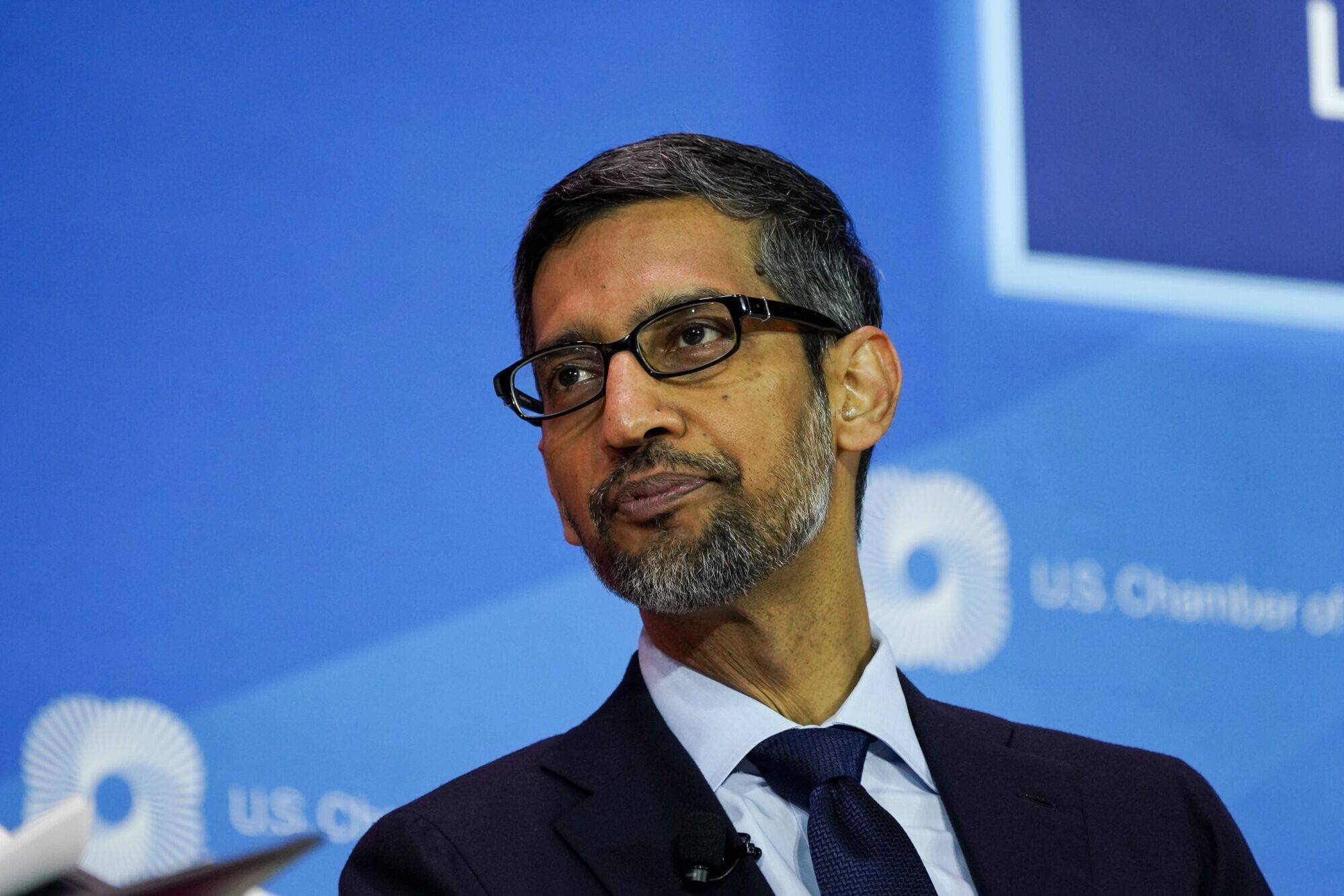
(Bloomberg) -- A senior software engineer at Google wrote a critique asserting that the internet search leader is losing its edge in artificial intelligence to the open-source community, where many independent researchers use AI technology to make rapid and unexpected advances.
The engineer, Luke Sernau, published the document on an internal system at Google in early April. Over the past few weeks, the document was shared thousands of times among Googlers, according to a person familiar with the matter, who asked not to be named because they were not authorized to discuss internal company matters. On Thursday, the document was published by the consulting firm SemiAnalysis, and made the rounds in Silicon Valley.
In Sernau's analysis, Google's rivalry with startup OpenAI had distracted from the rapid developments being made in open-source technology. “We've done a lot of looking over our shoulders at OpenAI. Who will cross the next milestone? What will the next move be?” he wrote. “But the uncomfortable truth is, we aren't positioned to win this arms race and neither is OpenAI. While we've been squabbling, a third faction has been quietly eating our lunch. I'm talking, of course, about open source.”
Sernau did not respond to a request for comment.
As progress in generative artificial intelligence accelerates, employees at Google and other tech giants have engaged in spirited discussions internally and externally about the technology that is remaking their industry. Google, in particular, has come under pressure as the wild popularity of OpenAI's chatbot ChatGPT has sparked concerns that the company may be losing its advantage in artificial intelligence, a field where it has long been a leader.
Yet Sernau asserted that the real threat to Google is coming from open-source communities, where engineers are speedily advancing models that rival the quality of those at big tech companies, and can be made more cheaply. These models, he said, can be faster, more customizable and more useful than Google's own.
“We have no secret sauce,” Sernau wrote. “Our best hope is to learn from and collaborate with what others are doing outside Google.” He expressed concern that clients would not be willing to pay for models with such high-quality technology on offer for free.
The spokesperson for Google did not provide a comment on the content of the post. In a recent earnings call, Alphabet Chief Executive Officer Sundar Pichai said, “Our investments and breakthroughs in AI over the last decade have positioned us well,” pointing to progress in developing models and working with developers and other partners. Pichai has called for AI regulation in the past, cautioning that the technology could be “very harmful,” if not deployed in a thoughtful way.
In February, a large language model created by Meta leaked out into the open, jump-starting progress on generative AI in open-source forums. The model, known as LLaMA, is smaller than the models that Google and OpenAI have been touting, making it easier to work with; researchers currently have to apply to Meta to access LLaMA.
Google would do well to shift its focus to smaller more nimble models, Sernau argued. “Giant models are slowing us down,” the engineer wrote. “In the long run, the best models are the ones which can be iterated upon quickly.”
More stories like this are available on bloomberg.com
©2023 Bloomberg L.P.

-
Ten Things I Learnt This Samvat

Patience can be a trap. Cheap stocks can stay cheap. Leverage can wipe you out. What did Samvat 2082 teach us? Niraj Shah writes on 10 lessons from the year gone by.
-
Talking Points This Week: Tech Nerves, FII Buying, And A Faraway Banking Shock
The global markets are not shining this Diwali. The exception in the large markets is, India.
-
Midterm Rally Lasted A Day. The Hard Reality Of A Divided US May Last Two Years | Opinion
Between a contested AI boom, a debt ceiling that arrives in 2027 and a president with every incentive to act alone, the next two years may prove more volatile than the first day's rally suggests.
-
Blue Wave Will Derail the AI Trade but Won't Dismantle the AI Era | Unhedged Position
The Democrats' sweep of the US Congress will see politics collide with economic forces both over the long and short term.
-
It's Time To Take The GST Council's Bet On Trust Global
Payment records can prove India's services exports, and clear, proportionate rules can bring foreign digital sellers into the tax net.
-
Opinion | India at 38: From Innovation Overperformer to Innovation Powerhouse
India now has 453 VC-backed deep science startups, 18 of them late-stage, after 117 percent growth since 2020. Laurus Labs, at USD 9.3 billion, is the most valuable deep science company in any middle-income economy outside China.
-
Navigating Energy Crossroads: S Jaishankar's Call For Diversified Supply Chains At G20 Ministerial Meeting
As geopolitical fault lines continue to test maritime trade routes and commodity flows, Jaishankar's message remains pertinent: true economic resilience requires open markets, protected transit lines, and a genuine commitment to multilateral cooperation rather than coercion.
-
Indians Are Travelling, But Not Every Journey Is A Holiday | The Week In Whys
Pilgrims, patients and working women are the real travellers, and the system hasn't quite caught up with them.
-
Getting To Work Costs Women More | The Reason Why
It is not just about women paying more than men. It is about women paying much more in cities than in villages.









