Google, Facebook And Others Can't Bypass Mukesh Ambani In India
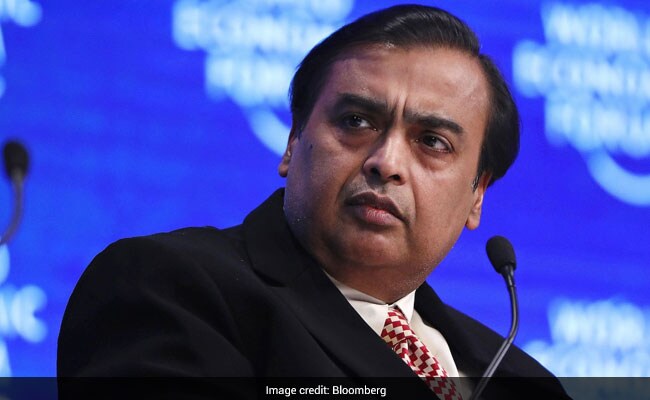
The world's biggest tech companies are clamoring for a larger piece of India's booming internet space, but that increasingly seems to mean going through the country's richest man, Mukesh Ambani.
Ambani's Reliance Industries Ltd. is said to be offering to sell a stake of about $20 billion in its retail business to Amazon.com Inc., Bloomberg News reported last week. If Ambani succeeds in pulling off such a deal, it would mark another victory for the billionaire, who in recent months has secured $20 billion of investment in his digital unit from marquee names including Facebook Inc. and Google Inc.
The mere possibility of an Amazon investment reveals not only Ambani's market clout, but also how India's business climate is changing as Prime Minister Narendra Modi cranks up nationalist rhetoric while the nation hurtles toward the first annual economic contraction in 40 years. Having seen multiple regulatory roadblocks thrown in their way, a tie-up with a powerful Indian ally has never looked more crucial for the world's biggest internet companies. And no business person carries more heft in India -- known for its complicated bureaucracy and red tape -- than Ambani.
Better to Cooperate
"I suspect the government somewhere is signaling that it's better for multinational companies to come in with some Indian partner," said Arun Kumar, an economist and the Malcolm Adiseshiah Chair at the Institute of Social Sciences. "So Amazon might decide it's better to cooperate with Reliance than compete against it."
The 63-year-old Indian tycoon has identified technology and retail as future growth areas in a pivot away from the energy businesses he inherited from his father, who died in 2002. Retail is the next frontier for Ambani, whose ambitions include creating a home-grown e-commerce giant like China's Alibaba Group Holding Ltd.
Silicon Valley's ambitions in the country represent a threat to Ambani's ability to achieve such dominance in his home market, but winning their cooperation, with all the know-how and global reach it brings, could help him achieve it faster. That aligns with the emphasis Modi has been placing on developing India's local economy.
'Life's Mantra'
In one 33-minute address to the nation recently, Modi used the word 'self-reliance' 17 times. "The corona crisis has taught us the value of local manufacturing, local markets and local supply chains," Modi went on to say. "Local is not only our need it is also our responsibility. Time has taught us that we will simply have to make 'local' our life's mantra."
Even so, India is increasingly important to Silicon Valley because it's a one billion-plus person market that's still largely untapped. China is dominated by homegrown e-commerce players and largely shuts out global tech companies, while established markets in the West offer limited growth opportunities.
Though Amazon is already India's largest e-commerce player, its ability to compete with domestic firms was hamstrung by an abrupt rule change in 2018 that limited foreign players to operating as e-Bay style marketplaces, rather than selling their own stock.
Entering E-Commerce
Not long after, Ambani announced that his own sprawling conglomerate, Reliance Industries, would make an entry into e-commerce, leveraging its control of both India's largest mobile carrier and biggest network of brick-and-mortar stores.
In response, Amazon tried to bolster its presence on the ground with an investment in India's second biggest physical retailer, cash-strapped Future Group. But the rules restricting foreign ownership in that sector meant its investment was too little to halt Future Group's slide into financial distress.
Last month, it was Ambani who was waiting to snap up the majority of the company's operations for $3.4 billion. Faced with a regulatory disadvantage and a competitor only seeming to grow stronger, it's not hard to see why Amazon might be tempted to make a peace offering now.
"Reliance has brick and mortar, logistics, warehousing, and now online build out with its recent deals," said Chakri Lokapriya, chief investment officer at TCG Asset Management in Mumbai. "It will take years of operational infrastructure for Amazon or other multinational companies to recreate that, and hence Reliance Industries is the preferred partner choice for their entry into India."
Regulatory Limbo
Facebook may have made a similar calculation. The company plans to turn its wildly popular WhatsApp messaging platform into a nationwide payments system have been stuck in Indian regulatory limbo for more than two years now.
Meanwhile, Reliance is pushing ahead with its own payment system, with its almost 400 million mobile subscribers as a built-in user base. But since their deal, Facebook and Reliance have announced that WhatsApp will at least be the main platform for Ambani's online grocery store, his flagship e-commerce offering, ensuring the social networking giant has a toehold in the Indian e-commerce market it covets.
Google, meanwhile, has announced plans to roll out a low-cost phone with Ambani which will run on its Android operating system. Previously Ambani had been selling his own low cost phones, which ran on a different operating system. Google, like Facebook, may have decided it was better to work with Ambani than against him. Amazon may wind up doing the same.
"Business in India is taking the monopolistic approach," said Mathew Antony, managing partner of Aditya Consulting, a boutique legal advisory firm in Mumbai. "It is increasingly becoming evident with the Facebook and similar investment deals that the large foreign business investments into the country is by default having a first right of refusal at the Reliance doors."
With assistance from Saritha Rai and Vrishti Beniwal.

-
Why Amazon And Flipkart Are Struggling To Beat Meesho In India's Smaller Cities

With 274 million users and lowest-cost logistics, Meesho is defending its value commerce crown against giants like Amazon and Flipkart.
-
High US Salaries, No Green Card Certainty: The Financial Calculation Facing Indian H-1B Families
The suspension of PERM processing at eight technology employers does not cancel existing H-1B visas. What it does is force a question many Indian families have been avoiding: is the US salary worth tying your career and family plans to one employer?
-
Swiggy vs Eternal: Food Delivery's Two Rivals Are No Longer In The Same Race
Eternal is building a private AI assistant, dark.ai. Swiggy is still working out how to make Instamart pay, with an operating loss of Rs 895 crore in the July-September quarter while Blinkit stayed profitable.
-
Where You Live Shapes How You Get To Work | The Reason Why
Two-wheelers are the most popular way to get to work in India, accounting for nearly 43% of workplace commutes.
-
Unhedged Position: Can India See An Indonesia-Style Time Correction?
The Nifty is trading below levels it first clocked in 2024. Is there, then, as I have suggested in the headline, potential that the current time correction drags on painfully for the next three-five, even ten years?
-
Navigating Friction And Energy Realities: An Analysis Of Marco Rubio's October Visit To India
Occurring at a critical juncture marked by stalled trade negotiations and escalating geopolitical pressures over global energy supplies, the visit offers a profound window into modern US-India relations.
-
India Exports Capital. Why Not Export Trusteeship?
The big question, then, is whether India can build an institution that global borrowers, investors, banks, and lawyers can trust, even without an Indian connection.
-
France's Economy & Politics Are In Crisis | The Reason Why
Let's look at how the French economy and politics evolved under Nicolas Sarkozy, Franois Hollande and Emmanuel Macron.
-
You May Inherit The Business. You Must Earn Its Credibility.
Succession tests the founder's ability to share authority as much as it tests the next generation's readiness to assume it.
-
Signing Deals Is One Thing; Making Them Work Is Another | The Week In Whys
Sometimes, things don't turn out as planned. Indian companies have lost some bids to rivals, some projects won't produce until 2030.










