Google Building Self-Driving Cars With No Driver Seat, Steering Wheels
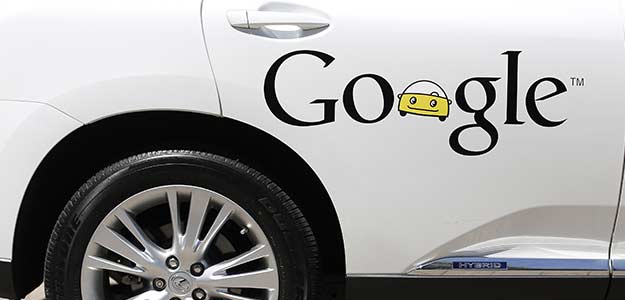
Google Inc is building cars that don't have steering wheels, accelerator pedals or brake pedals, in an ambitious expansion of the Internet company's efforts to develop self-driving cars.
The small electric cars, which seat two passengers, are currently prototypes that Google has been building through partnerships with automotive suppliers and manufacturers, Google co-founder Sergey Brin said at the Code conference in Southern California on Tuesday.
Google aims to build up to 200 such cars in the near term and hopes the vehicles will be available in various cities within a couple of years, he said.
Google has been testing self-driving cars since 2009, incorporating laser sensors and radars into standard automobiles such as the Prius from Toyota Motor Corp and sport-utility vehicles from Toyota luxury car division Lexus.
While those vehicles require a human to remain in the driver's seat and to take over in certain situations, the new cars operate completely autonomously.
Brin said the cars could operate as a service, picking up passengers when summoned, and potentially even operate as fleets of interconnected "trains".
"Ten seconds after getting in I was doing my email, I had forgotten I was there," Brin said of his experience riding in one of the pod-like vehicles, which resemble a cross between a Smart car and Volkswagen Beetle. "It ultimately reminded me of catching a chairlift."
Brin declined to specify whether Google intended to build and sell the cars itself, saying only that the company would "work with partners".
The driverless cars are currently limited to a maximum speed of 25 miles (40 km) an hour, but Brin said there was no reason the cars could not go as fast as 100 miles an hour or more once they had been proven to be safe.
The front of the cars contain about 2 feet (61 cm) of foam and the windshield is made out of plastic instead of glass to make the cars safer, he said.
"Within a couple of years I hope we will surpass the safety metrics we've put in place, which is to be significantly safer than a human driver, and we will start testing them without drivers and hopefully you'll be able to utilize them at some limited cities," Brin said.
A handful of US states, including California and Nevada, have passed legislation to allow testing of self-driving cars on public roads. Brin said he was optimistic that the new, passenger-only self-driving cars would be approved for testing in the US and overseas in the future.
Copyright: Thomson Reuters 2014

-
Love, Sex Aur Dhokha: The Audacious Plot To Spy On Jensen Huang

A Taipei dinner, a Singapore chip buyer and a suspected Chinese asset: inside the alleged spy operation that got close to NVIDIA's Jensen Huang.
-
Ten Things I Learnt This Samvat
Patience can be a trap. Cheap stocks can stay cheap. Leverage can wipe you out. What did Samvat 2082 teach us? Niraj Shah writes on 10 lessons from the year gone by.
-
Talking Points This Week: Tech Nerves, FII Buying, And A Faraway Banking Shock
The global markets are not shining this Diwali. The exception in the large markets is, India.
-
Midterm Rally Lasted A Day. The Hard Reality Of A Divided US May Last Two Years | Opinion
Between a contested AI boom, a debt ceiling that arrives in 2027 and a president with every incentive to act alone, the next two years may prove more volatile than the first day's rally suggests.
-
Blue Wave Will Derail the AI Trade but Won't Dismantle the AI Era | Unhedged Position
The Democrats' sweep of the US Congress will see politics collide with economic forces both over the long and short term.
-
It's Time To Take The GST Council's Bet On Trust Global
Payment records can prove India's services exports, and clear, proportionate rules can bring foreign digital sellers into the tax net.
-
Opinion | India at 38: From Innovation Overperformer to Innovation Powerhouse
India now has 453 VC-backed deep science startups, 18 of them late-stage, after 117 percent growth since 2020. Laurus Labs, at USD 9.3 billion, is the most valuable deep science company in any middle-income economy outside China.
-
Navigating Energy Crossroads: S Jaishankar's Call For Diversified Supply Chains At G20 Ministerial Meeting
As geopolitical fault lines continue to test maritime trade routes and commodity flows, Jaishankar's message remains pertinent: true economic resilience requires open markets, protected transit lines, and a genuine commitment to multilateral cooperation rather than coercion.
-
Indians Are Travelling, But Not Every Journey Is A Holiday | The Week In Whys
Pilgrims, patients and working women are the real travellers, and the system hasn't quite caught up with them.









