Good News For PM Modi, Experts See Gap With China Closing: Foreign Media
Prime Minister Narendra Modi has something to cheer about even as economists slash India's growth forecasts.
A clutch of studies and surveys published around the World Economic Forum show that perceptions about India's outlook are improving, closing the gap with China. The results will be heartening for PM Modi, who's under fire at home for his shock currency withdrawal that's left analysts scrambling to calculate the impact on the $2 trillion economy.
Forecasts and perceptions will play a role as PM Modi nears several state elections scheduled to start next month. His administration is also due to present its annual budget on Feb. 1.
ECONOMIC OUTLOOK
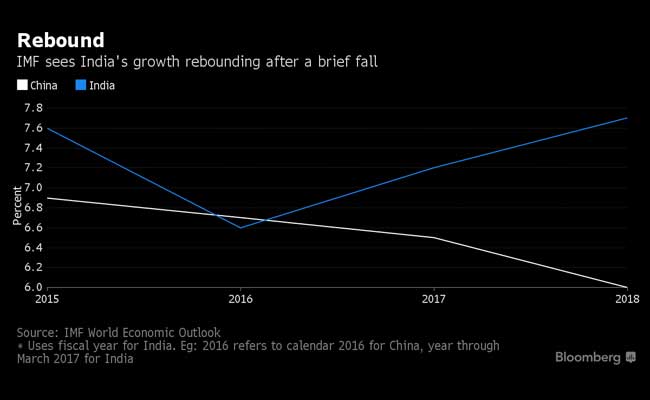
The cash clampdown will hurt India in the near term, though growth will rebound, according to the International Monetary Fund. It cut its forecast for India's gross domestic product to 6.6 percent from 7.6 percent. "Even with our downgrade, India's growth rate remains substantial," said Maury Obstfeld, the IMF's research director. "We do agree with the general goal that motivated this, which is reducing the extent of illicit transactions in the economy."
BUSINESS PROSPECTS
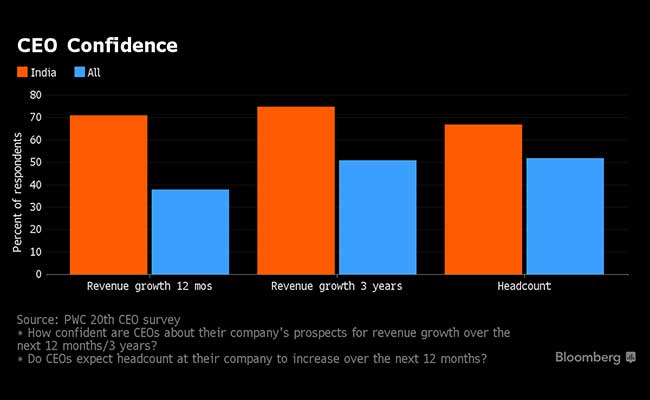
While global chief executives are less interested in India than they were in 2011 -- "perhaps because structural reforms have been slow to come" -- local business leaders are more optimistic about prospects in the South Asian nation. PWC surveyed almost 1,400 CEOs across 79 countries.
BULGING MARKET
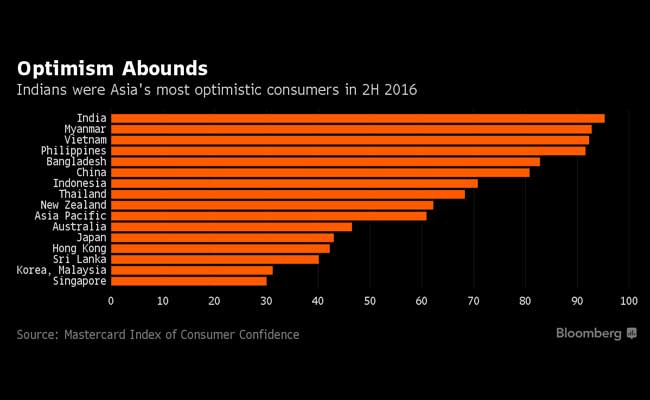
Much of this confidence can be attributed to consumption, crimped by PM Modi's cash ban but still the highest in Asia. Consumer sentiments, which slipped 2.4 points in June-December from the first half of 2016, stays in "extremely optimistic" territory in Mastercard's survey.
NIMBLE POLICIES
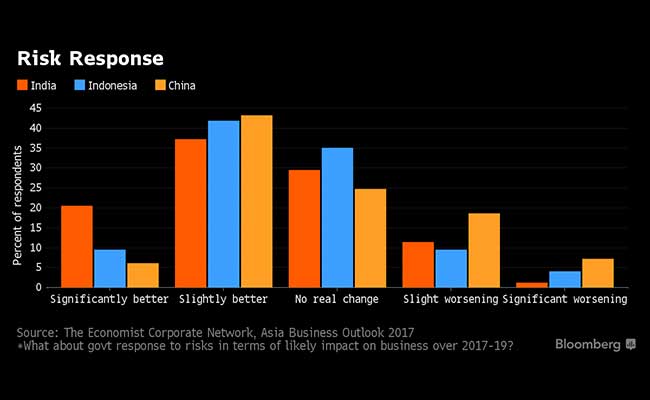
Credit must also be given to policy makers, whose responses to political and economic risk are seen as most likely to help business prospects. About 20 percent of respondents in the Economist's survey felt their firm's expectations were "overly optimistic" for China. The same proportion believed that corporate expectations were too low for India.
EFFECTIVE INSTITUTIONS
That sentiment is also echoed among citizens. Edelman assessed institutional trust by surveying more than 33,000 people in 28 countries between Oct. 12 and Nov. 16. 'Informed public' refers to college-educated people aged 25-64, who're in the top 25 percent of household income in their countries and who report significant media consumption.
ATTRACTING FOREIGNERS
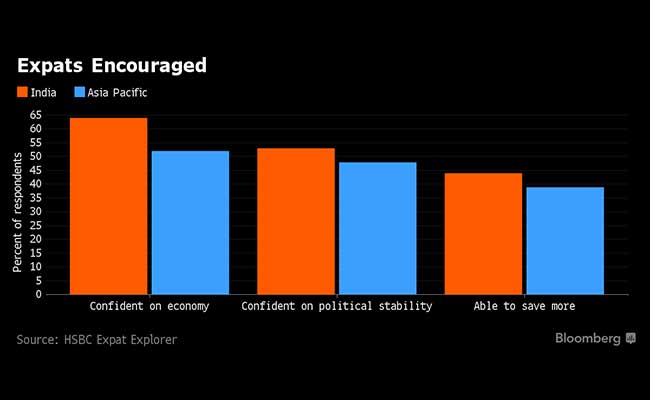
While India doesn't figure among the most sought after global destinations for expatriates, foreigners in India are more confident about their prospects than in many other Asian countries, an HSBC report shows. A majority of expats in India say that living here has accelerated their progress toward long-term savings and investments.
LINGERING WORRY
The biggest concern -- for PM Modi and his citizens -- will be the onward march of the robots. Over a quarter of employers in India say that automation will kill jobs over the next two years, according to a report from ManpowerGroup, which surveyed 18,000 employers in 43 countries. It urged companies to invest in their employees' skills so people and organizations can stay relevant.
© 2017 Bloomberg L.P

-
High US Salaries, No Green Card Certainty: The Financial Calculation Facing Indian H-1B Families

The suspension of PERM processing at eight technology employers does not cancel existing H-1B visas. What it does is force a question many Indian families have been avoiding: is the US salary worth tying your career and family plans to one employer?
-
Unhedged Position: Can India See An Indonesia-Style Time Correction?
The Nifty is trading below levels it first clocked in 2024. Is there, then, as I have suggested in the headline, potential that the current time correction drags on painfully for the next three-five, even ten years?
-
Navigating Friction And Energy Realities: An Analysis Of Marco Rubio's October Visit To India
Occurring at a critical juncture marked by stalled trade negotiations and escalating geopolitical pressures over global energy supplies, the visit offers a profound window into modern US-India relations.
-
India Exports Capital. Why Not Export Trusteeship?
The big question, then, is whether India can build an institution that global borrowers, investors, banks, and lawyers can trust, even without an Indian connection.
-
France's Economy & Politics Are In Crisis | The Reason Why
Let's look at how the French economy and politics evolved under Nicolas Sarkozy, Franois Hollande and Emmanuel Macron.
-
You May Inherit The Business. You Must Earn Its Credibility.
Succession tests the founder's ability to share authority as much as it tests the next generation's readiness to assume it.
-
Signing Deals Is One Thing; Making Them Work Is Another | The Week In Whys
Sometimes, things don't turn out as planned. Indian companies have lost some bids to rivals, some projects won't produce until 2030.
-
FOMC Wall, PERM Suspension, Hospital Stocks | Talking Points This Week
A PERM suspension would directly affect green-card sponsorship rather than H-1B visas, so the near-term earnings impact could remain relatively limited. The key question is whether this marks a new phase in US scrutiny of Indian IT.
-
Everything, Everywhere, All At Once: Dalal Street's Week To Forget | Joining The Dots
Visa curbs, a Starlink spat and cancer drug caps: what connects this week's shocks for Indian markets
-
India Is Going Abroad For Critical Minerals. But It May Take Years To Pay Off | The Reason Why
Although India's steps are in the right direction, they remain modest compared with India's growing dependence.