Go Air May Have Planes Repossesed, Complicating Rescue Efforts
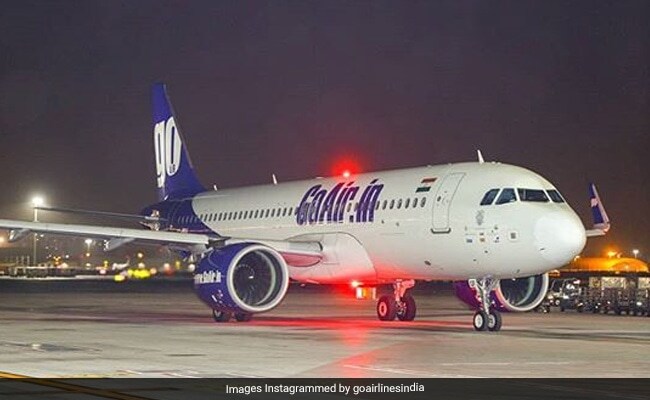
Lessors are seeking to take back possession of at least 20 Airbus SE jets operated by Go Airlines India Ltd., further complicating the insolvent carrier's attempts to start flying again, even as a local bankruptcy court contemplates whether the company should get any respite.
Lessors including Dublin's GY Aviation Lease, SMBC Aviation Capital and Pembroke Aircraft Leasing have applied to India's Directorate General of Civil Aviation on Thursday to de-register the planes, including brand new A320neo jets, information posted on the regulator's website showed. The regulator should typically deregister the planes within five working days of a request, meaning the clock is ticking for the airline controlled by billionaire Nusli Wadia's group.
India in 2008 acceded to the so-called Cape Town Convention, which defines the rights of aircraft owners and lessors during payment defaults. While the agreement allows for the return of equipment quickly, India's enforcement hasn't been swift in past airline failures and issues, sometimes leading to increased lease rates for local carriers, and court cases.
Go Air - now re-branded as Go First - filed for insolvency protection Tuesday, blaming failing Pratt & Whitney engines for grounding about half its fleet of Airbus aircraft at a time when demand for travel is soaring. The National Company Law Tribunal on Thursday didn't provide a judgment on an insolvency resolution case filed by the airline seeking to restrain lessors from taking back its aircraft.
The airline said it had to ground 30.5% of its Airbus A320neo fleet in 2020, 25.6% in 2021, and 33.9% in 2022, as Pratt failed to provide new engines and spares. That added up to a total equivalent of more than 47 years of potential flying time between January 2020 to February 2023 when aircraft were forced to be on the ground.
"The bigger issue here is more about this engine which has been breaking consecutively," Mark Martin, founder of Dubai-based Martin Consulting LLC, told Bloomberg Television in an interview on Friday. "This problem is an industry problem and the first victim is Go Air. Never in the history of aviation has an airline gone belly up and gone under because of a component failing so severely."
Pratt & Whitney, a unit of Raytheon Technologies Corp, has previously said the Go Air matter is subjudice, and it continues to prioritise delivery schedules for all customers.
Other airlines have faced troubles with Pratt & Whitney engines as well. Deutsche Lufthansa AG said this week a third of its Airbus A220 fleet in Zurich has been temporarily grounded because of issues with Pratt & Whitney engines. Turkish Airlines, Air Baltic Corp and IndiGo have all faced problems with the turbines.
Once a plane is deregistered in India, airports can calculate their dues for three months preceding the lessor's application, and once such payments and any other fresh dues are cleared by the lessor, the plane can leave the country, according to aviation law firm Sarin & Co.
Go Air is the third high-profile Indian airline forced to ground its entire fleet in the past decade or so in one of the toughest markets in the world. Cheap fares, high oil prices and weakness in the Indian currency all have contributed to multiple years of losses for carriers even as the South Asian nation remains one of the world's fastest-growing aviation markets.
(Except for the headline, this story has not been edited by NDTV staff and is published from a syndicated feed.)

-
Navigating Friction And Energy Realities: An Analysis Of Marco Rubio's October Visit To India

Occurring at a critical juncture marked by stalled trade negotiations and escalating geopolitical pressures over global energy supplies, the visit offers a profound window into modern US-India relations.
-
India Exports Capital. Why Not Export Trusteeship?
The big question, then, is whether India can build an institution that global borrowers, investors, banks, and lawyers can trust, even without an Indian connection.
-
France's Economy & Politics Are In Crisis | The Reason Why
Let's look at how the French economy and politics evolved under Nicolas Sarkozy, Franois Hollande and Emmanuel Macron.
-
You May Inherit The Business. You Must Earn Its Credibility.
Succession tests the founder's ability to share authority as much as it tests the next generation's readiness to assume it.
-
Signing Deals Is One Thing; Making Them Work Is Another | The Week In Whys
Sometimes, things don't turn out as planned. Indian companies have lost some bids to rivals, some projects won't produce until 2030.
-
FOMC Wall, PERM Suspension, Hospital Stocks | Talking Points This Week
A PERM suspension would directly affect green-card sponsorship rather than H-1B visas, so the near-term earnings impact could remain relatively limited. The key question is whether this marks a new phase in US scrutiny of Indian IT.
-
Everything, Everywhere, All At Once: Dalal Street's Week To Forget | Joining The Dots
Visa curbs, a Starlink spat and cancer drug caps: what connects this week's shocks for Indian markets
-
India Is Going Abroad For Critical Minerals. But It May Take Years To Pay Off | The Reason Why
Although India's steps are in the right direction, they remain modest compared with India's growing dependence.
-
When Everyone Has AI, What Gives You An Edge?
India's young workforce is entering an uncertain world of work where powerful AI tools are becoming widely accessible. The advantage will belong to those who combine deep expertise with digital fluency, and the distinctly human capabilities that technology cannot manufacture.
-
Wrong Labels, High Pesticide Residues Holding Back Agri Exports | The Reason Why
India needs stronger domestic food-safety and labelling standards, with best practices becoming part of everyday business for farmers, traders and food companies.










