Unequal Vaccine Access Widening Gap Between Rich And Poor Countries: IMF
The International Monetary Fund maintained its outlook for the biggest rebound in global economic growth in four decades while changing underlying regional forecasts, with unequal access to vaccines further widening the recovery gap between advanced and developing economies.
World output is still expected to grow 6 per cent in 2021 following last year's 3.2 per cent drop, the fund said in an updated World Economic Outlook released Tuesday. It reduced the forecast for emerging-market expansion to 6.3 per cent compared with the 6.7 per cent increase projected in April, and raised the estimate for advanced economies by 0.5 percentage point to 5.6 per cent.
The U.K. got the biggest bump among major economies, with the IMF now forecasting a growth rate of 7 per cent in 2021, a touch lower than Bank of England estimates.

For 2022, the IMF now sees global growth of 4.9 per cent, up from 4.4 per cent.
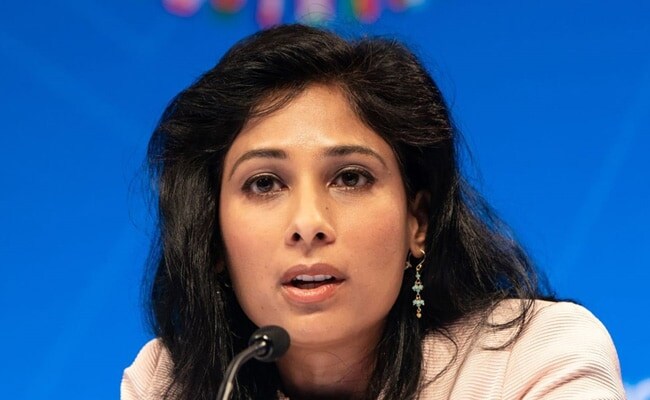
"We warned of a dangerous divergence, and we are seeing that getting worse," IMF Chief Economist Gita Gopinath said in an interview with Bloomberg Television after the release of the report. "We're not out of the woods with respect to the pandemic."
Vaccine access has emerged as "the principal fault line along which the global recovery splits into two blocs: those that can look forward to further normalization of activity later this year -- almost all advanced economies -- and those that will still face resurgent infections and rising Covid death tolls," the IMF said. "The recovery, however, is not assured even in countries where infections are currently very low so long as the virus circulates elsewhere."
To address the widening gap, the Washington-based fund urged advanced economies -- which have inoculated about 40 per cent of their populations -- to share their vaccine surplus with poorer nations.
"Multilateral action is needed to ensure rapid, worldwide access to vaccines, diagnostics, and therapeutics," Ms Gopinath said in a related blog. "This would save countless lives, prevent new variants from emerging and add trillions of dollars to global economic growth."
In May, the fund proposed a $50 billion plan to end the pandemic, in which 40 per cent of people in every country would be vaccinated by the end of the year. The World Health Organization, the World Bank and the World Trade Organization all endorsed the proposal.
Among other findings:
Emerging Asia saw the biggest downgrade among regions, with the IMF trimming the growth projection for this year by 1.1 percentage points to 7.5 per cent.
A 3 percentage-point cut in the annual growth rate for India -- hurt by a severe second Covid-19 wave from March to May -- led the drop. Despite this, gross domestic product there is set to expand 9.5 per cent in 2021.
The forecast for sub-Saharan Africa is unchanged relative to April, with worsening pandemic developments expected to weigh on the region's recovery. A 0.9 percentage-point increase in South Africa's forecast offset downward revisions in other countries.
The fund raised its GDP expansion outlooks for the U.S., the euro area, Latin America and the Middle East and Central Asia.
Inflation is expected to return to its pre-pandemic ranges in most countries in 2022 once these disturbances work their way through prices, the fund said. Elevated inflation is also expected in some emerging-market and developing economies, related in part to high food prices.
Risks tilt to the downside, with uncertainty surrounding the global baseline remaining high, the IMF said. Delays in administering vaccines would allow new variants to spread, "with possibly higher risks of breakthrough infections among vaccinated populations."
"Concerted, well-directed policies can make the difference between a future of durable recoveries for all economies or one with widening fault lines -- as many struggle with the health crisis while a handful see conditions normalize, albeit with the constant threat of renewed flare-ups," the IMF said.

-
Where You Live Shapes How You Get To Work | The Reason Why

Two-wheelers are the most popular way to get to work in India, accounting for nearly 43% of workplace commutes.
-
High US Salaries, No Green Card Certainty: The Financial Calculation Facing Indian H-1B Families
The suspension of PERM processing at eight technology employers does not cancel existing H-1B visas. What it does is force a question many Indian families have been avoiding: is the US salary worth tying your career and family plans to one employer?
-
Unhedged Position: Can India See An Indonesia-Style Time Correction?
The Nifty is trading below levels it first clocked in 2024. Is there, then, as I have suggested in the headline, potential that the current time correction drags on painfully for the next three-five, even ten years?
-
Navigating Friction And Energy Realities: An Analysis Of Marco Rubio's October Visit To India
Occurring at a critical juncture marked by stalled trade negotiations and escalating geopolitical pressures over global energy supplies, the visit offers a profound window into modern US-India relations.
-
India Exports Capital. Why Not Export Trusteeship?
The big question, then, is whether India can build an institution that global borrowers, investors, banks, and lawyers can trust, even without an Indian connection.
-
France's Economy & Politics Are In Crisis | The Reason Why
Let's look at how the French economy and politics evolved under Nicolas Sarkozy, Franois Hollande and Emmanuel Macron.
-
You May Inherit The Business. You Must Earn Its Credibility.
Succession tests the founder's ability to share authority as much as it tests the next generation's readiness to assume it.
-
Signing Deals Is One Thing; Making Them Work Is Another | The Week In Whys
Sometimes, things don't turn out as planned. Indian companies have lost some bids to rivals, some projects won't produce until 2030.
-
FOMC Wall, PERM Suspension, Hospital Stocks | Talking Points This Week
A PERM suspension would directly affect green-card sponsorship rather than H-1B visas, so the near-term earnings impact could remain relatively limited. The key question is whether this marks a new phase in US scrutiny of Indian IT.
-
Everything, Everywhere, All At Once: Dalal Street's Week To Forget | Joining The Dots
Visa curbs, a Starlink spat and cancer drug caps: what connects this week's shocks for Indian markets









