Global Food Supplies At Risk After Russia's Withdrawal From UN-Brokered Grain Deal
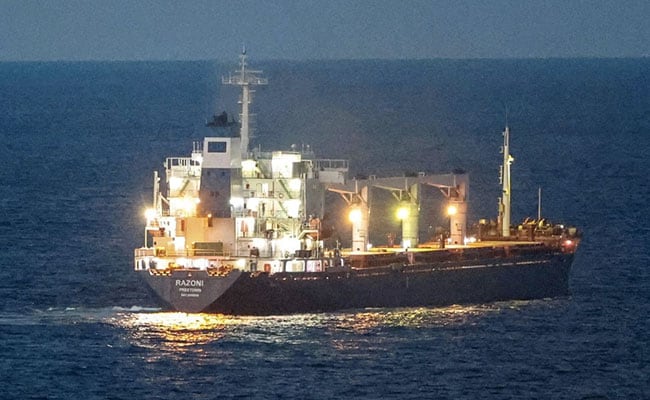
Russia's weekend backtrack from a UN-brokered deal to export Black Sea grains is likely to hit shipments to import-dependent countries, deepening a global food crisis and sparking gains in prices.
Hundreds of thousands of tonnes of wheat booked for delivery to Africa and the Middle East are at risk following Russia's withdrawal, while Ukrainian corn exports to Europe will get knocked lower, two Singapore-based traders said.
Russia on Saturday suspended participation in the UN grain deal for an "indefinite term", after what it said was a major Ukrainian drone attack on its Black Sea fleet in Crimea.
"If I have to replace a vessel which was due to come from Ukraine, what are the options? Not much really," said one Singapore-based grains trader who supplies wheat to buyers in Asia and the Middle East.
Chicago wheat futures on Monday jumped more than 5% and corn rose over 2% from the fears over supplies. [GRA/]
Earlier this year global wheat prices jumped to an all-time high and corn hit a 10-year top as Russia's invasion of Ukraine added fuel to a rally set off by adverse weather and COVID-19 supply disruptions.
Australia, a key wheat supplier to Asia, is unlikely to be able to fill any supply gap, with shipping slots booked right up to February, traders said.
Shares in Australia's Graincorp - which posted a five-fold jump in H1 profit due to supply constraints arising from the Russia-Ukraine conflict - rose more than 7%.
No ships moved through the established maritime humanitarian corridor on Sunday. The United Nations, Turkey and Ukraine, however, pressed ahead to implement the Black Sea grain deal and agreed on a transit plan for Monday for 16 vessels to move forward, despite the withdrawal of Russia.
"We have to see how the situation unfolds. It is not clear if Ukraine will continue to ship grains and what happens to Russian exports," said the Singapore-based grains trader.
Wheat, Corn And Vegoils
Asian buyers booking Ukrainian wheat cargoes include Indonesia, the world's second-largest importer of the grain, although the region typically relies on Australia and North America.
In recent deals, Indonesian millers bought four cargoes or around 200,000 tonnes of Ukrainian wheat for November shipment in deals signed over the last few weeks, traders said. Some Vietnamese feed mills that bought Ukrainian wheat are also likely to suffer.
Last week, a government agency in Pakistan bought about 385,000 tonnes of wheat in a tender likely to be sourced from Russia and Ukraine.
"We are not sure if Russia will continue to export wheat or it will be safe for vessels carrying Russian wheat to ship from the Black Sea even as Ukrainian exports remain blocked," said a second Singapore-based trader at an international company.
Ukraine's corn exports to Europe booked for November are likely to be hit as well.
"As far as Europe is concerned, corn is a bigger issue than wheat as we are getting into peak season for Ukrainian corn in November," said the second trader.
Russia's decision is expected to support world vegetable oil prices as it threatens Ukraine's sunflower oil exports to key destinations, including top edible oil importer India.
Malaysian palm oil futures jumped more than 4% on Monday. Under the U.N.-brokered grains deal, a Joint Coordination Centre (JCC) made up of U.N., Turkish, Russian and Ukrainian officials agrees on the movement of ships and inspects the vessels. More than 9.5 million tonnes of corn, wheat, sunflower products, barley, rapeseed and soy have been exported from the Black Sea since July.
Although global agricultural commodity prices have come off record highs in recent months, local retail food prices remain high and now face further upside.
"Typically, it takes about two months for higher grain prices to filter through the supply chain and impact consumers at the retail level," said a Sydney-based analyst.
"But food processors do not have much forward coverage, so it is likely to be a lot quicker."
(Except for the headline, this story has not been edited by NDTV staff and is published from a syndicated feed.)

-
Navigating Energy Crossroads: S Jaishankar's Call For Diversified Supply Chains At G20 Ministerial Meeting

As geopolitical fault lines continue to test maritime trade routes and commodity flows, Jaishankar's message remains pertinent: true economic resilience requires open markets, protected transit lines, and a genuine commitment to multilateral cooperation rather than coercion.
-
Indians Are Travelling, But Not Every Journey Is A Holiday | The Week In Whys
Pilgrims, patients and working women are the real travellers, and the system hasn't quite caught up with them.
-
Getting To Work Costs Women More | The Reason Why
It is not just about women paying more than men. It is about women paying much more in cities than in villages.
-
AI Bias In Investing Cannot Be Eliminated, But It Can Be Governed
Framing is a particularly important example as identical financial information presented in terms of gains rather than losses can lead an LLM to reach a different assessment.
-
Joining The Dots | Dark Skies, Steady Diya: Why Hope Holds This Diwali
With war, a weak rupee and foreign outflows weighing on sentiment, policymakers at the NDTV World Summit and market veterans at NDTV Profit Ignite: Diwali Edition offered the same advice: stay invested and filter out the noise.
-
The Curious Case of Equitas Small Finance Bank And A CEO Who Quit For Stock
PN Vasudevan believes persistent investor concerns over a perceived conflict of interest had become a governance overhang on Equitas Small Finance Bank's stock, even as the lender improved profitability and asset quality.
-
Talking Points This Week: AI Cash Burn, A Tiger Comeback And An India That Still Finds Its Own Path
India is not immune to higher oil or tighter global liquidity, yet its earnings base is broader, its domestic policy levers are still available.
-
Foreign Investors Own Half Of HDFC Bank and ICICI Bank. An LTCG Cut Could Matter Most Here
Foreign portfolio investors have US$115 billion parked in HDFC Bank, ICICI Bank. If the government cuts long-term capital gains tax, Jefferies says returning foreign money could land here first.
-
'Never Seen This Level Of Negativity': Sandeep Tandon Says The Next Rally May Be Closer Than You Think
Veteran investor Sandeep Tandon says foreign selling is easing, large-caps are due a comeback and mid-caps are crowded, while he turns positive on gold, power and pharma this Diwali.
-
Indians Stay With Family, Not In Hotels | The Reason Why
India still lacks enough clean, reliable and affordable hotels for budget-conscious travellers.










