Global Economy Week Ahead: Living in Interesting Times
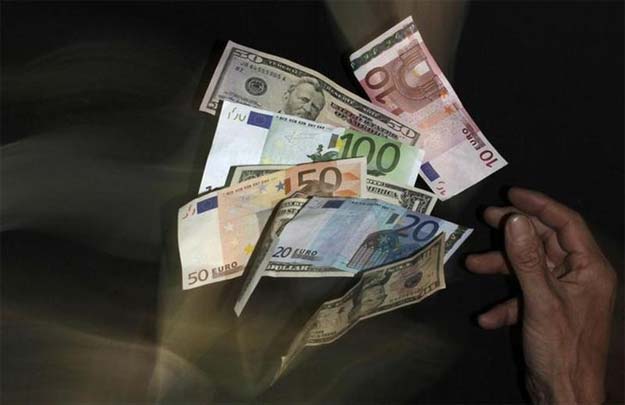
With US stocks hitting record highs on the back of strong jobs growth, the European Central Bank (ECB) holding out the prospect of printing money and British house prices soaring, there is a lot to ponder in the week to come.
The Dow Jones index breached 17,000 for the first time last week, days after the Bank for International Settlements - the global forum for central banks - said that markets were in a "euphoric" state and that keeping interest rates too low for too long could sow the seeds of another crisis.
In fact, the world's major central banks are operating at different speeds and, in some cases, are on opposing paths.
The Bank of England is highly unlikely to lift interest rates from a record low 0.5 per cent after its monthly policy meeting on Thursday, but it is looking increasingly certain to be the first major central bank to tighten policy.
The Federal Reserve is winding up its money-printing programme but seems comfortable leaving rates low until well into next year. The ECB cut rates last month and may yet have to resort to quantitative easing to ward off deflation.
The British economy is growing fast and its housing market is threatening to burst out of control - prices in London have shot up nearly 26 per cent from a year ago.
A Reuters poll of more than 60 economists produced a consensus that UK rates will rise in the first quarter of next year. But it attached a growing, 40 per cent chance to a hike before year-end.
Only last year, the bank was predicting no move until 2016.
Bank of England chief economist Andy Haldane said last week that raising rates was the last line of defence against asset price bubbles, but it would be surprising if property prices were not very high on the Bank's agenda.
"With none of the BoE ostensibly being in an immediate hurry to raise rates, the August Inflation Report next month may provide a better vehicle through which to assess the need for rate rises," said Nick Bate, economist at Bank of America Merrill Lynch.
Fed and ECB chatter
Data last week showed US employment growth jumped in June, evidence the economy is rebounding after a weather-related slump at the start of the year.
The data slate is thin in the week to come but a number of Fed officials - covering the hawk-to-dove spectrum - are speaking and investors will be tuned in to see if any think a case is building for an earlier rate rise.
On the back of the US jobs report, J.P. Morgan brought forward its forecast for the first Fed rate rise to the third quarter of 2015, from Q4, and said a move in the second quarter was quite plausible.
Minutes of the Fed's last policy meeting, at which it expressed confidence the US recovery was on track and hinted at a slightly more aggressive pace of interest rate increases starting next year, will be released on Wednesday.
The European Central Bank faces a very different threat - deflation.
Hours after ECB President Mario Draghi held out the prospect of printing euros to rev up the economy, Bundesbank chief Jens Weidmann broke cover to say the ECB should not leave policy loose for too long.
Mr Draghi has taken the ECB a long way with measures some of its members have found hard to swallow. Quantitative easing could prove to be his toughest test yet.
The ECB chief speaks in London on Wednesday - the venue for his game-changing 2012 declaration that he would do whatever it takes to preserve the euro. A number of his colleagues are also out and about in the week to come.
"Disinflationary pressures will not disappear overnight and nor will the threat of deflation. Accordingly, we still think that the ECB will need to take further action, ultimately implementing a large-scale quantitative easing programme," said Jessica Hinds at Capital Economics.
In Japan, the focus is on Thursday's machinery orders, which act as a leading indicator of capital spending and are expected to have resumed growing in May.
"Earnings are improving, so companies which have put off investment are now starting to invest," said Norio Miyagawa, senior economist at Mizuho Securities Research & Consulting Co.
Bank of Japan Governor Haruhiko Kuroda speaks on Monday when the central bank holds its quarterly meeting of regional branch managers. He is likely to reiterate the BOJ's upbeat take on the economy, which should underscore a growing market view that no further monetary easing is likely in the near future.
Top Chinese and US officials will hold annual talks in Beijing on July 9-10, known as the Strategic and Economic Dialogue, with Washington again calling on Beijing to do more to allow the market to set the value of its yuan currency.
Copyright @ Thomson Reuters 2014

-
Blue Wave Will Derail the AI Trade but Won't Dismantle the AI Era | Unhedged Position

The Democrats' sweep of the US Congress will see politics collide with economic forces both over the long and short term.
-
It's Time To Take The GST Council's Bet On Trust Global
Payment records can prove India's services exports, and clear, proportionate rules can bring foreign digital sellers into the tax net.
-
Opinion | India at 38: From Innovation Overperformer to Innovation Powerhouse
India now has 453 VC-backed deep science startups, 18 of them late-stage, after 117 percent growth since 2020. Laurus Labs, at USD 9.3 billion, is the most valuable deep science company in any middle-income economy outside China.
-
Navigating Energy Crossroads: S Jaishankar's Call For Diversified Supply Chains At G20 Ministerial Meeting
As geopolitical fault lines continue to test maritime trade routes and commodity flows, Jaishankar's message remains pertinent: true economic resilience requires open markets, protected transit lines, and a genuine commitment to multilateral cooperation rather than coercion.
-
Indians Are Travelling, But Not Every Journey Is A Holiday | The Week In Whys
Pilgrims, patients and working women are the real travellers, and the system hasn't quite caught up with them.
-
Getting To Work Costs Women More | The Reason Why
It is not just about women paying more than men. It is about women paying much more in cities than in villages.
-
AI Bias In Investing Cannot Be Eliminated, But It Can Be Governed
Framing is a particularly important example as identical financial information presented in terms of gains rather than losses can lead an LLM to reach a different assessment.
-
Joining The Dots | Dark Skies, Steady Diya: Why Hope Holds This Diwali
With war, a weak rupee and foreign outflows weighing on sentiment, policymakers at the NDTV World Summit and market veterans at NDTV Profit Ignite: Diwali Edition offered the same advice: stay invested and filter out the noise.
-
The Curious Case of Equitas Small Finance Bank And A CEO Who Quit For Stock
PN Vasudevan believes persistent investor concerns over a perceived conflict of interest had become a governance overhang on Equitas Small Finance Bank's stock, even as the lender improved profitability and asset quality.










