Global Corporate Funding In Solar Sector At $5.3 Billion In First Half Of 2018
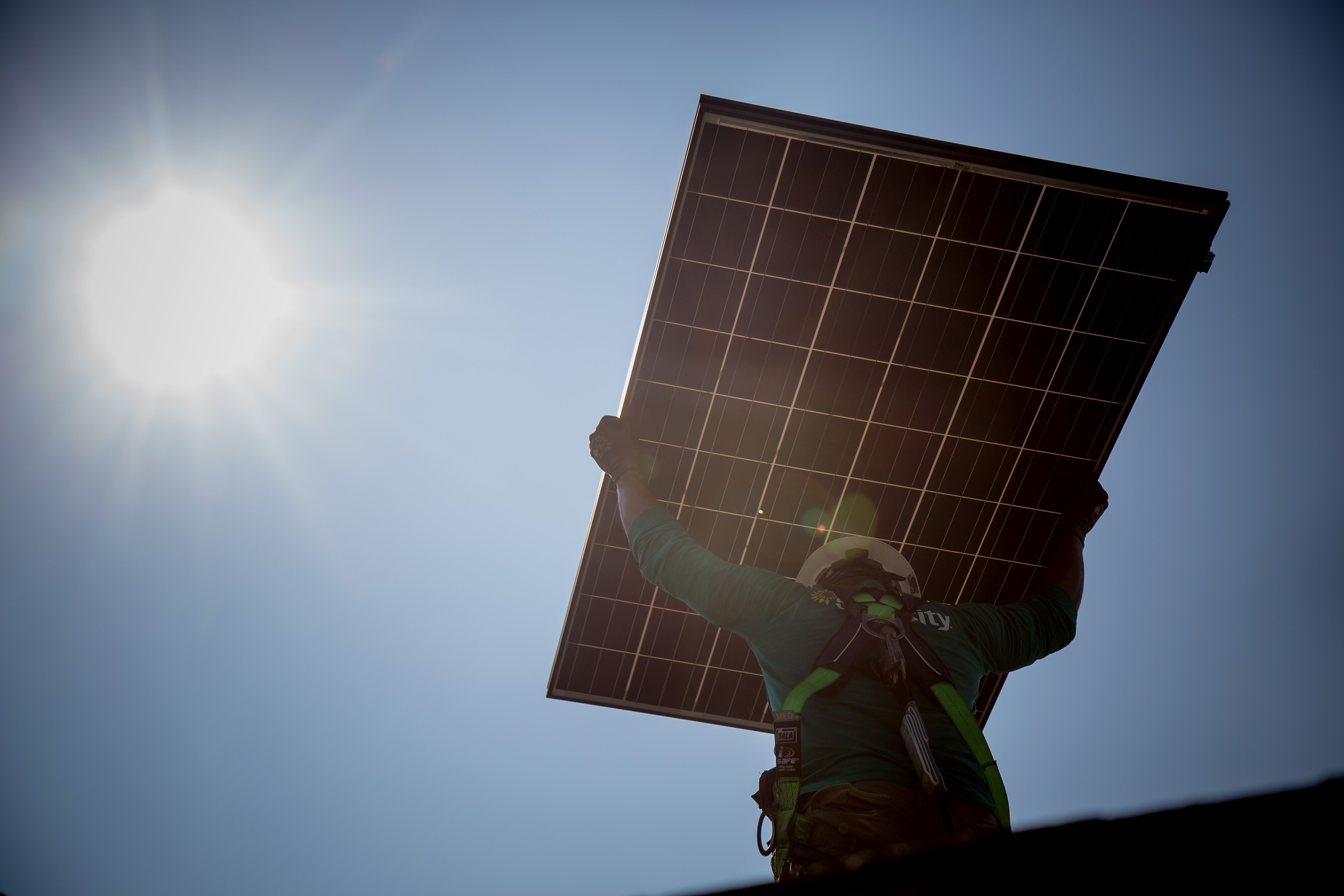
Total global corporate funding in solar sector touched $5.3 billion in the first half of this year, up 15 per cent over last year, amid uncertainty in the industry due to Trump tariffs and the Chinese subsidy pullback, said consulting firm Mercom Capital Group.
Corporate funding, including venture capital, public market, and debt financing, in the solar sector was $4.6 billion in the January-June period of 2017.
“The first half of 2018 has been a roller-coaster for the solar industry marked by uncertainty due to Trump tariffs followed by the recent Chinese subsidy pullback,” commented Raj Prabhu, chief executive officer of Mercom Capital Group.
Though financial activity was better compared to the same period last year, the market is still sorting out the winners and losers that would come out of a potential slowdown in Chinese demand, which is expected to result in an oversupply situation and eventual price crash in components across the globe.Raj Prabhu, chief executive officer of Mercom Capital Group
On a quarter-on-quarter basis, corporate funding increased in the April-June period of this year with $2.8 billion in 34 deals compared to the $2.5 billion in 44 deals in January-March 2018.
Some of the notable Indian deals in the second quarter of this year in the debt funding segment include Sunsure Energy, a solar turnkey solutions provider, raised zero-collateral based debt capital worth $2.2 million from TATA Cleantech Capital, L&T Finance, and cKers Finance.
Among other major Indian deals, Azure Power raised $135 million in debt financing from a consortium of development finance institutions to finance around 200 MW of Azure Power's rooftop solar PV projects across India.
Meanwhile, globally there were a total of 46 solar M&A transactions in the January-June 2018, compared to 41 transactions in the same period a year ago.
Some of the noted Indian M&A deals include Hinduja Group, acquiring Kiran Energy, and ReNew Power taking over solar and wind energy project developer Ostro Energy valued at close to $1.63 billion and was supported with financing of $247 million from the Canada Pension Plan Investment Board.

-
Ten Things I Learnt This Samvat

Patience can be a trap. Cheap stocks can stay cheap. Leverage can wipe you out. What did Samvat 2082 teach us? Niraj Shah writes on 10 lessons from the year gone by.
-
Talking Points This Week: Tech Nerves, FII Buying, And A Faraway Banking Shock
The global markets are not shining this Diwali. The exception in the large markets is, India.
-
Midterm Rally Lasted A Day. The Hard Reality Of A Divided US May Last Two Years | Opinion
Between a contested AI boom, a debt ceiling that arrives in 2027 and a president with every incentive to act alone, the next two years may prove more volatile than the first day's rally suggests.
-
Blue Wave Will Derail the AI Trade but Won't Dismantle the AI Era | Unhedged Position
The Democrats' sweep of the US Congress will see politics collide with economic forces both over the long and short term.
-
It's Time To Take The GST Council's Bet On Trust Global
Payment records can prove India's services exports, and clear, proportionate rules can bring foreign digital sellers into the tax net.
-
Opinion | India at 38: From Innovation Overperformer to Innovation Powerhouse
India now has 453 VC-backed deep science startups, 18 of them late-stage, after 117 percent growth since 2020. Laurus Labs, at USD 9.3 billion, is the most valuable deep science company in any middle-income economy outside China.
-
Navigating Energy Crossroads: S Jaishankar's Call For Diversified Supply Chains At G20 Ministerial Meeting
As geopolitical fault lines continue to test maritime trade routes and commodity flows, Jaishankar's message remains pertinent: true economic resilience requires open markets, protected transit lines, and a genuine commitment to multilateral cooperation rather than coercion.
-
Indians Are Travelling, But Not Every Journey Is A Holiday | The Week In Whys
Pilgrims, patients and working women are the real travellers, and the system hasn't quite caught up with them.
-
Getting To Work Costs Women More | The Reason Why
It is not just about women paying more than men. It is about women paying much more in cities than in villages.









