RBI's 6th Consecutive Rate Cut Likely This Week After Latest GDP Shock
The deepening economic slowdown gives the Reserve Bank of India more reason to cut interest rates this week, adding to the fiscal stimulus already in the works.
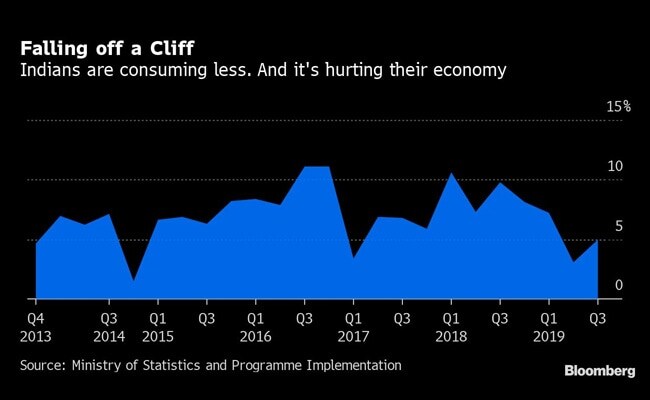
The RBI will deliver its rate decision on December 5, days after a report showed growth collapsed to 4.5 per cent in the July-September quarter, the first time it's been below 5 per cent since 2013.
Led by Governor Shaktikanta Das, the RBI has already cut interest rates by 135 basis points in five moves this year, the most by any Asian central bank. Policy makers have had their focus squarely on boosting Asia's third-largest economy, and last week's weak data gives them added reason to continue pushing for growth.
"The weak numbers emphatically underscore the need of policy focus on growth," said Shubhada Rao, chief economist at Yes Bank Ltd. in Mumbai. "We are expecting the RBI to execute another rate cut of 25 basis points at its next meeting."
Last quarter's growth slump showed a contraction in manufacturing and subdued investments. It was only government spending that bolstered the economy, with private consumption still fairly low key.
A slew of high-frequency indicators suggest the slowdown extended into October. The central bank may be pushed to lower its growth forecast for the fiscal year through March 2020 from 6.1 per cent, with economists in a Bloomberg survey already predicting expansion of just 5.6 per cent.
"We expect the central bank to take note of the downward surprises in the data versus forecasts and acknowledge a deeper-than-expected slowdown in economic activity," said Rahul Bajoria, a senior economist at Barclays Plc. in Mumbai. He expects the central bank to cut the repurchase rate by 40 basis points over the remainder of the fiscal year.
In the interest-rate swap market, investors are betting the repurchase rate -- which is currently at 5.15 per cent -- will be 5 per cent in the next 12 months, while economists are forecasting it at 4.75 per cent by the end of March as growth remains subdued in coming months.
What Bloomberg's Economists Say
We now expect the RBI to deliver a bigger rate cut of around 40-50 bps at its December 5 policy review. This is up from our earlier forecast for a 25 bps rate cut. The deeper cut should support the economy by boosting market sentiment and also nudging banks to improve their transmission to lower lending rates.
Despite the monetary stimulus and a slew of government measures to boost the economy -- including a $20 billion tax bonanza to companies -- a recovery looks uncertain.
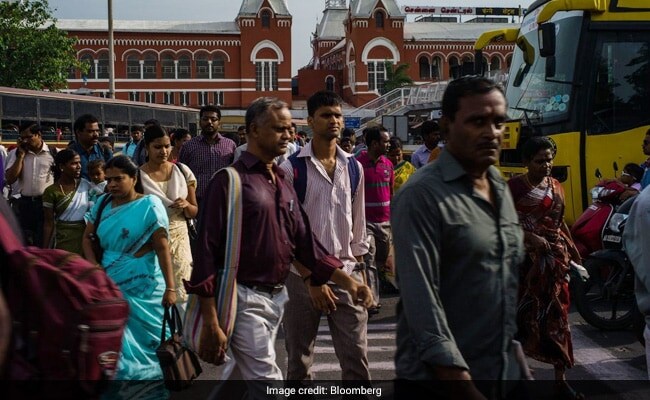
Businesses have cut back on investments, preferring to repay loans instead, while consumers have curbed spending, fearing more job losses. The rural economy remains weak and borrowing is hamstrung by debt-laden banks and a crisis-ridden shadow lending sector.
Banks also haven't passed on all of the 135 basis points of central bank rate cuts to borrowers, leaving policy makers frustrated.
Monetary policy space is slowly closing as inflation starts to accelerate. Consumer prices rose 4.62 per cent in October from a year earlier, the first reading above 4 per cent -- the RBI's medium-term target -- since July 2018, and the highest since June last year.
The spike was driven by a surge in onion prices, although core inflation -- which strips out volatile food and fuel prices -- slowed to 3.4 per cent.
"For the RBI, it presents a tough policy dilemma of overshooting inflation, undershooting growth and a fragile fiscal state," said Madhavi Arora, an economist at Edelweiss Securities in Mumbai. "Nonetheless, the weak quarterly GDP print will validate our call for further easing by the RBI by at least another 50 basis points in this cycle, despite an uptick in inflation beyond the 4 per cent comfort zone."

-
High US Salaries, No Green Card Certainty: The Financial Calculation Facing Indian H-1B Families

The suspension of PERM processing at eight technology employers does not cancel existing H-1B visas. What it does is force a question many Indian families have been avoiding: is the US salary worth tying your career and family plans to one employer?
-
Swiggy vs Eternal: Food Delivery's Two Rivals Are No Longer In The Same Race
Eternal is building a private AI assistant, dark.ai. Swiggy is still working out how to make Instamart pay, with an operating loss of Rs 895 crore in the July-September quarter while Blinkit stayed profitable.
-
Where You Live Shapes How You Get To Work | The Reason Why
Two-wheelers are the most popular way to get to work in India, accounting for nearly 43% of workplace commutes.
-
Unhedged Position: Can India See An Indonesia-Style Time Correction?
The Nifty is trading below levels it first clocked in 2024. Is there, then, as I have suggested in the headline, potential that the current time correction drags on painfully for the next three-five, even ten years?
-
Navigating Friction And Energy Realities: An Analysis Of Marco Rubio's October Visit To India
Occurring at a critical juncture marked by stalled trade negotiations and escalating geopolitical pressures over global energy supplies, the visit offers a profound window into modern US-India relations.
-
India Exports Capital. Why Not Export Trusteeship?
The big question, then, is whether India can build an institution that global borrowers, investors, banks, and lawyers can trust, even without an Indian connection.
-
France's Economy & Politics Are In Crisis | The Reason Why
Let's look at how the French economy and politics evolved under Nicolas Sarkozy, Franois Hollande and Emmanuel Macron.
-
You May Inherit The Business. You Must Earn Its Credibility.
Succession tests the founder's ability to share authority as much as it tests the next generation's readiness to assume it.
-
Signing Deals Is One Thing; Making Them Work Is Another | The Week In Whys
Sometimes, things don't turn out as planned. Indian companies have lost some bids to rivals, some projects won't produce until 2030.
-
FOMC Wall, PERM Suspension, Hospital Stocks | Talking Points This Week
A PERM suspension would directly affect green-card sponsorship rather than H-1B visas, so the near-term earnings impact could remain relatively limited. The key question is whether this marks a new phase in US scrutiny of Indian IT.









