G7's Oil Price Cap Sanctions To Have Little Impact On Russian Revenue
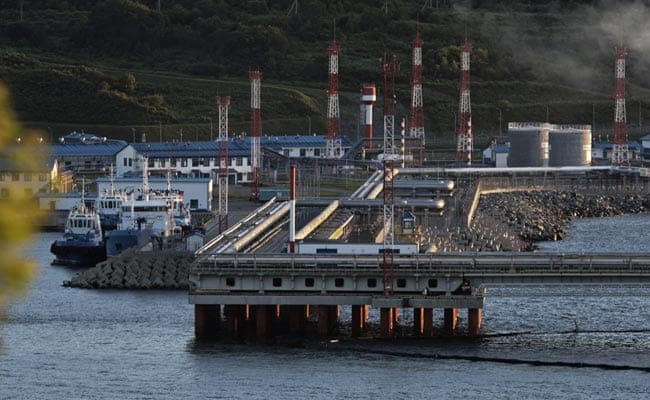
The Group of Seven (G7) nations' proposed price cap of $65-$70 a barrel on Russian oil would have little immediate impact on Moscow's revenues, as it is broadly in line with what Asian buyers are already paying, five industry sources with direct knowledge of the purchases said on Wednesday.
The goal of the price cap is to deprive Russian President Vladimir Putin of revenue to fund the military offensive in Ukraine, without causing major disruption to global oil markets that would drive energy prices higher.
Oil and gas exports are forecast to account for 42% of Russia's revenues this year at 11.7 trillion roubles ($196 billion), according to the country's finance ministry, up from 36% or 9.1 trillion roubles ($152 billion) in 2021.
The G7, including the United States, as well as the whole of the European Union and Australia, are planning to implement the price cap on sea-borne exports of Russian oil on Dec. 5.
India has emerged as the second-largest single buyer after China of Russian oil since the conflict began in February. Indian refiners have taken the place of refiners in countries that have imposed sanctions on Russian crude imports, or have steered clear of Russian crude to avoid negative publicity.
Some Indian refiners are paying the equivalent to a discount of around $25 to $35 a barrel to international benchmark Brent crude for Russian Urals crude, two sources said. Urals is Russia's main export crude.
With Brent trading at around $85 a barrel on Wednesday, that would imply a price of $50-$60 a barrel of Urals, which is below the cap.
That would indicate Western shippers and insurers living in countries that have imposed sanctions on Russia would be able to provide services to cover shipments of Russian crude without fear of being sanctioned.
It also means that Russia would not need to make good on its threat to stop supplying buyers that adhered to the price cap - because the market is below that cap anyway.
The U.S. Treasury guidance published on Tuesday said the cap will be placed on what are known as Free on Board (FOB) prices, which do not include the cost of insurance and shipping. That would be the price that the crude would be sold at if a buyer went and picked it up from a Russian terminal.
Indian refiners typically pay for crude to be delivered to them. That price includes insurance and freight.
Even for delivered Urals crude, India is paying $15-$20 a barrel below Brent, one source said. That means even the delivered cargoes are about the same level as the price cap.
Urals is trading to other buyers at a similar discount of $30-$35 to dated Brent, trading sources said. Oil produced by the sanctioned state oil firm Rosneft is at the lower end and non-Rosneft slightly higher.
The U.S. Treasury guidance does not allow buyers in countries that have imposed sanctions on Russian crude imports, such as in the United States and the European Union, to buy Russian oil even under the price cap.
($1 = 59.8000 roubles)
(Except for the headline, this story has not been edited by NDTV staff and is published from a syndicated feed.)

-
High US Salaries, No Green Card Certainty: The Financial Calculation Facing Indian H-1B Families

The suspension of PERM processing at eight technology employers does not cancel existing H-1B visas. What it does is force a question many Indian families have been avoiding: is the US salary worth tying your career and family plans to one employer?
-
Unhedged Position: Can India See An Indonesia-Style Time Correction?
The Nifty is trading below levels it first clocked in 2024. Is there, then, as I have suggested in the headline, potential that the current time correction drags on painfully for the next three-five, even ten years?
-
Navigating Friction And Energy Realities: An Analysis Of Marco Rubio's October Visit To India
Occurring at a critical juncture marked by stalled trade negotiations and escalating geopolitical pressures over global energy supplies, the visit offers a profound window into modern US-India relations.
-
India Exports Capital. Why Not Export Trusteeship?
The big question, then, is whether India can build an institution that global borrowers, investors, banks, and lawyers can trust, even without an Indian connection.
-
France's Economy & Politics Are In Crisis | The Reason Why
Let's look at how the French economy and politics evolved under Nicolas Sarkozy, Franois Hollande and Emmanuel Macron.
-
You May Inherit The Business. You Must Earn Its Credibility.
Succession tests the founder's ability to share authority as much as it tests the next generation's readiness to assume it.
-
Signing Deals Is One Thing; Making Them Work Is Another | The Week In Whys
Sometimes, things don't turn out as planned. Indian companies have lost some bids to rivals, some projects won't produce until 2030.
-
FOMC Wall, PERM Suspension, Hospital Stocks | Talking Points This Week
A PERM suspension would directly affect green-card sponsorship rather than H-1B visas, so the near-term earnings impact could remain relatively limited. The key question is whether this marks a new phase in US scrutiny of Indian IT.
-
Everything, Everywhere, All At Once: Dalal Street's Week To Forget | Joining The Dots
Visa curbs, a Starlink spat and cancer drug caps: what connects this week's shocks for Indian markets
-
India Is Going Abroad For Critical Minerals. But It May Take Years To Pay Off | The Reason Why
Although India's steps are in the right direction, they remain modest compared with India's growing dependence.









