G20 Finance Ministers Discuss Ways To Improve Tax Transparency
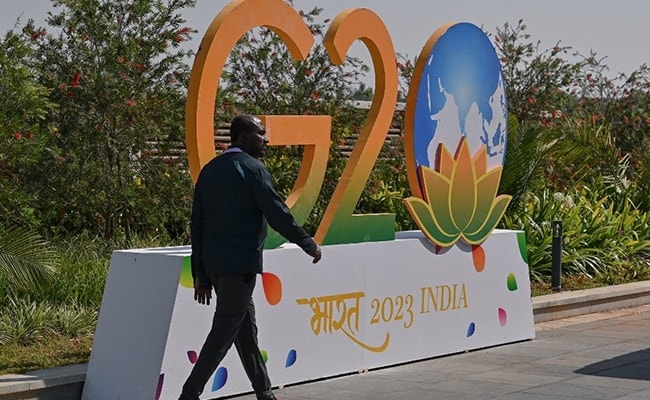
G20 finance ministers on Tuesday discussed strategies to implement strategies for overhauling the global tax norms to ensure that multinational companies pay taxes wherever they operate.
The two-day G20 finance ministers and central bank governors meeting being held under India's Presidency also discussed ways to help low and middle-income countries reeling under huge debt burden.
The meeting, chaired by Finance Minister Nirmala Sitharaman, invited views on the way forward in international taxation with regard to the implementation of measures to check tax evasion.
"Finance Ministers and Governors were also invited to discuss strategies for capacity building to support the implementation of 'Two Pillar Solution' and enhancing global #taxtransparency under #G20India Presidency," the Finance Ministry tweeted.
The proposed two-pillar solution consists of two components, including the reallocation of multinational companies' additional share of profit to the market jurisdictions where they operate.
The second component is about having a global minimum tax of 15 per cent for multinational companies.
The Organisation for Economic Co-operation and Development (OECD) in an outcome statement last week said that a few jurisdictions have expressed concerns "with some specific items" in the Multi-Lateral Convention (MLC).
"Efforts to resolve these issues are underway with a view to prepare the MLC for signature expeditiously," the OECD said.
India has been calling for G20 countries to ensure that the developing nations are guarded against any "unintended consequences" of the proposed global minimum tax deal.
Developing countries make up almost one-third of the membership of the G20 inclusive framework for taxation.
Further, delegates exchanged views on ways for advancing financial inclusion and productivity gains through innovative digital approaches, including digital technologies and digital public infrastructure, to achieve SDGs (Sustainable Development Goals) in G20 countries and beyond.
"G20 delegates were invited to discuss progress on the Financial Sector and provide guidance on #CryptoAssets ecosystem, including their regulation, supervision, and oversight," the ministry tweeted.
In another session on financial inclusion, the G20 ministers discussed issues pertaining to the financial sector and financial inclusion under Indian Presidency.
Ministers and governors discussed the progress under G20 Common Framework and engaged on ways for swift and timely resolution of debt treatment for countries most in need, the finance ministry said in a tweet.
Under the G20 Presidency, India has been pressing for ways to tackle the aggravated debt vulnerabilities facing developing nations mainly on account of the continuing geopolitical tensions and the pandemic.
It is feared that if left unaddressed, the mounting debt vulnerabilities of developing nations could trigger a global recession and push millions to extreme poverty.
In December last year, World Bank said the world's poorest countries owed USD 62 billion in annual debt service, a 35 per cent growth of over USD 46 billion in 2021, triggering a higher risk of defaults.
The low-income countries are at high risk of debt distress or are already in it and debt crises are also spreading to middle-income countries.
On the opening day of the ministerial conference on Monday, finance ministers of the G20 nations, which is a grouping of developed and developing countries, discussed the global economy and risks, issues related to crypto assets as well as policy measures for promoting green and low-carbon technologies.
(Except for the headline, this story has not been edited by NDTV staff and is published from a syndicated feed.)

-
Where You Live Shapes How You Get To Work | The Reason Why

Two-wheelers are the most popular way to get to work in India, accounting for nearly 43% of workplace commutes.
-
High US Salaries, No Green Card Certainty: The Financial Calculation Facing Indian H-1B Families
The suspension of PERM processing at eight technology employers does not cancel existing H-1B visas. What it does is force a question many Indian families have been avoiding: is the US salary worth tying your career and family plans to one employer?
-
Unhedged Position: Can India See An Indonesia-Style Time Correction?
The Nifty is trading below levels it first clocked in 2024. Is there, then, as I have suggested in the headline, potential that the current time correction drags on painfully for the next three-five, even ten years?
-
Navigating Friction And Energy Realities: An Analysis Of Marco Rubio's October Visit To India
Occurring at a critical juncture marked by stalled trade negotiations and escalating geopolitical pressures over global energy supplies, the visit offers a profound window into modern US-India relations.
-
India Exports Capital. Why Not Export Trusteeship?
The big question, then, is whether India can build an institution that global borrowers, investors, banks, and lawyers can trust, even without an Indian connection.
-
France's Economy & Politics Are In Crisis | The Reason Why
Let's look at how the French economy and politics evolved under Nicolas Sarkozy, Franois Hollande and Emmanuel Macron.
-
You May Inherit The Business. You Must Earn Its Credibility.
Succession tests the founder's ability to share authority as much as it tests the next generation's readiness to assume it.
-
Signing Deals Is One Thing; Making Them Work Is Another | The Week In Whys
Sometimes, things don't turn out as planned. Indian companies have lost some bids to rivals, some projects won't produce until 2030.
-
FOMC Wall, PERM Suspension, Hospital Stocks | Talking Points This Week
A PERM suspension would directly affect green-card sponsorship rather than H-1B visas, so the near-term earnings impact could remain relatively limited. The key question is whether this marks a new phase in US scrutiny of Indian IT.
-
Everything, Everywhere, All At Once: Dalal Street's Week To Forget | Joining The Dots
Visa curbs, a Starlink spat and cancer drug caps: what connects this week's shocks for Indian markets









