Fundraise Will Be Re-Rating Event For Yes Bank, Says CEO Prashant Kumar
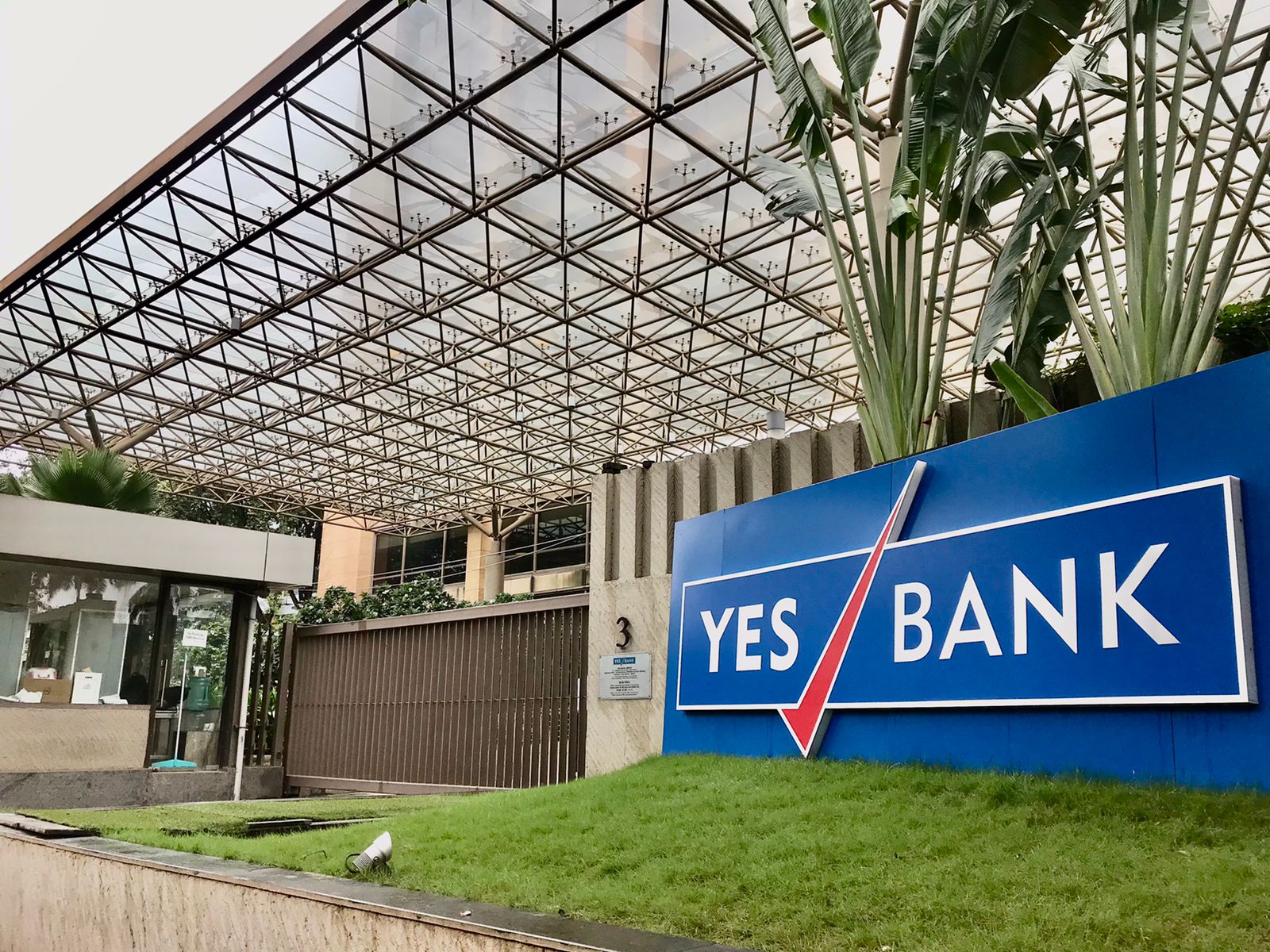
Yes Bank Ltd. raising $1.1 billion from Carlyle Group and Advent International is set to be a re-rating event for the lender, according to Managing Director and Chief Executive Officer, Prashant Kumar.
In an interview to BQ Prime, Kumar said that the fundraise will not be dilutive for existing investors.
"Firstly, the investment is coming at a value which is slightly higher than the book value. Secondly, this is also a re-rating event for the bank," Kumar said. "Not only would this open opportunities for business growth, but also reduce funding cost. The return on equity would get a boost from this capital," he said.
Analysts pointed out on Monday that while return on equity will improve, it is likely to happen only after two years.
"While RoAs are expected to improve over the next few years, we believe it is unlikely to cross double digits in the next three years on a full year basis," analysts at Macquarie Research said in a report. "This means a double-digit RoE could happen only beyond FY25 and that is too far looking into the future," the report said.
On Friday, Yes Bank informed exchanges that it will raise Rs 8,898.47 crore from Carlyle Group and Advent International, through issuance of 369 crore equity shares at Rs 13.78 per share and 256 crore warrants at Rs 14.82 per warrant. Each investor will acquire 10% stake in the bank, after the warrants are converted, the bank had said.
"Their (Carlyle and Advent) nominees coming on our board will help the bank in moving in a new direction, which is more growth-oriented and profit-oriented," Kumar said.
The equity infusion is set to raise the common equity Tier-1 capital ratio to 15.7% from 11.9% currently, he said. This will meet the bank's medium to long-term capital needs and provide a three year runway.
"After that the return on assets should add to the capital base and make us self-sufficient," Kumar said.
Through this fundraising exercise, large private equity players will enter the bank's current capital structure which only includes financial institutions and retail investors. This will improve the quality of the investors, Kumar said.
With capital no longer a constraint, Yes Bank will push up is credit growth across segments, he added.
Lack Of A Credible Moat?
While the capital infusion is definitely a positive for Yes Bank, which comes out of a reconstruction scheme introduced in March 2020, it is still not the best investment case for analysts. The reason? Lack of differentiation from existing mid-tier banks.
According to analysts at Kotak Institutional Equities, nearly all mid-tier banks are coming out of their asset quality issues and are stepping up growth, just like Yes Bank.
"Yes Bank is in a similar situation with no strong profit pools readily available...This lack of differentiation and a valuation that reflects the current situation prevents us from being constructive," Kotak analysts said in a note on Monday.
This view among analysts misses on the fact that retail and small business lending is a vast market and there are very few lenders still active on the street, Kumar said.
"Earlier, the non-bank finance companies were expanding because banks were not able to reach the customers. Now the NBFCs are not there and the market is continuously expanding. So banks targeting good quality customers and having a strong digital on-boarding process would also be continuously expanding," he said.
Yes Bank is looking to boost its loan book by focussing on products such as housing—where it was not present till recently, loans against property, personal vehicles, commercial vehicles and medium enterprises.

-
High US Salaries, No Green Card Certainty: The Financial Calculation Facing Indian H-1B Families

The suspension of PERM processing at eight technology employers does not cancel existing H-1B visas. What it does is force a question many Indian families have been avoiding: is the US salary worth tying your career and family plans to one employer?
-
Swiggy vs Eternal: Food Delivery's Two Rivals Are No Longer In The Same Race
Eternal is building a private AI assistant, dark.ai. Swiggy is still working out how to make Instamart pay, with an operating loss of Rs 895 crore in the July-September quarter while Blinkit stayed profitable.
-
Where You Live Shapes How You Get To Work | The Reason Why
Two-wheelers are the most popular way to get to work in India, accounting for nearly 43% of workplace commutes.
-
Unhedged Position: Can India See An Indonesia-Style Time Correction?
The Nifty is trading below levels it first clocked in 2024. Is there, then, as I have suggested in the headline, potential that the current time correction drags on painfully for the next three-five, even ten years?
-
Navigating Friction And Energy Realities: An Analysis Of Marco Rubio's October Visit To India
Occurring at a critical juncture marked by stalled trade negotiations and escalating geopolitical pressures over global energy supplies, the visit offers a profound window into modern US-India relations.
-
India Exports Capital. Why Not Export Trusteeship?
The big question, then, is whether India can build an institution that global borrowers, investors, banks, and lawyers can trust, even without an Indian connection.
-
France's Economy & Politics Are In Crisis | The Reason Why
Let's look at how the French economy and politics evolved under Nicolas Sarkozy, Franois Hollande and Emmanuel Macron.
-
You May Inherit The Business. You Must Earn Its Credibility.
Succession tests the founder's ability to share authority as much as it tests the next generation's readiness to assume it.
-
Signing Deals Is One Thing; Making Them Work Is Another | The Week In Whys
Sometimes, things don't turn out as planned. Indian companies have lost some bids to rivals, some projects won't produce until 2030.
-
FOMC Wall, PERM Suspension, Hospital Stocks | Talking Points This Week
A PERM suspension would directly affect green-card sponsorship rather than H-1B visas, so the near-term earnings impact could remain relatively limited. The key question is whether this marks a new phase in US scrutiny of Indian IT.









