From PM Modi, 6 Pre-Election Perks Including GST Help For Small Businesses
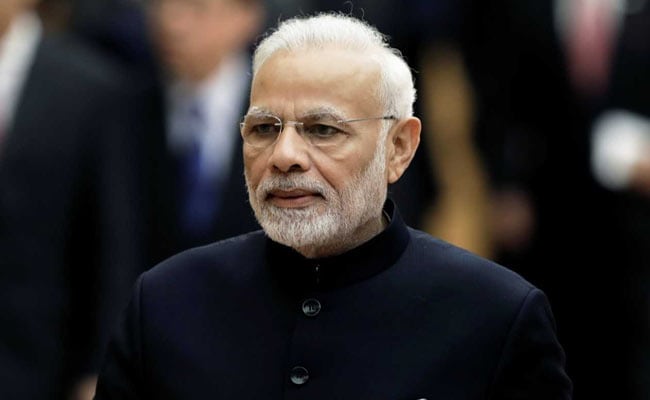
The government has recently announced a series of measures to try to win over farmers, small business owners and the less well-off, after the ruling party suffered setbacks in state elections and with a general election due in months.
The measures are likely to be a drain on finances in Asia's third-biggest economy, where Prime Minister Narendra Modi's government is trying to stick to a decade-low fiscal deficit target of 3.3 per cent of the gross domestic product.
But PM Modi's ruling Bharatiya Janata Party (BJP) has promised even more perks ahead of the general election, which must be held by May.
"They will be for development, they will be for transformation," Ravi Shankar Prasad, the minister for law, justice, and information technology, told Parliament this week, referring to inducements for the electorate.
"Who wins or loses, the people will decide. We are confident when elections happen, the country's public will again give a big majority to the ruling coalition led by Narendra Modi."
News agency Reuters reported this week that the Reserve Bank of India could transfer an interim dividend of Rs 30,000 crore-Rs 40,000 crore ($4.3 billion-$5.8 billion) to the government by March to help meet the fiscal deficit target as spending rises ahead of the election.
Following are steps the government has taken, in addition to proposals for farm-loan waivers worth billions of dollars after the main opposition Congress defeated the BJP in Madhya Pradesh, Rajasthan and Chhattisgarh in state assembly elections late last year.
Help for small businesses
The government on January 10 announced a change in Goods and Services Tax (GST) rules that would exempt an additional 20 lakh small businesses.
Businesses with annual sales of up to Rs 40 lakh ($56,700) will be exempt from GST. Currently, firms with an annual turnover of up to Rs 20 lakh are exempt. The change will come into effect in April.
Help for farmers
PM Modi is considering three options for a relief package to help farmers suffering because of low crop prices at a cost of as much as Rs 3 lakh crore ($42.82 billion), according to three government sources. The possibilities are a direct payment to all landowning farmers, compensation for those who sold produce below government prices, and a loan forgiveness programme.
Job reservation
Parliament passed a landmark bill on Wednesday reserving 10 per cent of government jobs for people outside high-income brackets. Under the amendment to the constitution, floated by the BJP, people with an annual income of less than Rs 8 lakh ($11,355), and owning less than five acres of land, would be eligible.
Onions
The government on December 28 doubled export incentives for onion farmers to 10 per cent, following a steep drop in prices of the important staple. The export incentive programme allows farmers to get credit from the government, which can be used to pay various taxes.
E-commerce rules
The government said on December 26 it would ban e-commerce companies such as Amazon.com and the Walmart-owned Flipkart Group from selling products from companies in which they have an equity interest.
The rule will be applicable from February 1, and came after complaints from retailers and traders, who say the big companies are using their control over inventory from their affiliates, and through exclusive sales agreements, to create an unfair market that allows them to sell some products at very low prices.
Sales tax cut
On December 22, the government slashed the sales tax rate on more than 20 items - including televisions, batteries and movie tickets - aiming to appeal to traders and the middle class.

-
Where You Live Shapes How You Get To Work | The Reason Why

Two-wheelers are the most popular way to get to work in India, accounting for nearly 43% of workplace commutes.
-
High US Salaries, No Green Card Certainty: The Financial Calculation Facing Indian H-1B Families
The suspension of PERM processing at eight technology employers does not cancel existing H-1B visas. What it does is force a question many Indian families have been avoiding: is the US salary worth tying your career and family plans to one employer?
-
Unhedged Position: Can India See An Indonesia-Style Time Correction?
The Nifty is trading below levels it first clocked in 2024. Is there, then, as I have suggested in the headline, potential that the current time correction drags on painfully for the next three-five, even ten years?
-
Navigating Friction And Energy Realities: An Analysis Of Marco Rubio's October Visit To India
Occurring at a critical juncture marked by stalled trade negotiations and escalating geopolitical pressures over global energy supplies, the visit offers a profound window into modern US-India relations.
-
India Exports Capital. Why Not Export Trusteeship?
The big question, then, is whether India can build an institution that global borrowers, investors, banks, and lawyers can trust, even without an Indian connection.
-
France's Economy & Politics Are In Crisis | The Reason Why
Let's look at how the French economy and politics evolved under Nicolas Sarkozy, Franois Hollande and Emmanuel Macron.
-
You May Inherit The Business. You Must Earn Its Credibility.
Succession tests the founder's ability to share authority as much as it tests the next generation's readiness to assume it.
-
Signing Deals Is One Thing; Making Them Work Is Another | The Week In Whys
Sometimes, things don't turn out as planned. Indian companies have lost some bids to rivals, some projects won't produce until 2030.
-
FOMC Wall, PERM Suspension, Hospital Stocks | Talking Points This Week
A PERM suspension would directly affect green-card sponsorship rather than H-1B visas, so the near-term earnings impact could remain relatively limited. The key question is whether this marks a new phase in US scrutiny of Indian IT.
-
Everything, Everywhere, All At Once: Dalal Street's Week To Forget | Joining The Dots
Visa curbs, a Starlink spat and cancer drug caps: what connects this week's shocks for Indian markets









