Rupee's Journey Since India's Independence, From 4 Per Dollar To Nearly 80
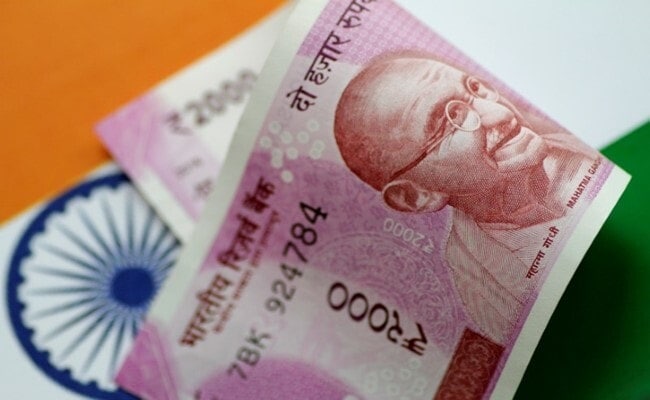
India is celebrating its 75th year of Independence and is at the crossroads of realising a resilient economic growth for its people during the next 25 years - what the government terms the country's "Amrit Kaal".
Keeping other aspects of the economy aside, let us glance at how the Indian currency rupee has fared against other global benchmark peers since 1947. The value of a country's currency is a key indicator for gauging its economic pathway.
A lot has happened on the macroeconomic front since 1947, including economic stress in the 1960s led by a slump in food and industrial production.
Then came Indo-China and Indo-Pakistan, which widened spending and gave birth to the balance of payments crisis.
With high import bills, India nearly defaulted as the foreign exchange reserves had almost dried up.
As per reports, the then Indira Gandhi-led government had to go for a steep devalue of the rupee. The value of the rupee depreciated from Rs 4.76 against the US dollar to Rs 7.5.
Then in 1991, India again found itself in a serious economic crisis as the country was not in a position to pay for its imports and service its external debt obligations.
Again, India was on the verge of default, necessitating much-needed reforms to open the country's economy.
To negate the crisis, the Reserve Bank of India reportedly devalued the rupee in two sharp tranches - 9 per cent and 11 per cent, respectively. Post the devaluation, the value of the rupee against the US dollar was around 26.
From Rs 4 during Independence against the then benchmark Pound sterling to around Rs 79 to Rs 80 against the US dollar, the rupee has depreciated by Rs 75 in the past 75 years.
"Weakness for the rupee in these years has been contributed by many factors with trade deficit now rising to record highs of $31 billion from almost no deficit at the start of independence mainly contributed by high oil import bill," said Gaurang Somaiya, Forex and Bullion Analyst, Motilal Oswal Financial Services.
"We expect that rupee could continue to fall against the US dollar going ahead, but the pace of depreciation could be getting slow following a massive war chest build by the RBI in the reform of foreign exchange reserves," Mr Somaiya added.
Even though the falling rupee may not benefit the entire economy, a devalued currency has its merits as it aids in boosting exports.
Since the economic reforms of 1991, the rupee has been depreciating at the rate of 3.74 per cent on CAGR (compound annual growth rate) against the US dollar because of inflation and interest rate differential between the US and India, said Dilip Parmar, Research Analyst at brokerage house HDFC Securities.
Between 2000 and 2007, the rupee stabilised to an extent, led by substantial foreign investments flowing into the country but later declined during the global financial crisis of 2008.
"Further looking at the past, we see major depreciation started from 2009 onwards, from 46.5 to now at 79.5, 4.3 per cent CAGR as compared to almost unchanged from 2000 to 2009, from 46.7 to 46.5," Mr Parmar added.
The US dollar, the reserve currency of almost all countries, is detrimental to other currencies, especially in times of sharp volatility in financial markets, as it weakens peer currencies.
Since the cost of imports becomes higher, domestic inflation may be triggered, which in turn may reduce purchasing power in the economy.
Rising costs of imports may also increase the current account deficit (CAD). For April-July 2022, India's trade deficit stood at $100.01 billion.
A widening trade deficit also contributes to the weakening of the rupee.
For the record, the Indian rupee in July slipped below the psychologically important level of 80 against the US dollar for the first time as high crude oil prices amid tighter global supplies boosted demands for the US dollar.
There is, however, a silver lining.
SBI Research said in its latest report said an interesting development is taking place in the global currency market as there has been a significant jump in trade in oil and other commodities in currencies such as the Renminbi, Hong Kong Dollar, and Arab Emirates Dirham at discounted rates.
"Dollar distancing is finally happening, and it is time for India to pitch Rupee as a credible, secular alternative in the changing world order?" SBI Research questioned in its report.
Coming to the share of the US dollar in global foreign exchange reserves, it has been shrinking since the start of the twenty-first century, falling close to 59 per cent as of the end of December 2021, from above 70 per cent two decades back.
The RBI also seems keen to reduce the dominance of the US dollar as it announced a mechanism to settle payments for international trade in rupees earlier this year, especially for India's exports.
That mechanism may help in internationalising the rupee in the long run.

-
Unhedged Position: Can India See An Indonesia-Style Time Correction?

The Nifty is trading below levels it first clocked in 2024. Is there, then, as I have suggested in the headline, potential that the current time correction drags on painfully for the next three-five, even ten years?
-
Navigating Friction And Energy Realities: An Analysis Of Marco Rubio's October Visit To India
Occurring at a critical juncture marked by stalled trade negotiations and escalating geopolitical pressures over global energy supplies, the visit offers a profound window into modern US-India relations.
-
India Exports Capital. Why Not Export Trusteeship?
The big question, then, is whether India can build an institution that global borrowers, investors, banks, and lawyers can trust, even without an Indian connection.
-
France's Economy & Politics Are In Crisis | The Reason Why
Let's look at how the French economy and politics evolved under Nicolas Sarkozy, Franois Hollande and Emmanuel Macron.
-
You May Inherit The Business. You Must Earn Its Credibility.
Succession tests the founder's ability to share authority as much as it tests the next generation's readiness to assume it.
-
Signing Deals Is One Thing; Making Them Work Is Another | The Week In Whys
Sometimes, things don't turn out as planned. Indian companies have lost some bids to rivals, some projects won't produce until 2030.
-
FOMC Wall, PERM Suspension, Hospital Stocks | Talking Points This Week
A PERM suspension would directly affect green-card sponsorship rather than H-1B visas, so the near-term earnings impact could remain relatively limited. The key question is whether this marks a new phase in US scrutiny of Indian IT.
-
Everything, Everywhere, All At Once: Dalal Street's Week To Forget | Joining The Dots
Visa curbs, a Starlink spat and cancer drug caps: what connects this week's shocks for Indian markets
-
India Is Going Abroad For Critical Minerals. But It May Take Years To Pay Off | The Reason Why
Although India's steps are in the right direction, they remain modest compared with India's growing dependence.
-
When Everyone Has AI, What Gives You An Edge?
India's young workforce is entering an uncertain world of work where powerful AI tools are becoming widely accessible. The advantage will belong to those who combine deep expertise with digital fluency, and the distinctly human capabilities that technology cannot manufacture.









