Foxconn Plans To Apply Separately For Chip Manufacturing Unit In India
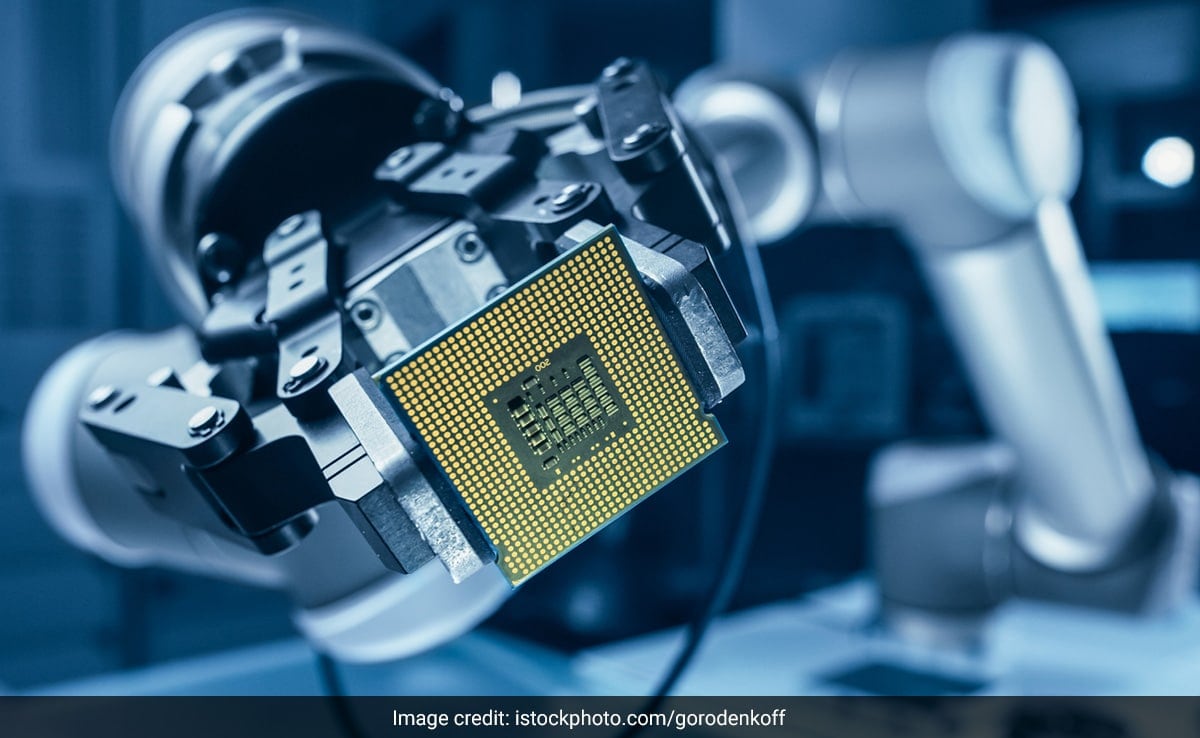
A day after announcing withdrawal from its chip-making JV with Indian conglomerate Vedanta, Foxconn on Tuesday said it is working on plans to apply for incentives under semiconductor and display fab programme, as the contract manufacturer pledged its commitment to India.
The Taiwanese electronics manufacturing giant said it has been actively reviewing landscape for optimal partners. The comment assumes significance as Foxconn has pulled out from the USD 19.5 billion semiconductor JV with Vedanta.
"We welcome a diverse set of stakeholders, both inside India and abroad, who also want to see India get to the next level and can complement Foxconn's world-class supply chain management and manufacturing efficiency," Foxconn said in a statement on Tuesday.
Pledging its commitment to India, Foxconn said it "is working toward submitting an application related to Modified Programme for Semiconductors and Display Fab Ecosystem." Foxconn said it sees the country successfully establishing a robust semiconductor manufacturing ecosystem. "It will take time. Foxconn first entered India in 2006 and we are still here. The group looks forward to growing alongside India's nascent semiconductor industry," it said.
"Foxconn has sound channels of communications with government stakeholders across India, and we have been consistent and clear with them at all levels about our continued commitment to invest in India," it said.
On its decision to pull out of the JV with Vedanta, Foxconn said both parties mutually agreed to part ways. "This is not a negative. There was recognition from both sides that the project was not moving fast enough, there were challenging gaps we were not able to smoothly overcome, as well as external issues related to the project," it said.
On reports citing the withdrawal as a negative example of the group's investment integrity, Foxconn asserted "that is absolutely not the case."
"When Foxconn course corrects, it is done only after heavy considerations on the near term impact to our stakeholders, and on the long term corporate health to the group and our shareholders."
"Building fabs from scratch in a new geography is a challenge, but Foxconn is committed to invest in India," it said. Foxconn said it has been working on challenges like this since 1980s.
"Foxconn has no intention to do anything but continue to strongly support Government's Make in India ambitions and establish a diversity of local partnerships that meet the needs of stakeholders," the company said.
On whether Foxconn has to write down losses related to the JV with Vedanta, Foxconn said it has not injected capital or fixed assets into the JV.
"We understand there is a lot of interest in Foxconn's plans and India's information ecosystem is porous. However, due to competitive and sensitive issues involved in negotiating large scale investments, Foxconn is unable to disclose more information at this time," it added.
It is pertinent to mention that the Vedanta Foxconn JV had announced setting up of India's first electronic chip manufacturing unit in Gujarat.
Union Minister for Electronics and IT Ashwini Vaishnaw had on Monday evening said both Foxconn and Vedanta are committed to the semiconductor mission and the Make-in-India programme of the country.
Minister of state for electronics and IT Rajeev Chandrasekhar had said that Foxconn's decision to pull out of Vedanta joint venture has no impact on India's semiconductor fabrication plant goal as both the companies had no prior semiconductor experience or technology and were expected to source fabrication tech from a tech partner.
He said that Vedanta through the JV has recently submitted a 40 nm fab proposal backed by a technology licensing agreement from a Global Semicon major - which is currently being evaluated by the government's Semicon India Tech Advisory group.
(Except for the headline, this story has not been edited by NDTV staff and is published from a syndicated feed.)

-
Blue Wave Will Derail the AI Trade but Won't Dismantle the AI Era | Unhedged Position

The Democrats' sweep of the US Congress will see politics collide with economic forces both over the long and short term.
-
It's Time To Take The GST Council's Bet On Trust Global
Payment records can prove India's services exports, and clear, proportionate rules can bring foreign digital sellers into the tax net.
-
Opinion | India at 38: From Innovation Overperformer to Innovation Powerhouse
India now has 453 VC-backed deep science startups, 18 of them late-stage, after 117 percent growth since 2020. Laurus Labs, at USD 9.3 billion, is the most valuable deep science company in any middle-income economy outside China.
-
Navigating Energy Crossroads: S Jaishankar's Call For Diversified Supply Chains At G20 Ministerial Meeting
As geopolitical fault lines continue to test maritime trade routes and commodity flows, Jaishankar's message remains pertinent: true economic resilience requires open markets, protected transit lines, and a genuine commitment to multilateral cooperation rather than coercion.
-
Indians Are Travelling, But Not Every Journey Is A Holiday | The Week In Whys
Pilgrims, patients and working women are the real travellers, and the system hasn't quite caught up with them.
-
Getting To Work Costs Women More | The Reason Why
It is not just about women paying more than men. It is about women paying much more in cities than in villages.
-
AI Bias In Investing Cannot Be Eliminated, But It Can Be Governed
Framing is a particularly important example as identical financial information presented in terms of gains rather than losses can lead an LLM to reach a different assessment.
-
Joining The Dots | Dark Skies, Steady Diya: Why Hope Holds This Diwali
With war, a weak rupee and foreign outflows weighing on sentiment, policymakers at the NDTV World Summit and market veterans at NDTV Profit Ignite: Diwali Edition offered the same advice: stay invested and filter out the noise.
-
The Curious Case of Equitas Small Finance Bank And A CEO Who Quit For Stock
PN Vasudevan believes persistent investor concerns over a perceived conflict of interest had become a governance overhang on Equitas Small Finance Bank's stock, even as the lender improved profitability and asset quality.










