Former RBI Chief Subbarao Says Note Ban Will Bring Down Inflation
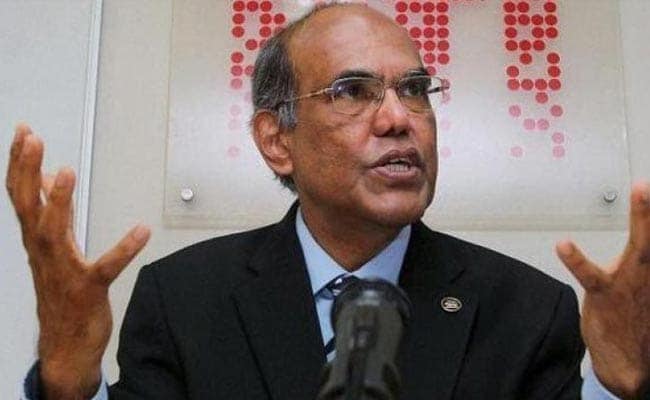
Singapore: Hailing the Indian government's decision to ban Rs 500 and Rs 1,000 notes, former RBI Governor Duvvuri Subbarao has said it would be a positive move for investment and will result in disinflation.
"Given the scenario, my own view is that it is going to be good," Mr Subbarao, said.
It would be positive for investment and result in disinflation among other benefits, he said, while commenting on the government's decision to demonetise high value currencies last week.
Importantly, it would be good for bankers to encourage people to move from hard cash to electronic transactions. It would move from a cash-intensive economy to a less cash-intensive, he said, while speaking at MintAsia's Global Banking Conclave 2016 held in Singapore yesterday.
But Mr Subbarao also stressed the importance of following up with tougher measures on currency management and not to allow the built up of "black money" again.
NRIs have also welcomed the government's decision on note ban.
Dinesh Khara, managing director for associates and subsidiaries at the State Bank of India (SBI), the country's largest financial institution said, "It is short-term pain but long-term benefit".
Applauding the move dubbed "demonetisation", Mr Khara said, "As a community of banks, we are all geared up to meet out and mitigate the current hardship."
"We are trying to figure out ways and means through which we can do it. For us also it was as much a challenge," said Mr Khara.
Cash dispensing at the Automatic Teller Machines (ATMs) are being ramped up and debit card swipe for cash at point of sale machines are being increased, he said.
SBI is sending out more and more vans with debit-card swipe machines to increase cash flow. The inflow of deposits in banks would eventually benefit the people with softer interest rates on loans, he said responding to a question at the conclave.
"Definitely, it sounds positive to me. For the medium to long-term, looks like there is a possibility of a lot of things becoming positive," added Bharat Padmanabhan, managing director and head of ASEAN and South Asia at the Standard Chartered Bank, one of the oldest foreign banks in the country.
Julian Van Kan, a managing director at BNP Paribas, added "I actually very much support what is going on," about the government's decision on the currency.
"India for us remains a very large market," he said.
The three banking executives and Mr Subbarao discussed the Indian currency move dominated banking issues with an audience of some 250 financial sector delegates at the conclave.
Sharing their views, delegates spoke of positive developments for the economy and elimination of cash hoarding as the parallel economy or "black money" that has widely hurt the overall economy, created inflation and evaded taxes.

-
High US Salaries, No Green Card Certainty: The Financial Calculation Facing Indian H-1B Families

The suspension of PERM processing at eight technology employers does not cancel existing H-1B visas. What it does is force a question many Indian families have been avoiding: is the US salary worth tying your career and family plans to one employer?
-
Swiggy vs Eternal: Food Delivery's Two Rivals Are No Longer In The Same Race
Eternal is building a private AI assistant, dark.ai. Swiggy is still working out how to make Instamart pay, with an operating loss of Rs 895 crore in the July-September quarter while Blinkit stayed profitable.
-
Where You Live Shapes How You Get To Work | The Reason Why
Two-wheelers are the most popular way to get to work in India, accounting for nearly 43% of workplace commutes.
-
Unhedged Position: Can India See An Indonesia-Style Time Correction?
The Nifty is trading below levels it first clocked in 2024. Is there, then, as I have suggested in the headline, potential that the current time correction drags on painfully for the next three-five, even ten years?
-
Navigating Friction And Energy Realities: An Analysis Of Marco Rubio's October Visit To India
Occurring at a critical juncture marked by stalled trade negotiations and escalating geopolitical pressures over global energy supplies, the visit offers a profound window into modern US-India relations.
-
India Exports Capital. Why Not Export Trusteeship?
The big question, then, is whether India can build an institution that global borrowers, investors, banks, and lawyers can trust, even without an Indian connection.
-
France's Economy & Politics Are In Crisis | The Reason Why
Let's look at how the French economy and politics evolved under Nicolas Sarkozy, Franois Hollande and Emmanuel Macron.
-
You May Inherit The Business. You Must Earn Its Credibility.
Succession tests the founder's ability to share authority as much as it tests the next generation's readiness to assume it.
-
Signing Deals Is One Thing; Making Them Work Is Another | The Week In Whys
Sometimes, things don't turn out as planned. Indian companies have lost some bids to rivals, some projects won't produce until 2030.
-
FOMC Wall, PERM Suspension, Hospital Stocks | Talking Points This Week
A PERM suspension would directly affect green-card sponsorship rather than H-1B visas, so the near-term earnings impact could remain relatively limited. The key question is whether this marks a new phase in US scrutiny of Indian IT.









