Forget Recession, Soft Landing For India Means Fast Growth, If Not The Fastest
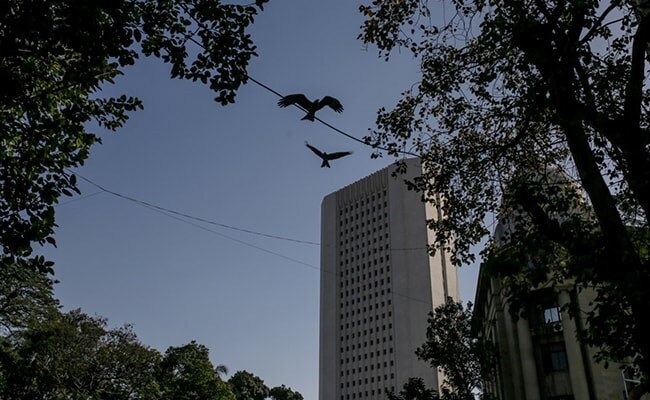
India's central bank, which last month vowed to do “whatever it takes” to fight inflation, is expected to refocus efforts toward its own version of a soft landing where it tackles price gains while trying to ensure growth remains among the world's fastest.
Economists see Reserve Bank of India Governor Shaktikanta Das and his monetary policy panel colleagues to begin dialing down the pace of interest-rate hikes this month after data showed a weaker-than-expected recovery last quarter.
Gross domestic product expansion of 13.5 per cent in the April-June period was below the RBI's 16.2 per cent estimate, a red flag for policy makers who have been consistent in their messaging about the need to preserve growth.
“I see a soft landing as a trajectory of policy rates that minimizes the growth sacrifice,” said Jayanth Rama Varma, a member of the RBI's rate-setting panel.
Mr Varma, a monetary policy hawk, had voted in favor of a half-point hike at the August meeting when Das pledged to return inflation to its target of 2 to 6 per cent from around 7 per cent.
Economists at Goldman Sachs Group Inc. have already lowered the growth forecast for India to 7 per cent from 7.2 per cent, while Citigroup Inc. cut it more sharply to 6.7 per cent.
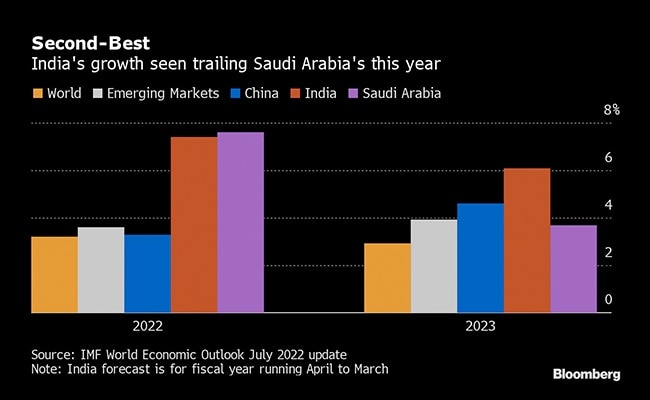
The country, which last year was the world's fastest growing major economy, is poised to lose that spot to Saudi Arabia this year, according to International Monetary Fund projections in July.
Deutsche Bank AG sees the RBI, which delivered 140 basis points of hikes since May including two half-point increments, now slowing rate hikes to quarter-point adjustments from here on.
After a couple of more increases, India could be reaching the end of a rate-hike cycle, said Arup Raha, chief economist for Asia-Pacific with Oxford Economics.
“There are lots of uncertainties for policy makers to consider,” he said. “If they're going to err, they're better off trying to promote growth as long as inflationary expectations remain anchored.”
Beyond rates, the RBI has been stepping in to protect the rupee after it breached 80 to a dollar levels a few times, which in turn helps check imported inflation.
Those interventions have made the Indian currency one of Asia's most resilient so far this year.
Elsewhere in the region, the Malaysian ringgit and the Philippine peso have declined to multi-year lows amid dollar strength on expectations the US Federal Reserve will press ahead with large hikes to tame inflation.
That is likely to force monetary authorities, including Bangko Sentral ng Pilipinas, to closely watch the Fed's actions.
For India, the dynamics are significantly different.
“India doesn't need to keep pace with the US Fed,” said Sonal Varma, an economist with Nomura Holdings Inc.
“India did not overheat like the US and there is no wage-price spiral. No one should expect India to slip into recession, nor for the inflation-targeting central bank to sacrifice growth too much,” she said.
--With assistance from Vrishti Beniwal.
(Except for the headline, this story has not been edited by NDTV staff and is published from a syndicated feed.)

-
Navigating Friction And Energy Realities: An Analysis Of Marco Rubio's October Visit To India

Occurring at a critical juncture marked by stalled trade negotiations and escalating geopolitical pressures over global energy supplies, the visit offers a profound window into modern US-India relations.
-
India Exports Capital. Why Not Export Trusteeship?
The big question, then, is whether India can build an institution that global borrowers, investors, banks, and lawyers can trust, even without an Indian connection.
-
France's Economy & Politics Are In Crisis | The Reason Why
Let's look at how the French economy and politics evolved under Nicolas Sarkozy, Franois Hollande and Emmanuel Macron.
-
You May Inherit The Business. You Must Earn Its Credibility.
Succession tests the founder's ability to share authority as much as it tests the next generation's readiness to assume it.
-
Signing Deals Is One Thing; Making Them Work Is Another | The Week In Whys
Sometimes, things don't turn out as planned. Indian companies have lost some bids to rivals, some projects won't produce until 2030.
-
FOMC Wall, PERM Suspension, Hospital Stocks | Talking Points This Week
A PERM suspension would directly affect green-card sponsorship rather than H-1B visas, so the near-term earnings impact could remain relatively limited. The key question is whether this marks a new phase in US scrutiny of Indian IT.
-
Everything, Everywhere, All At Once: Dalal Street's Week To Forget | Joining The Dots
Visa curbs, a Starlink spat and cancer drug caps: what connects this week's shocks for Indian markets
-
India Is Going Abroad For Critical Minerals. But It May Take Years To Pay Off | The Reason Why
Although India's steps are in the right direction, they remain modest compared with India's growing dependence.
-
When Everyone Has AI, What Gives You An Edge?
India's young workforce is entering an uncertain world of work where powerful AI tools are becoming widely accessible. The advantage will belong to those who combine deep expertise with digital fluency, and the distinctly human capabilities that technology cannot manufacture.
-
Wrong Labels, High Pesticide Residues Holding Back Agri Exports | The Reason Why
India needs stronger domestic food-safety and labelling standards, with best practices becoming part of everyday business for farmers, traders and food companies.










