Foreign Media On India's Cash Chaos, Why This Clampdown Is Different
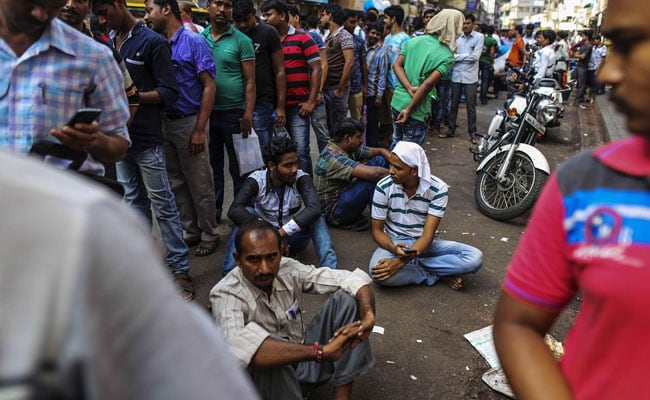
Serpentine queues spilling from banks. Parents worried that they can't provide for their families. Prime Minister Narendra Modi appealing to Indians to bear the pain for just a little while longer.
These pictures continue to dominate media coverage in Asia's third-largest economy, even two weeks after the government's shock clampdown on cash. While supporters of the move say it will help root out tax evasion and graft in the years ahead, critics question the administration's planning and execution.
What many outside the country can't comprehend, though, is the reason for the chaos. Surely global governments in the past have suddenly banned certain currency denominations, too, haven't they?
Why India's Cash Clampdown is Different
As most Indians gathered around for dinner Nov. 8, Modi blindsided citizens by announcing on national television that their 500 rupee and 1,000 rupee ($15) notes would be worthless come midnight. The step was essential to clamp down on "black money," he said, the local term for cash stashed away to avoid tax.
In terms of the share of currency in circulation, Modi's move was akin to sucking out from the system all U.S. dollar bills except about half of the $1 notes.
The decision rattled the world's second-most populous nation, where cash dominates day-to-day life. Strange tales were whispered around neighborhoods that night, of the wealthy rushing to purchase gold and luxury watches to extinguish unaccounted cash, while housewives stocked up on groceries.
Morning dawned to even more confusion, and when banks reopened the next day people lined up to exchange their now worthless currency. Newspapers reported that sacks of torn notes turned up across the country as people destroyed and abandoned them to avoid prosecution.
It's not as if the notes would turn into paper at the stroke of midnight. They'd still retain their value, the government ruled, but only if they were deposited into bank accounts by Dec. 30. Strict caps were imposed on the exchange of physical bills into new notes, and those depositing the old notes had to submit signed declarations and come armed with identification.
That doesn't sound so tough, you may say. Try this: as many as 600 million Indians probably don't have bank accounts, central bank data show. A disproportionate number of these live in more than 600,000 villages, earning daily wages in cash.
To meet demand, banks stayed open for longer hours, offering water and coffee to hassled clients. Reports began trickling in -- several disputed -- of Indians collapsing as they waited to exchange their bills under the biting sun, as well as bank staff dying under the strain of the job.
Tourists were left stranded without money and touts fleeced visitors who had been until then enjoying the beaches of Goa or the shrines of Rajasthan. Part of the reason for the trouble is that India is woefully under-banked. Cash machines are few and far between, even though demand for services has been surging over the years.
Amid rising public anger, Modi appealed for understanding. Give me 50 more days, he requested Indians in a teary-eyed address on Nov. 12. "After that, if any fault is found in my intentions or my actions, I am willing to suffer any punishment given by the country."
Modi's motive was clear: he sought to take account of each of the big bills in circulation. Of the 15 trillion rupees that needed to be turned in at banks, about a third wouldn't be deposited, the government's lawyer told the Supreme Court.
However, as the days rolled on, it became increasingly clear that the logistics weren't completely thought through. To pump out the new notes, cash machines needed to be refitted, which banks scrambled to do after being caught unaware. Printing the required number of new notes could itself take as long as six more months, according to some estimates.
Alternative payment providers saw their window of opportunity. Mobile wallet companies such as Paytm and Freecharge.in reported a jump in transactions. Again, most of this came from cities and towns. Most of India, data show, is unfamiliar with the available options.
One reason for the lack of technological options is that the availability of third-generation mobile spectrum and broadband is limited. Of India's 1.3 billion population, less than 300 million use the Internet. Of the total number of Indians who own a mobile phone, only about 26 percent have smartphones, which are essential to run payment apps.
The relatively low penetration of smartphones in India is because the cost of a smartphone is prohibitively high in the nation with the lowest living standards among major emerging markets.
That leaves Indians back where they started -- relying on cash for their daily survival, but not getting quite enough of it.
© 2016 Bloomberg L.P
(Except for the headline, this story has not been edited by NDTV staff and is published from a syndicated feed.)

-
High US Salaries, No Green Card Certainty: The Financial Calculation Facing Indian H-1B Families

The suspension of PERM processing at eight technology employers does not cancel existing H-1B visas. What it does is force a question many Indian families have been avoiding: is the US salary worth tying your career and family plans to one employer?
-
Unhedged Position: Can India See An Indonesia-Style Time Correction?
The Nifty is trading below levels it first clocked in 2024. Is there, then, as I have suggested in the headline, potential that the current time correction drags on painfully for the next three-five, even ten years?
-
Navigating Friction And Energy Realities: An Analysis Of Marco Rubio's October Visit To India
Occurring at a critical juncture marked by stalled trade negotiations and escalating geopolitical pressures over global energy supplies, the visit offers a profound window into modern US-India relations.
-
India Exports Capital. Why Not Export Trusteeship?
The big question, then, is whether India can build an institution that global borrowers, investors, banks, and lawyers can trust, even without an Indian connection.
-
France's Economy & Politics Are In Crisis | The Reason Why
Let's look at how the French economy and politics evolved under Nicolas Sarkozy, Franois Hollande and Emmanuel Macron.
-
You May Inherit The Business. You Must Earn Its Credibility.
Succession tests the founder's ability to share authority as much as it tests the next generation's readiness to assume it.
-
Signing Deals Is One Thing; Making Them Work Is Another | The Week In Whys
Sometimes, things don't turn out as planned. Indian companies have lost some bids to rivals, some projects won't produce until 2030.
-
FOMC Wall, PERM Suspension, Hospital Stocks | Talking Points This Week
A PERM suspension would directly affect green-card sponsorship rather than H-1B visas, so the near-term earnings impact could remain relatively limited. The key question is whether this marks a new phase in US scrutiny of Indian IT.
-
Everything, Everywhere, All At Once: Dalal Street's Week To Forget | Joining The Dots
Visa curbs, a Starlink spat and cancer drug caps: what connects this week's shocks for Indian markets
-
India Is Going Abroad For Critical Minerals. But It May Take Years To Pay Off | The Reason Why
Although India's steps are in the right direction, they remain modest compared with India's growing dependence.









