Flipkart Acquires Myntra To Take On Amazon
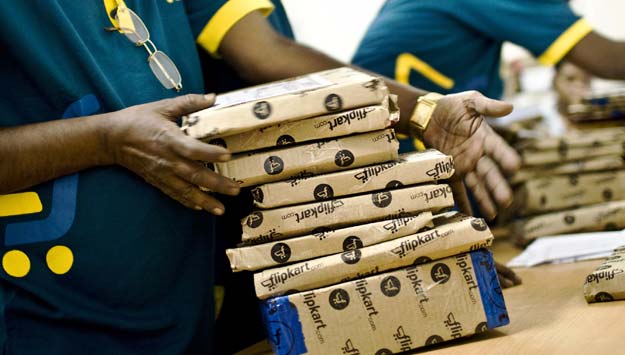
In India's biggest ever e-commerce deal, the country's largest online retailer, Flipkart, has acquired the biggest fashion retailer online - Myntra - in a deal estimated at around Rs 2,000 crore.
Homegrown Flipkart is the clear leader in India, but international giant, Amazon, is snapping at its heels in the domestic market - and so Flipkart decided to accelerate by acquiring India's biggest fashion retailer, Myntra. Myntra currently has around 30 per cent of the online fashion market.
The two online retailers will continue to work as independent entities as Myntra CEO and cofounder Mukesh Bansal will join the Flipkart board.
Flipkart's co-founder Sachin Bansal told NDTV, "I think this acquisition puts us far ahead of the competition in this space. Put together, we kind of reach 50 per cent market share. Not just that, it gives us an opportunity to grow further from here, to grow faster together."
Mukesh Bansal explained what was in the deal for Myntra. "Flipkart is the largest e-commerce company in India. They have very strong technology platforms, supply chain expertise, largest share of Indian e-commerce shoppers. So we can leverage all of that while strengthening our fashion expertise," he said.
The online entrepreneurs did not divulge the exact size of the deal. Flipkart's Sachin Bansal said, "We are not in a position to disclose details and structure of the deal, but I can assure you it is a number we are both very happy about!"
Myntra's Mukesh Bansal told NDTV, "We are quite thrilled with the valuation. It factors in what we have achieved till date as well as the potential for Myntra to grow in future, so our shareholders are quite excited with the valuation."
Flipkart and Myntra say it will be business as usual for both customers and employees.
The Flipkart head said, "Our commitment to bringing lower prices to the customers - that continues. That is the core value proposition of e-commerce itself. Because of the model being more efficient, we should be able to pass on better discounts to our customers. That is our value proposition. We can't go against our basic DNA as an e-commerce company which is about lower prices."
E-commerce companies have been growing at a rate of 40 to 45 per cent each year. The competition is clearly fierce for the millions of Indians who prefer to shop online in a market that is estimated at 3 billion dollars, or nearly Rs 20,000 crore. And Flipkart has made sure it continues to have the biggest slice of the pie.

-
Talking Points This Week: Tech Nerves, FII Buying, And A Faraway Banking Shock

The global markets are not shining this Diwali. The exception in the large markets is, India.
-
Midterm Rally Lasted A Day. The Hard Reality Of A Divided US May Last Two Years | Opinion
Between a contested AI boom, a debt ceiling that arrives in 2027 and a president with every incentive to act alone, the next two years may prove more volatile than the first day's rally suggests.
-
Blue Wave Will Derail the AI Trade but Won't Dismantle the AI Era | Unhedged Position
The Democrats' sweep of the US Congress will see politics collide with economic forces both over the long and short term.
-
It's Time To Take The GST Council's Bet On Trust Global
Payment records can prove India's services exports, and clear, proportionate rules can bring foreign digital sellers into the tax net.
-
Opinion | India at 38: From Innovation Overperformer to Innovation Powerhouse
India now has 453 VC-backed deep science startups, 18 of them late-stage, after 117 percent growth since 2020. Laurus Labs, at USD 9.3 billion, is the most valuable deep science company in any middle-income economy outside China.
-
Navigating Energy Crossroads: S Jaishankar's Call For Diversified Supply Chains At G20 Ministerial Meeting
As geopolitical fault lines continue to test maritime trade routes and commodity flows, Jaishankar's message remains pertinent: true economic resilience requires open markets, protected transit lines, and a genuine commitment to multilateral cooperation rather than coercion.
-
Indians Are Travelling, But Not Every Journey Is A Holiday | The Week In Whys
Pilgrims, patients and working women are the real travellers, and the system hasn't quite caught up with them.
-
Getting To Work Costs Women More | The Reason Why
It is not just about women paying more than men. It is about women paying much more in cities than in villages.
-
AI Bias In Investing Cannot Be Eliminated, But It Can Be Governed
Framing is a particularly important example as identical financial information presented in terms of gains rather than losses can lead an LLM to reach a different assessment.









