Financial Surplus Of Indian Households Falling Since 2017-18: RBI Report
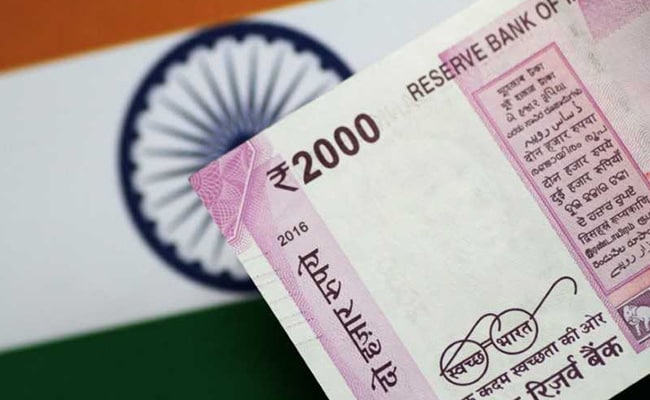
Indians, traditionally known to save money, have of late shown a behavioural change in terms of managing their money as their financial surpluses have shrunk in the last couple of years.
A recent Reserve Bank of India (RBI) report said that although currency and deposits constitute more than half of the total assets held by households, their share in total assets have been declining over time and are being replaced by equities and debt securities.
Among household assets, the share of insurance and pension funds have gradually increased, indicative of the growing risk appetite and portfolio diversification, while the major liability in household balance sheets are loans and borrowings, primarily from other depository corporations (ODC) and other financial corporations (OFCs), the report said.
According to official data, household financial assets and their surplus showed an uptick during 2015-16 on account higher currency and deposits supported by high income growth as India's gross domestic product (GDP) growth touched 8 per cent for the first time during the current decade.
"The financial surplus of households have shrunk in subsequent years. In 2017-18, both household assets and liabilities expanded but the growth in the latter outpaced the former resulting in further moderation in surplus," as per the report.
The data suggested that households are connected the most with financial corporations which act as intermediaries to channel their surpluses to deficit sectors.
The report said that "demonetisation had a significant but transitory impact on the instrument used for acquisition of financial liabilities during 2016-17, and a quick reversal in the following year. Increased number of insurance policies and mutual funds units were issued during 2016-17."
Talking of the governments, both at the Centre and states, the report said that on the governments' assets side, equity has the largest share, which is reflective of participation of the central government in corporations, both financial and non-financial. This is followed by deposits held with ODCs, more pronounced in the case of state governments which have accumulated large cash balances, reflecting poor cash management.
The financial resource gap of the general government sector remained stable during the period 2012-13 to 2016-17, widening somewhat during 2017-18. "This gap was primarily financed by the OFCs and ODCs," it said.
The resource flow from households, primarily via debt securities, picked up from the year 2014-15. Debt securities make up almost three-fourths of total financial liabilities. These debt securities act as a safe haven for investors and are statutorily mandated for scheduled commercial banks (SCBs) under the liquidity coverage ratio (LCR) in addition to the minimum statutory liquidity ratio (SLR) requirement.
In its conclusion, the report noted that in the recent years, the general government has emerged as the major deficit sector in the economy exhausting a major share of the surplus of households.

-
Where You Live Shapes How You Get To Work | The Reason Why

Two-wheelers are the most popular way to get to work in India, accounting for nearly 43% of workplace commutes.
-
High US Salaries, No Green Card Certainty: The Financial Calculation Facing Indian H-1B Families
The suspension of PERM processing at eight technology employers does not cancel existing H-1B visas. What it does is force a question many Indian families have been avoiding: is the US salary worth tying your career and family plans to one employer?
-
Unhedged Position: Can India See An Indonesia-Style Time Correction?
The Nifty is trading below levels it first clocked in 2024. Is there, then, as I have suggested in the headline, potential that the current time correction drags on painfully for the next three-five, even ten years?
-
Navigating Friction And Energy Realities: An Analysis Of Marco Rubio's October Visit To India
Occurring at a critical juncture marked by stalled trade negotiations and escalating geopolitical pressures over global energy supplies, the visit offers a profound window into modern US-India relations.
-
India Exports Capital. Why Not Export Trusteeship?
The big question, then, is whether India can build an institution that global borrowers, investors, banks, and lawyers can trust, even without an Indian connection.
-
France's Economy & Politics Are In Crisis | The Reason Why
Let's look at how the French economy and politics evolved under Nicolas Sarkozy, Franois Hollande and Emmanuel Macron.
-
You May Inherit The Business. You Must Earn Its Credibility.
Succession tests the founder's ability to share authority as much as it tests the next generation's readiness to assume it.
-
Signing Deals Is One Thing; Making Them Work Is Another | The Week In Whys
Sometimes, things don't turn out as planned. Indian companies have lost some bids to rivals, some projects won't produce until 2030.
-
FOMC Wall, PERM Suspension, Hospital Stocks | Talking Points This Week
A PERM suspension would directly affect green-card sponsorship rather than H-1B visas, so the near-term earnings impact could remain relatively limited. The key question is whether this marks a new phase in US scrutiny of Indian IT.
-
Everything, Everywhere, All At Once: Dalal Street's Week To Forget | Joining The Dots
Visa curbs, a Starlink spat and cancer drug caps: what connects this week's shocks for Indian markets









