Finance Minister Sitharaman Urges States To Dismantle Agricultural Produce Market Committees
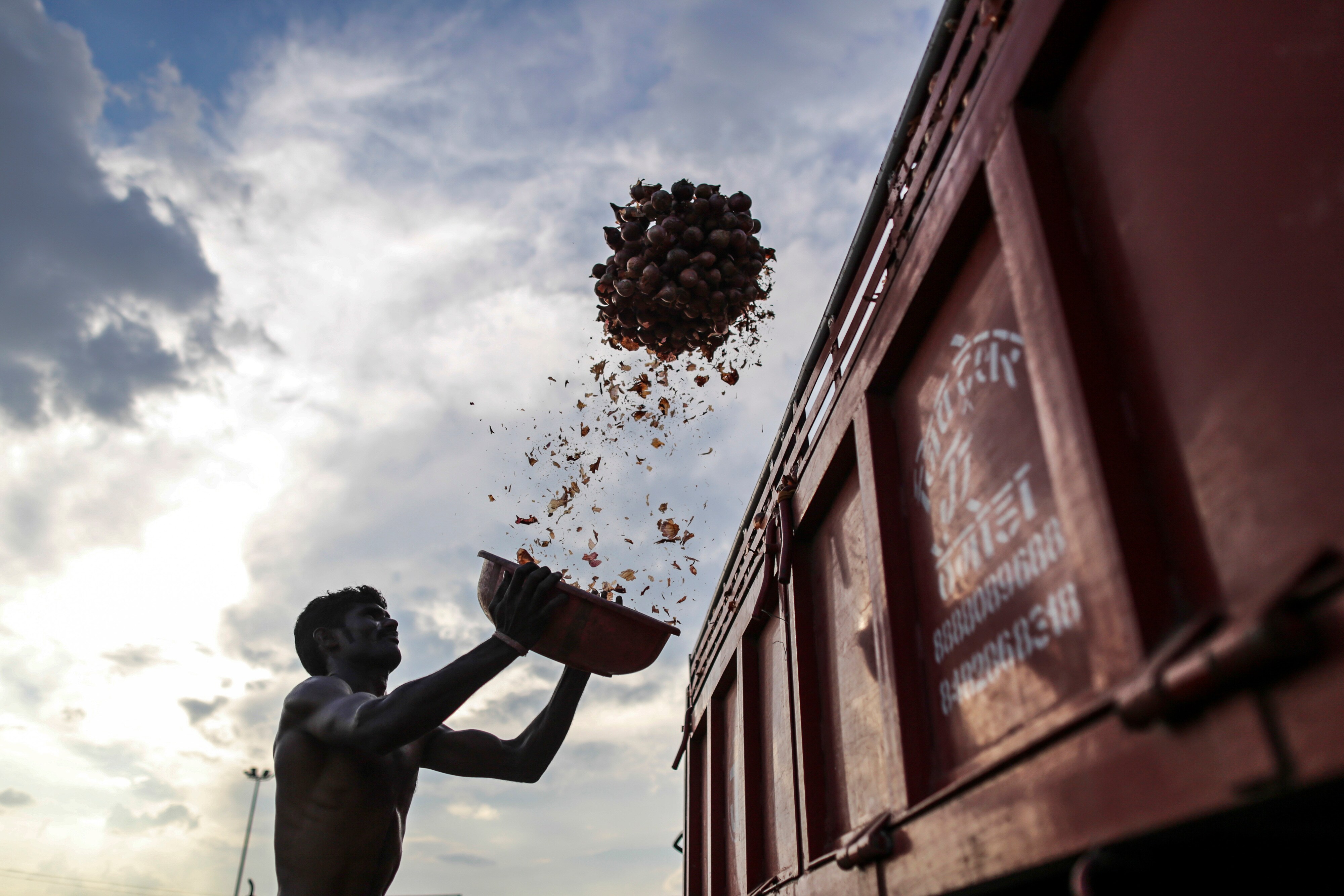
Finance Minister Nirmala Sitharaman has urged states to dismantle Agricultural Produce Marketing Committees and move towards using the National Agriculture Market, or e-NAM, for creating a unified market for agricultural commodities.
APMCs are state government-controlled agriculture marketing boards for farmers to sell their crops. The National Agriculture Market, on the other hand, is an electronic trading platform that helps farmers to trade their produce in the open market.
“The e-NAM has been pushed very much by the union government, and many states have agreed, also to take it up at their level. Together with this we're also making sure that the states are cajoled to reject the APMC,” Sitharaman said at the World Congress on Rural and Agricultural Finance in New Delhi.
Agricultural produce marketing committees have served their purpose, but now there are many difficulties associated with APMCs, Sitharaman said, adding that they are “not so efficient” in helping farmers find a better price for their produce.
Niti Aayog, in its three-year action plan until 2019-20, has called for reforming APMC Acts of state governments. Agricultural marketing suffers from policy distortions, fragmentation resulting from large number of intermediaries, the think tank said. Reformed APMC Acts should empower farmers to sell their produce to whomsoever they wish, and anyone besides APMC mandis should have the right to buy produce directly from the farmer, the action plan said.
Sitharaman also urged farmers to produce oilseeds that have high demand in the country.
Watch Nirmala Sitharaman's speech here:

-
A New Samvat Wishlist: Inclusive Prosperity And Human Development

India has strengthened its economic foundations through infrastructure, digital access and enterprise. Its next growth chapter must deepen productivity, create better livelihoods and widen participation in prosperity.
-
Love, Sex Aur Dhokha: The Audacious Plot To Spy On Jensen Huang
A Taipei dinner, a Singapore chip buyer and a suspected Chinese asset: inside the alleged spy operation that got close to NVIDIA's Jensen Huang.
-
Ten Things I Learnt This Samvat
Patience can be a trap. Cheap stocks can stay cheap. Leverage can wipe you out. What did Samvat 2082 teach us? Niraj Shah writes on 10 lessons from the year gone by.
-
Talking Points This Week: Tech Nerves, FII Buying, And A Faraway Banking Shock
The global markets are not shining this Diwali. The exception in the large markets is, India.
-
Midterm Rally Lasted A Day. The Hard Reality Of A Divided US May Last Two Years | Opinion
Between a contested AI boom, a debt ceiling that arrives in 2027 and a president with every incentive to act alone, the next two years may prove more volatile than the first day's rally suggests.
-
Blue Wave Will Derail the AI Trade but Won't Dismantle the AI Era | Unhedged Position
The Democrats' sweep of the US Congress will see politics collide with economic forces both over the long and short term.
-
It's Time To Take The GST Council's Bet On Trust Global
Payment records can prove India's services exports, and clear, proportionate rules can bring foreign digital sellers into the tax net.
-
Opinion | India at 38: From Innovation Overperformer to Innovation Powerhouse
India now has 453 VC-backed deep science startups, 18 of them late-stage, after 117 percent growth since 2020. Laurus Labs, at USD 9.3 billion, is the most valuable deep science company in any middle-income economy outside China.
-
Navigating Energy Crossroads: S Jaishankar's Call For Diversified Supply Chains At G20 Ministerial Meeting
As geopolitical fault lines continue to test maritime trade routes and commodity flows, Jaishankar's message remains pertinent: true economic resilience requires open markets, protected transit lines, and a genuine commitment to multilateral cooperation rather than coercion.









