Government, RBI Take Steps To Encourage Capital Flows, Boost Rupee
On late friday night, the government, in an effort to encourage capital flows against the backdrop of a widening current account deficit, announced that it will focus on a five-point plan that ranges from boosting foreign portfolio investor participation in the corporate bond market to easing rules on external commercial borrowings.
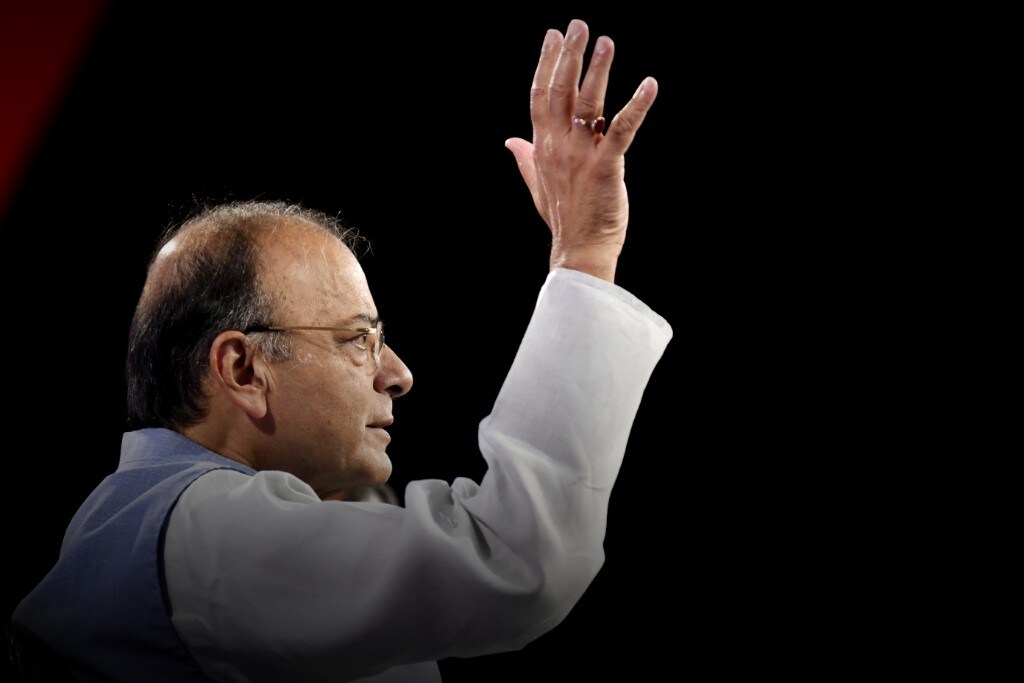
Finance Minister Arun Jaitley listed the five steps in a brief media meet.
- Mandatory hedging conditions for infrastructure loans will be reviewed.
- To permit manufacturing sector entities to avail external commercial borrowings up to $50 million with a minimum maturity of one year versus the earlier period of three years.
- Removal of exposure limits of 20 percent of foreign portfolio investors' corporate bond portfolio to a single corporate group, company and related entities, and 50 percent of any issue of corporate bonds will be reviewed.
- Exemption from withholding tax for issuance of Masala Bond issues done in FY19.
- Removal of restrictions on Indian banks' market making in Masala Bonds, including restrictions on underwriting of such bonds.
“The announcements should be seen as enablers to fund flows,”Jayesh Mehta, treasurer at Bank of America-Merrill Lynch, said to BloombergQuint. The decision to remove withholding tax on masala bonds could help that market, he added
“The removal of 20 percent concentration limit on FPI holdings will aid flows. The reviewing of hedging requirements for infrastructure External Commercial Borrowings will help bring down costs for these companies making them more lucrative compared to domestic borrowings.”
Broadly, it is positive that no drastic measures have been announced. The rupee, post this, should move in line with global peers but this should end any under-performance of the rupee.Jayesh Mehta, Treasurer, Bank of America-Merrill Lynch
Two other bankers said, on the condition of anonymity, that the measures could have some positive impact but will not result in any huge shift in fund flow patterns nor give any significant relief to the rupee. They can possibly make an impact when the global markets calm down and the view towards emerging markets improves, one of them said. At that time, it could help in easier refinancing, he added.
The outcome of the plan would depend on the inflow of short term debt, according to Abheek Barua, chief economist at HDFC Bank said. He pointed that there might not be enough appetite for masala bonds right now. “Just opening these channels might not bring adequate dollars and maybe it will have a marginal impact,” Barua said. “Some of these measures could address the funding requirements in the long term and could help in stabilising the rupee, but the impact would be marginal.”
Devendra Kumar Pant of India Ratings and Research called it a “short-term currency booster” for the market. He said the move is unlikely to give a long-term solution to “micro-fundamentals” till factors like structural rigidity in CAD, declining savings rate, and growth without macro-economic stability are reduced.
If the situation does not improve (from these measures), redemption pressure of these borrowings will have an unfavorable impact on currency value.Devendra Kumar Pant, Chief Economist, India Ratings and Research
Jaitley said, in the media meet, that earlier in the day the Reserve Bank of India Governor had made a presentation on the global economy and on external factors that could impact the Indian economy. The broad conclusion of that presentation was that India's growth rate is above that in other economies and inflation is within a moderate range.
As for external factors, the rise in the dollar and in crude prices and the trade wars are impacting India's economy despite its soundness, Jaitley said. One area that needs special attention is the rising current account deficit, he said before announcing the five measures. The government will take necessary steps to cut non-essential imports and increase exports, he added.
Jaitley also reiterated that the government will maintain fiscal deficit targets.
Several recommendations have come in from the RBI and Finance Ministry officials and more announcements will be made in the days to come, he said.
Watch the Finance Minister's brief press conference here.

-
High US Salaries, No Green Card Certainty: The Financial Calculation Facing Indian H-1B Families

The suspension of PERM processing at eight technology employers does not cancel existing H-1B visas. What it does is force a question many Indian families have been avoiding: is the US salary worth tying your career and family plans to one employer?
-
Unhedged Position: Can India See An Indonesia-Style Time Correction?
The Nifty is trading below levels it first clocked in 2024. Is there, then, as I have suggested in the headline, potential that the current time correction drags on painfully for the next three-five, even ten years?
-
Navigating Friction And Energy Realities: An Analysis Of Marco Rubio's October Visit To India
Occurring at a critical juncture marked by stalled trade negotiations and escalating geopolitical pressures over global energy supplies, the visit offers a profound window into modern US-India relations.
-
India Exports Capital. Why Not Export Trusteeship?
The big question, then, is whether India can build an institution that global borrowers, investors, banks, and lawyers can trust, even without an Indian connection.
-
France's Economy & Politics Are In Crisis | The Reason Why
Let's look at how the French economy and politics evolved under Nicolas Sarkozy, Franois Hollande and Emmanuel Macron.
-
You May Inherit The Business. You Must Earn Its Credibility.
Succession tests the founder's ability to share authority as much as it tests the next generation's readiness to assume it.
-
Signing Deals Is One Thing; Making Them Work Is Another | The Week In Whys
Sometimes, things don't turn out as planned. Indian companies have lost some bids to rivals, some projects won't produce until 2030.
-
FOMC Wall, PERM Suspension, Hospital Stocks | Talking Points This Week
A PERM suspension would directly affect green-card sponsorship rather than H-1B visas, so the near-term earnings impact could remain relatively limited. The key question is whether this marks a new phase in US scrutiny of Indian IT.
-
Everything, Everywhere, All At Once: Dalal Street's Week To Forget | Joining The Dots
Visa curbs, a Starlink spat and cancer drug caps: what connects this week's shocks for Indian markets
-
India Is Going Abroad For Critical Minerals. But It May Take Years To Pay Off | The Reason Why
Although India's steps are in the right direction, they remain modest compared with India's growing dependence.









