Finance Bill Gets Presidential Assent, Takes Effect From April 1
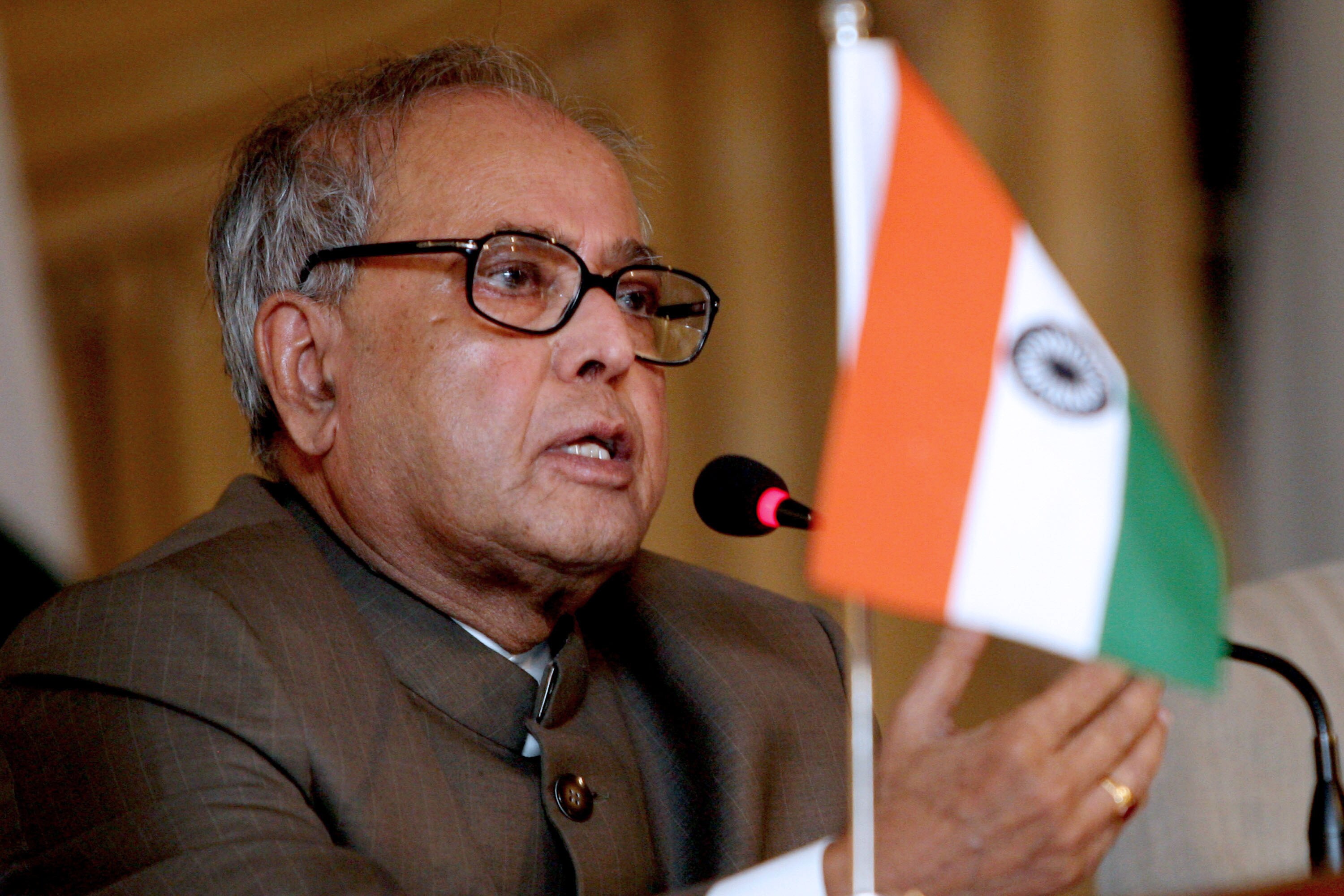
President Pranab Mukherjee has given his assent to the Finance Bill 2017 to give effect to provisions like bar on cash transactions above Rs 2 lakh and compulsory quoting of Aadhaar for filing tax returns.
“The President was kind enough to give his assent to the Finance Bill before he left for official visit to Assam on Thursday,” Revenue Secretary Hasmukh Adhia told PTI .
With this, the provisions of the Finance Bill come into effect from Saturday, he said.
This is the first-time ever the annual Budget together with taxation proposals have come into effect from the first day of the financial year 2017-18.
Scrapping a colonial-era tradition of presenting the Budget at the end of February, Finance Minister Arun Jaitley had for the first time in the history of independent India presented the annual accounts on February 1.
The legislative process of getting approvals for demands for grants or spending, general Budget as well as taxation proposals contained in the Finance Bill 2017 were all completed by March 30. President's assent was taken the very next day.
This will give the government more time to implement welfare spending programmes and taxation plans.
Previously, when the Budget was presented at the end of February, the three-stage Parliament approval process used to get completed some time in mid-May, weeks ahead of onset of monsoon rains. This meant government departments would start spending only from August-end or September after the monsoon ends.
Besides advancing the presentation date, the Budget scrapped the Plan and non-Plan distinction and merged the Railway budget with it, ending a nearly century-long practice.
Advancement of the Budget will give government departments more leeway to spend as well as allow companies time to adapt to business and taxation plans.
Adhia said all taxation and other proposals in the Finance Bill 2017 have come into effect from Saturday.
Among the most important is limiting cash transaction to Rs 2 lakh, at par with the current requirement of quoting Permanent Account Number (PAN) for cash spending.
Penalty for violating this is a fine equivalent to the amount of transaction, he said. The fine will be payable by the person or the establishment receiving the cash.
Also, Aadhaar number is now a must while applying for PAN as well as filing of tax returns.
The Finance Bill also provides that a person holding PAN as on July 1, 2017, has to intimate his Aadhaar number to the authorities in a manner which will be notified by the government.
It also amends the Companies Act of 2013 to make donations by companies to electoral trusts only through account payee cheque, bank draft or electronic transfer.
The language has also been tweaked to provide for every company disclosing in its profit and loss account the total amount contributed to such trusts.
The move is in sync with Jaitley's Budget proposal of introducing bearer electoral bonds, which could be purchased by a donor using cheques from a scheduled bank and encashed only through a notified bank account of a political party within the limited duration of such instrument.
Adhia said rules for electoral bonds will be notified within this month.
The President's assent to the Finance Bill also means that as many as seven appellate tribunals will now be dissolved and their work taken over by other existing ones.
The tribunals scrapped include the Competition Appellate Tribunal, whose functions will be taken by the National Company Law Appellate Tribunal (NCLAT).
The Airports Economic Regulatory Authority Appellate Tribunal and the Cyber Appellate Tribunal will be replaced and their functions would be taken over by the Telecom Disputes Settlement and Appellate Tribunal (TDSAT).
Also, the Copyright Board will be dissolved and its functions will go to the Intellectual Property Appellate Board.
The National Highways Tribunal will be replaced and its functions will be taken over by the Airport Appellate Tribunal while the job of the Employees Provident Fund Appellate Tribunal will be handled by the Industrial Tribunal.

-
Unhedged Position: Can India See An Indonesia-Style Time Correction?

The Nifty is trading below levels it first clocked in 2024. Is there, then, as I have suggested in the headline, potential that the current time correction drags on painfully for the next three-five, even ten years?
-
Navigating Friction And Energy Realities: An Analysis Of Marco Rubio's October Visit To India
Occurring at a critical juncture marked by stalled trade negotiations and escalating geopolitical pressures over global energy supplies, the visit offers a profound window into modern US-India relations.
-
India Exports Capital. Why Not Export Trusteeship?
The big question, then, is whether India can build an institution that global borrowers, investors, banks, and lawyers can trust, even without an Indian connection.
-
France's Economy & Politics Are In Crisis | The Reason Why
Let's look at how the French economy and politics evolved under Nicolas Sarkozy, Franois Hollande and Emmanuel Macron.
-
You May Inherit The Business. You Must Earn Its Credibility.
Succession tests the founder's ability to share authority as much as it tests the next generation's readiness to assume it.
-
Signing Deals Is One Thing; Making Them Work Is Another | The Week In Whys
Sometimes, things don't turn out as planned. Indian companies have lost some bids to rivals, some projects won't produce until 2030.
-
FOMC Wall, PERM Suspension, Hospital Stocks | Talking Points This Week
A PERM suspension would directly affect green-card sponsorship rather than H-1B visas, so the near-term earnings impact could remain relatively limited. The key question is whether this marks a new phase in US scrutiny of Indian IT.
-
Everything, Everywhere, All At Once: Dalal Street's Week To Forget | Joining The Dots
Visa curbs, a Starlink spat and cancer drug caps: what connects this week's shocks for Indian markets
-
India Is Going Abroad For Critical Minerals. But It May Take Years To Pay Off | The Reason Why
Although India's steps are in the right direction, they remain modest compared with India's growing dependence.
-
When Everyone Has AI, What Gives You An Edge?
India's young workforce is entering an uncertain world of work where powerful AI tools are becoming widely accessible. The advantage will belong to those who combine deep expertise with digital fluency, and the distinctly human capabilities that technology cannot manufacture.









