Fewer Indians Use Tobacco, But India Still World’s Second Largest Consumer, Producer
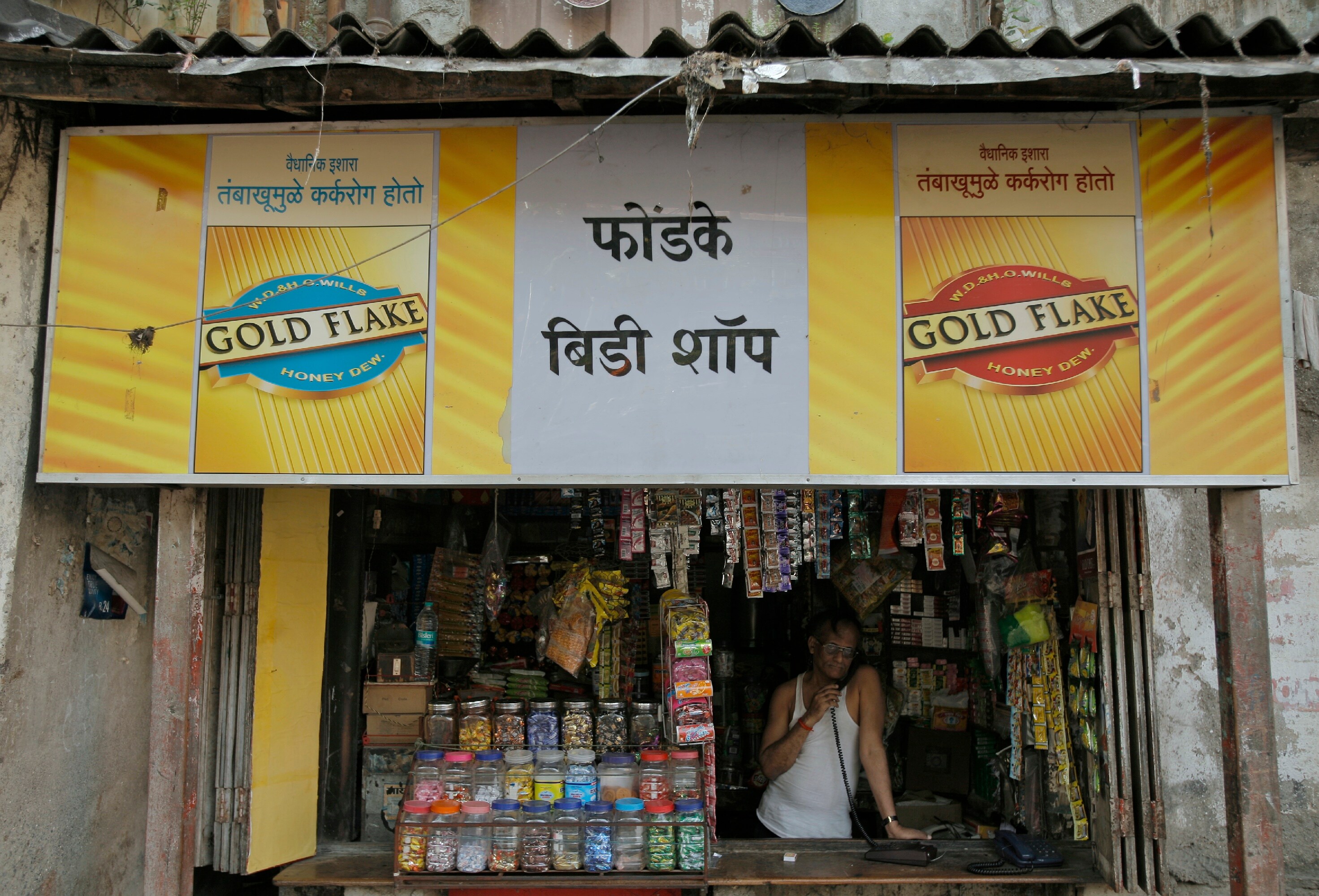
Fewer Indians used tobacco in 2015-16 than a decade ago, but only China consumes and produces more tobacco, keeping cancer rates high, according to the latest national health data.
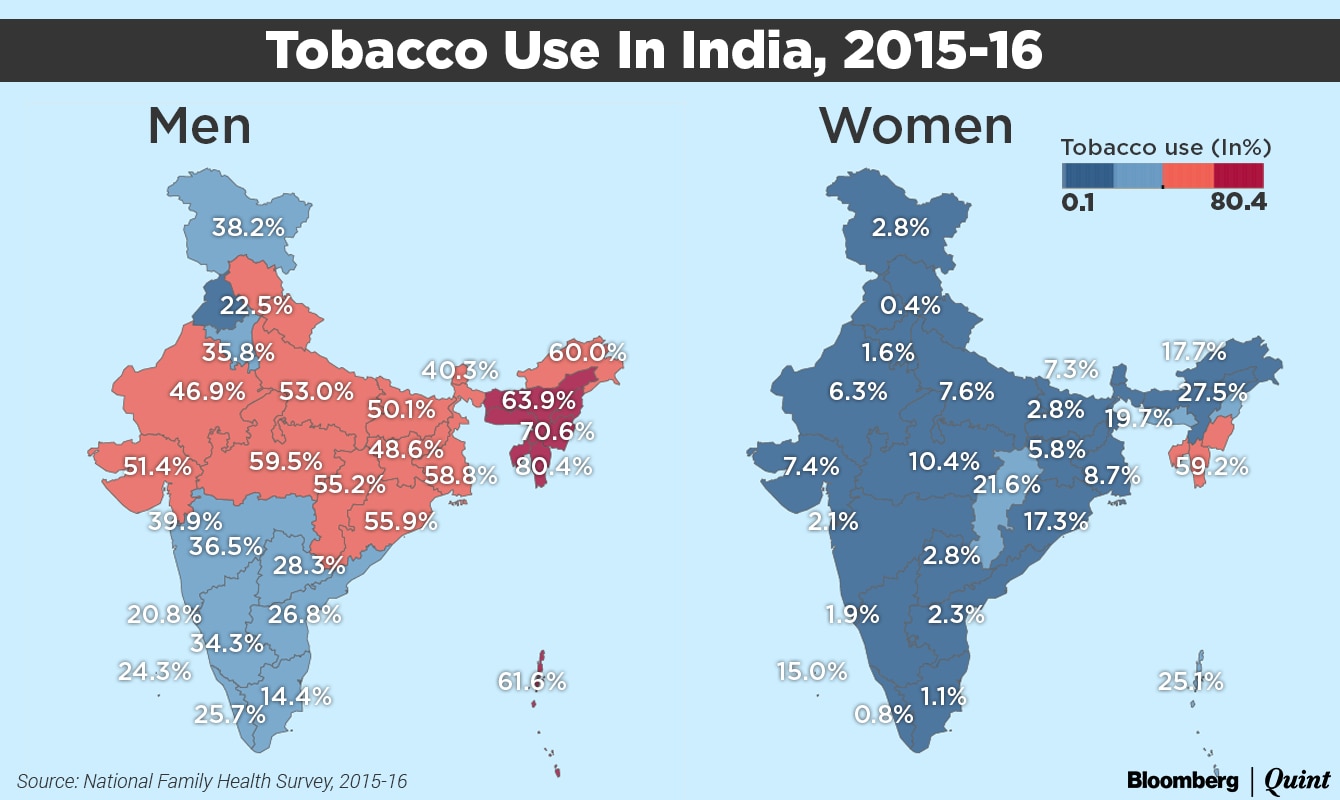
Tobacco consumption in India is the highest in the six north-eastern states of Mizoram, Meghalaya, Manipur, Nagaland, Tripura and Assam. On an average, 70.7 percent men use tobacco in some form or the other, according to data from the National Family Health Survey 2015-16 (NFHS-4). This figure is 26 percentage points higher than the national average.
Mizoram tops the north east list, with 80.4 percent men and 59.2 percent women between 15 and 49 years of age consuming tobacco. When ranked for men using tobacco, it is followed by Meghalaya (72.2 percent), Manipur (70.6 percent), Nagaland (69.4 percent), Tripura (67.8 percent) and Assam (63.9 percent).
At 37.7 percent, the female average for tobacco users in Manipur, Tripura, Meghalaya and Nagaland was way above the national average of 6.8 percent.
The north-eastern states also report a higher risk for cancer, about 112 men and 60 women. On an average 1,000 die of cancer, while the national average is 47 for men and 44 for women, according to the 2012 Million Death Study published in The Lancet.
Tobacco use is one of the main risk factors for a number of chronic diseases, including cancer, lung diseases and cardiovascular diseases. And not just in the north east, elsewhere too millions of Indians continue to be vulnerable to these diseases.
29.3 percent female, 30.6 percent male tobacco users tried to drop the habit in the last 12 months.
The latest national average for tobacco consumption, according to NFHS shows, 4-44.5 percent men and 6.8 percent women, is lower than 2005-06 figures. Tobacco use has fallen in India by 12.5 percentage points for men and four percentage points for women over a decade. But India is still the second highest producer and consumer of tobacco, according to National Tobacco Control Programme.
In 2011, the total cost of dealing with diseases related to tobacco use among the 35-69 age group in India amounted to Rs 1.05 lakh crore ($22.4 billion), according to this 2014 study by the ministry of health and family welfare. This is 1.16 percent of the gross domestic product and 12 percent more than the combined state and central government expenditure on healthcare in 2011.
The survey also shows that 29.3 percent female and 30.6 percent male tobacco users in the 15-49 age group tried to wean themselves off tobacco in the 12 months preceding the survey. In Mizoram, tobacco use has fallen by 1.6 percentage points and three percentage points for women and men, respectively, since 2005-06.
.png)
Punjab and Puducherry with 19.2 percent and 14.4 percent, respectively, recorded the lowest use of tobacco among men. Fewer than 1 percent women in the 15-49 age group use any kind of tobacco in Himachal Pradesh, Daman & Diu, Kerala, Chandigarh and Puducherry.
More Rural Indians Use Tobacco
Both men and women (between 15 and 49 years of age) use more tobacco in India's villages than its cities. Among urban women, 4.4 percent use it compared to the 8.1 percent women in villages. For men in villages, the figure is 48 percent and in cities, 38.9 percent.
Even on the question of trying to go off tobacco, more urban women users (33 percent) make an effort than women users in villages (28.2 percent). But the trend is reversed for men - 31.2 percent male tobacco users in villages and 29.6 percent in cities tried to wean themselves off tobacco.
Not a single state has more than 50 percent of male and female tobacco consumers (in the 15-49 age group) attempting to quit consumption of tobacco in any form in 12 months preceding the survey.
Why India Needs To Further Raise Taxes On Tobacco Products
The number of those using smokeless tobacco (25.9 percent) is almost double that of those who smoke (14 percent), according to Global Adult Tobacco Survey 2009-10.
“Tobacco is responsible for nearly 50 percent cancers in India and 90 percent of mouth cancers. Half of the mouth cancer patients die within 12 months of diagnosis,” said Pankaj Chaturvedi, professor and surgeon at the Tata Memorial Hospital in Mumbai.
Tobacco caused 42 percent of all cancers in men and 18 percent of all cancers in women, according to the Million Death Study. In all, tobacco caused 1,20,000 cancers with twice as many oral cancers as lung cancer. This highlights the high prevalence of tobacco chewing in India.
“Raising taxes on tobacco products is an evidence-based tool to reduce tobacco use. We appeal to the Indian government to levy highest Goods and Services Tax on all tobacco products including beedi,” said Michelle Reyes, an expert with the International Union Against TB and Lung Disease, in a statement released on the eve of the International Tobacco Day.
Ojaswi Rao is an intern with IndiaSpend.
This article has been published in arrangement with IndiaSpend.

-
High US Salaries, No Green Card Certainty: The Financial Calculation Facing Indian H-1B Families

The suspension of PERM processing at eight technology employers does not cancel existing H-1B visas. What it does is force a question many Indian families have been avoiding: is the US salary worth tying your career and family plans to one employer?
-
Swiggy vs Eternal: Food Delivery's Two Rivals Are No Longer In The Same Race
Eternal is building a private AI assistant, dark.ai. Swiggy is still working out how to make Instamart pay, with an operating loss of Rs 895 crore in the July-September quarter while Blinkit stayed profitable.
-
Where You Live Shapes How You Get To Work | The Reason Why
Two-wheelers are the most popular way to get to work in India, accounting for nearly 43% of workplace commutes.
-
Unhedged Position: Can India See An Indonesia-Style Time Correction?
The Nifty is trading below levels it first clocked in 2024. Is there, then, as I have suggested in the headline, potential that the current time correction drags on painfully for the next three-five, even ten years?
-
Navigating Friction And Energy Realities: An Analysis Of Marco Rubio's October Visit To India
Occurring at a critical juncture marked by stalled trade negotiations and escalating geopolitical pressures over global energy supplies, the visit offers a profound window into modern US-India relations.
-
India Exports Capital. Why Not Export Trusteeship?
The big question, then, is whether India can build an institution that global borrowers, investors, banks, and lawyers can trust, even without an Indian connection.
-
France's Economy & Politics Are In Crisis | The Reason Why
Let's look at how the French economy and politics evolved under Nicolas Sarkozy, Franois Hollande and Emmanuel Macron.
-
You May Inherit The Business. You Must Earn Its Credibility.
Succession tests the founder's ability to share authority as much as it tests the next generation's readiness to assume it.
-
Signing Deals Is One Thing; Making Them Work Is Another | The Week In Whys
Sometimes, things don't turn out as planned. Indian companies have lost some bids to rivals, some projects won't produce until 2030.
-
FOMC Wall, PERM Suspension, Hospital Stocks | Talking Points This Week
A PERM suspension would directly affect green-card sponsorship rather than H-1B visas, so the near-term earnings impact could remain relatively limited. The key question is whether this marks a new phase in US scrutiny of Indian IT.









