Festivals, Fast Fashion To Drive 8-10% Revenue Growth For Retailers This Year, Crisil Says

Higher demand stemming from a normal monsoon, easing inflation, the festive and wedding season, and increasing preference for fast fashion will contribute to 8–10% revenue growth in the current fiscal for the organised retail apparel sector, according to Crisil Ratings.
Slow area addition, existing store rationalisation and stable input prices will also support operating margin.
Revenue growth in fiscal 2025 will be slower than the compound annual growth rate of 11–12% seen between 2018 and 2023, the report said. Revenue density is expected to remain flat at Rs 11,900 per square foot.
As a result, retailers are exercising caution in opening new stores and instead prioritising efficiency improvements in existing locations, controlling costs, and minimising reliance on external debt.
The strategy is projected to help maintain operating margins between 7.2% and 7.4%, even amid ongoing high marketing expenses, thereby ensuring stable credit profiles, Crisil said, after analysing 37 apparel retailers that account for over a third of the organised industry.
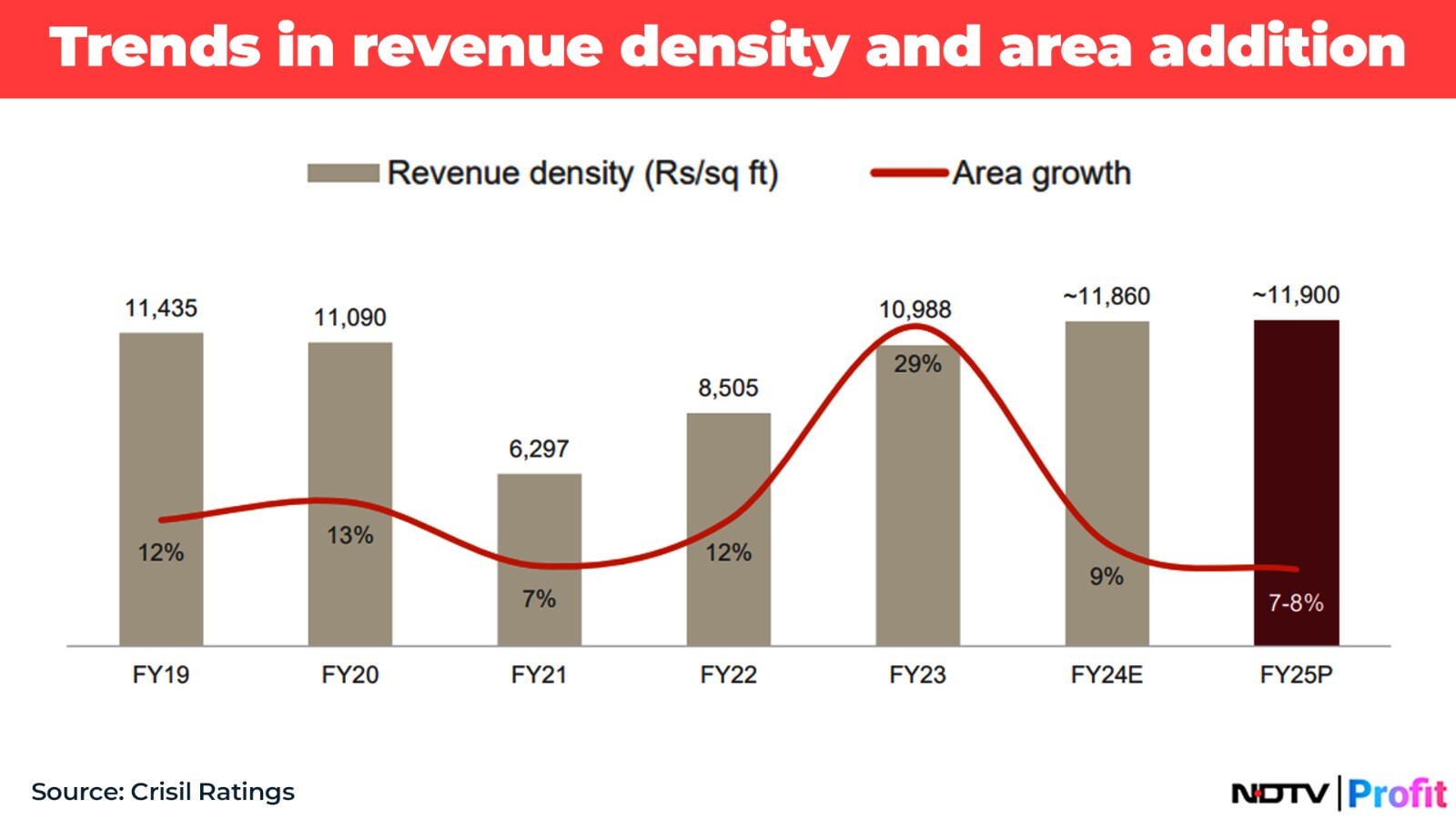
The strategy is projected to help maintain operating margins between 7.2% and 7.4%, even amid ongoing high marketing expenses.
"The marginal increase in profitability this fiscal will be driven by apparel retailers streamlining existing stores and opening new stores only as necessary, given that demand has not fully recovered," said Associate Director Anil More.
"Besides, the need to offer higher discounts and incur marketing spends to attract customers will limit the overall improvement in operating margin to 7.2–7.4% against 7.0% in fiscal 2024."
Crisil said improved inventory management and stable input costs will help prevent significant inventory write-offs this year. This marks a contrast to last year, when sharp fluctuations in costs reduced profitability by 100-110 basis points.
Changing Trends
Crisil said retailers are adjusting business strategies, enhancing supply chain efficiency and focussing on new trends, like in fast fashion, to meet evolving consumer behaviour.
The mass market is the largest segment in the apparel business, followed by premium and luxury. Fast fashion has become a major subset of the mass market.
"The mass market segment accounts for ~60% of total sales now, compared with ~56% before the pandemic, due to the rising popularity of fast fashion, which is expected to be the primary revenue driver this fiscal," said Anuj Sethi, senior director at Crisil.

-
Why Swapping Your Old Gold Can Trigger A Rs 5 Lakh Tax Bill, And How You Can Avoid It Legally

Swapping old gold for new is taxed as a sale and a fresh purchase. Getting your own gold remade can cut most of that bill, though it has its own costs.
-
The AI Trade is Done. The Real Opportunity for Investors Starts in 2027 | Unhedged Position
As pureplay AI stocks plunge and circular, capex-led financing unwinds, 2027 is set to be a year of reckoning for AI companies. Yet the bust clears the way for a better opportunity for investors in 2027 -- shifting the spotlight from AI builders to the companies using AI.
-
Leadership As Mission: Why The Age Of AI Demands More Human Leadership
Debjani Ghosh examines how AI is changing leadership, arguing that its success must be measured by its impact on people and the accountability of those guiding its use.
-
We May Need Another Tukaram Mundhe To Fight Air Pollution | The Reason Why
Developers may install basic measures such as sprinklers and green nets, resume work, and continue violating rules when this equipment stops working.
-
Extracting Value From Battery Scrap Could Be Challenging For India | The Reason Why
A discarded lithium-ion battery still contains valuable materials such as lithium, nickel and cobalt. These can be recovered and reused. When such batteries are crushed and shredded, they produce a dark powder called black mass.
-
One El Nino, India Can Handle. Two Could Break The Granary
India's grain stocks can absorb one bad year, but a second El Nino could drain the buffer in two to three years, economists say.
-
India's Troika Of Good Luck | Joining The Dots
As Jensen Huang's exit drags Nvidia down, a cooling AI trade and resilient earnings have revived investor interest in India. A likely RBI rate hike looms.
-
Talking Points This Week: Leadership Shock At Nvidia, Earnings Strength, And The Fog Over Hormuz
The Anthropic IPO pricing and first trading day, Nvidia's upcoming earnings, and any fresh signals from Iran will set the tone for the following week.
-
Signature Play: The Classic Cocktail Is Dead. Or Is It?
Classic cocktails are disappearing from India's cocktail menus. But they're still being ordered, taught to bartenders and borrowed from. So, who's really having the last drink?
-
A New Samvat Wishlist: Inclusive Prosperity And Human Development
India has strengthened its economic foundations through infrastructure, digital access and enterprise. Its next growth chapter must deepen productivity, create better livelihoods and widen participation in prosperity.









