Fed Raises Rates, Unveils Balance Sheet Cuts In Sign Of Confidence
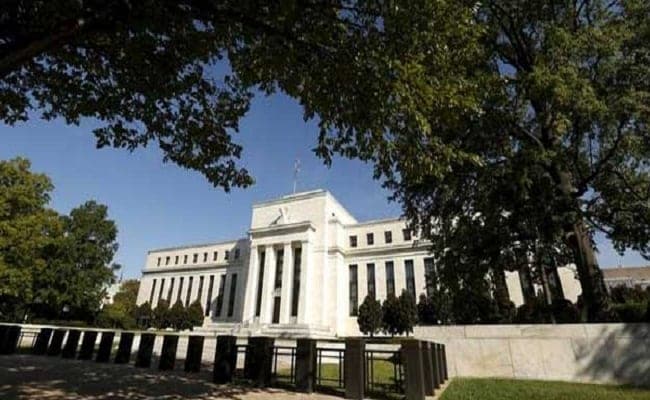
Washington: The Federal Reserve raised interest rates on Wednesday for the second time in three months and said it would begin cutting its holdings of bonds and other securities this year, signalling its confidence in a growing U.S. economy and strengthening job market.
In lifting its benchmark lending rate by a quarter percentage point to a target range of 1.00 percent to 1.25 percent and forecasting one more hike this year, the Fed seemed to largely brush off a recent run of mixed economic data.
The U.S. central bank's rate-setting committee said the economy had continued to strengthen, job gains remained solid and indicated it viewed a recent softness in inflation as largely transitory.
The Fed also gave a first clear outline on its plan to reduce its $4.2 trillion portfolio of Treasury bonds and mortgage-backed securities, most of which were purchased in the wake of the 2007-2009 financial crisis and recession.
It expects to begin the normalization of its balance sheet this year, gradually ramping up the pace. The plan, which would feature halting reinvestments of ever-larger amounts of maturing securities, did not specify the overall size of the reduction.
"What I can tell you is that we anticipate reducing reserve balances and our overall balance sheet to levels appreciably below those seen in recent years but larger than before the financial crisis," Fed Chair Janet Yellen said in a press conference following the release of the Fed's policy statement.
She added that the balance sheet normalization could be put into effect "relatively soon."
The initial cap for the reduction of the Fed's Treasuries holdings would be set at $6 billion per month, increasing by $6 billion increments every three months over a 12-month period until it reached $30 billion per month.
For agency debt and mortgage-backed securities, the cap will be $4 billion per month initially, rising by $4 billion at quarterly intervals over a year until it reached $20 billion per month.
U.S. stocks edged lower and prices of U.S. Treasuries pared gains after the Fed's policy statement. The dollar was largely flat against a basket of currencies after reversing earlier losses, while the price of gold fell.
"The Fed announcing an update to their reinvestment principles leaves September open (for) the start of balance sheet runoff, and the fact that they haven't slowed their projected path of rate hikes suggest they can do both balance sheet and rate hikes at the same time," said Gennadiy Goldberg, interest rate strategist at TD Securities.
EYES ON INFLATION
The Fed has now raised rates four times as part of a normalization of monetary policy that began in December 2015. The central bank had pushed rates to near zero in response to the financial crisis.
Fed policymakers also released their latest set of quarterly economic forecasts, which showed only temporary concern about inflation and continued confidence about economic growth in the coming years.
They forecast U.S. economic growth of 2.2 percent in 2017, an increase from the previous projection in March. Inflation was expected to be at 1.7 percent by the end of this year, down from the 1.9 percent previously forecast.
A retreat in inflation over the past two months has caused jitters that the shortfall, if sustained, could alter the pace of future rate hikes. But the Fed maintained its forecast for three rate hikes next year.
The Fed's preferred measure of underlying inflation has retreated to 1.5 percent, from 1.8 percent earlier this year, and has run below the central bank's 2 percent target for more than five years.
Earlier on Wednesday, the Labor Department reported consumer prices unexpectedly fell in May, the second drop in three months.
Yellen indicated the Fed still remained confident inflation would rise to its target over the medium term, bolstered by what she described as a robust labour market that is continuing to strengthen.
The Fed's estimates for the unemployment rate by the end of this year moved down to 4.3 percent, the current level, and to 4.2 percent in 2018, indicating the Fed believes the labour market will continue to tighten.
The median estimate of the long-run neutral rate, which is seen as the level of monetary policy that neither boosts nor slows the economy, was unchanged at 3.0 percent.
Minneapolis Fed President Neel Kashkari dissented in Wednesday's decision.
(This story has not been edited by NDTV staff and is auto-generated from a syndicated feed.)

-
Talking Points This Week: Tech Nerves, FII Buying, And A Faraway Banking Shock

The global markets are not shining this Diwali. The exception in the large markets is, India.
-
Midterm Rally Lasted A Day. The Hard Reality Of A Divided US May Last Two Years | Opinion
Between a contested AI boom, a debt ceiling that arrives in 2027 and a president with every incentive to act alone, the next two years may prove more volatile than the first day's rally suggests.
-
Blue Wave Will Derail the AI Trade but Won't Dismantle the AI Era | Unhedged Position
The Democrats' sweep of the US Congress will see politics collide with economic forces both over the long and short term.
-
It's Time To Take The GST Council's Bet On Trust Global
Payment records can prove India's services exports, and clear, proportionate rules can bring foreign digital sellers into the tax net.
-
Opinion | India at 38: From Innovation Overperformer to Innovation Powerhouse
India now has 453 VC-backed deep science startups, 18 of them late-stage, after 117 percent growth since 2020. Laurus Labs, at USD 9.3 billion, is the most valuable deep science company in any middle-income economy outside China.
-
Navigating Energy Crossroads: S Jaishankar's Call For Diversified Supply Chains At G20 Ministerial Meeting
As geopolitical fault lines continue to test maritime trade routes and commodity flows, Jaishankar's message remains pertinent: true economic resilience requires open markets, protected transit lines, and a genuine commitment to multilateral cooperation rather than coercion.
-
Indians Are Travelling, But Not Every Journey Is A Holiday | The Week In Whys
Pilgrims, patients and working women are the real travellers, and the system hasn't quite caught up with them.
-
Getting To Work Costs Women More | The Reason Why
It is not just about women paying more than men. It is about women paying much more in cities than in villages.
-
AI Bias In Investing Cannot Be Eliminated, But It Can Be Governed
Framing is a particularly important example as identical financial information presented in terms of gains rather than losses can lead an LLM to reach a different assessment.









