Farm Loan Waiver Gets Thumbs-Down From Former Central Bankers
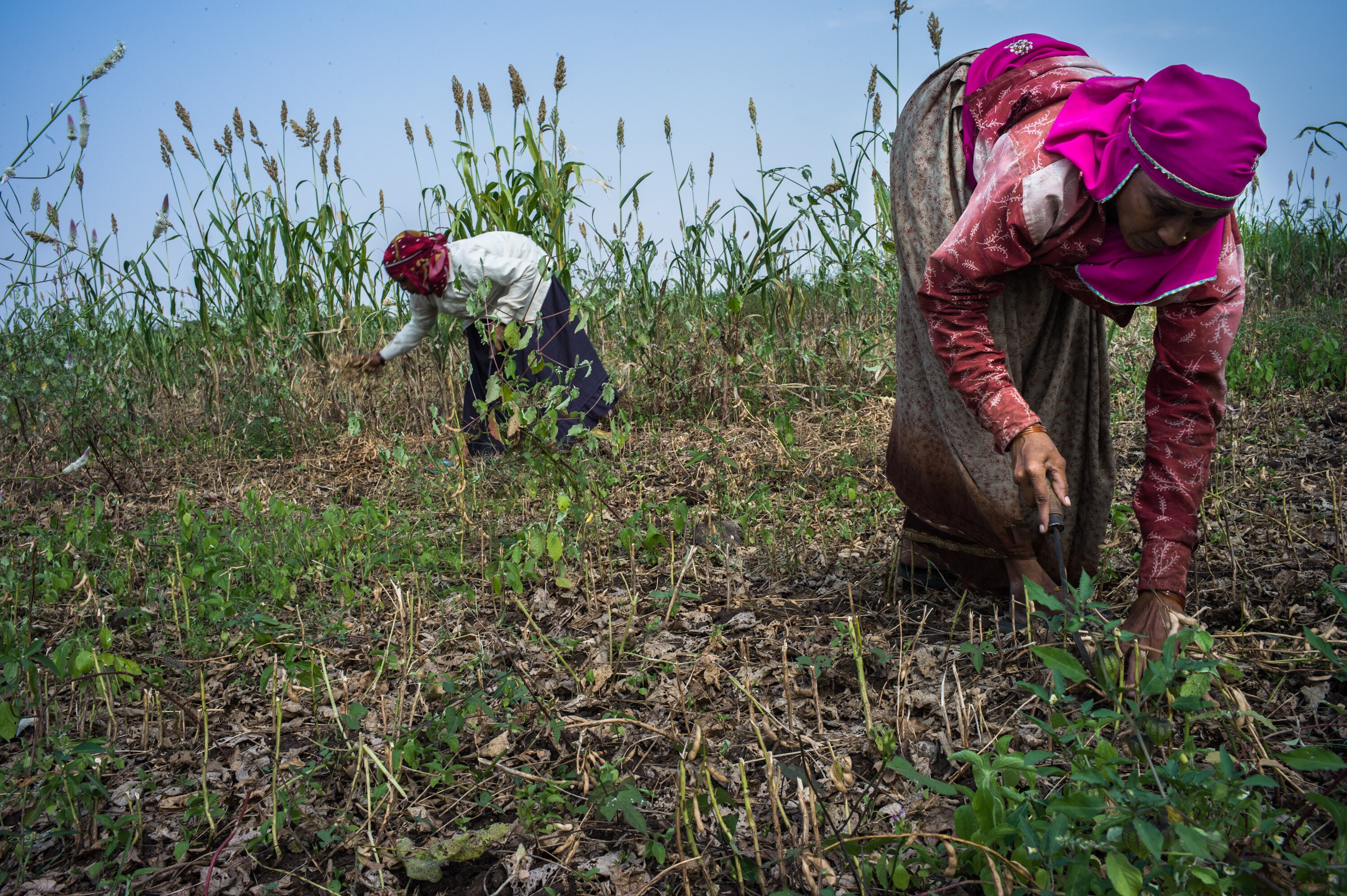
With the farm loan waiver pitch getting shriller by the day, former RBI governor YV Reddy today said the practice is not good for “economic or credit culture” and insisted that ultimately it is a political decision and cannot be justified in the longer run.
Former RBI governor C Rangarajan took a similar stance, saying the alternative is to offer farmers a longer window to pay off their debt. Reddy noted that every political party in India has offered such a waiver in some state or the other or at an all-India level.
“Loan waiver is not good for economic or credit culture. Every political party in India has given farm loan waiver in some state or the other or at all India level. So, ultimately it is a political decision, it cannot be justified in the longer run,” he said on the sidelines of the Inclusive Finance India Summit 2017.
Rangarajan observed that instead of waiving farm loans, the government should give farmers longer to repay or waive the payment of instalment and rate of interest in that particular year.
First thing to do is waiver of interest payments during the year of distress, second reschedule the loans so that the farmers will get a longer timeframe for repayment and finally, if all these things don't succeed, then the government should think of farm loan waiver.C Rangarajan, Former RBI Governor
The comments from former RBI governors assume significance, coming in the wake of such announcements by Punjab, Uttar Pradesh and Maharashtra.
Also Read: Gujarat Announces Interest-Free Farm Loans Of Up To Rs 3 Lakh
Recently, Congress leader Rahul Gandhi too tried a similar pitch during his campaign for Gujarat elections by promising farmers loan waivers if his party forms the government in the state.
In 2008, the government wrote off farm loans to the tune of Rs 74,000 crore.
Rangarajan pointed out that increase in growth rate in the second quarter of the current fiscal indicates that the slowdown is bottoming out. "My own assessment is that in the next two quarters, rate of growth will be 7 percent so that on an average for the year, GDP growth will be 6.5 percent," Rangarajan said.
On surge in bitcoin prices, Reddy said, "It is better we take a definitive view on bitcoins. I think the main problem for the government and the central bank is to decide what to do (with bitcoins), everybody is aware that it (bitcoin) is a big problem," he added.
On sidelines of the same event, former RBI deputy governor HR Khan said investment in bitcoins is "dangerous" and people should understand this.
Earlier, participating in a panel discussion with former RBI governors Bimal Jalan, D Subbarao and Reddy, Rangarajan said financial inclusion is not an option, but a compulsion. Jalan's prescription is inclusion has to be combined with financial stability.
Subbarao explained that India is a large country and what works in Nagaland may not work in Kerala, which is why "we should have a diversified model for financial inclusion".
Former deputy governor Subir Gokarn moderated the session.
Also Read: Loan Waivers Show Farming Is Uneconomical, Says Father Of India's Green Revolution

-
High US Salaries, No Green Card Certainty: The Financial Calculation Facing Indian H-1B Families

The suspension of PERM processing at eight technology employers does not cancel existing H-1B visas. What it does is force a question many Indian families have been avoiding: is the US salary worth tying your career and family plans to one employer?
-
Unhedged Position: Can India See An Indonesia-Style Time Correction?
The Nifty is trading below levels it first clocked in 2024. Is there, then, as I have suggested in the headline, potential that the current time correction drags on painfully for the next three-five, even ten years?
-
Navigating Friction And Energy Realities: An Analysis Of Marco Rubio's October Visit To India
Occurring at a critical juncture marked by stalled trade negotiations and escalating geopolitical pressures over global energy supplies, the visit offers a profound window into modern US-India relations.
-
India Exports Capital. Why Not Export Trusteeship?
The big question, then, is whether India can build an institution that global borrowers, investors, banks, and lawyers can trust, even without an Indian connection.
-
France's Economy & Politics Are In Crisis | The Reason Why
Let's look at how the French economy and politics evolved under Nicolas Sarkozy, Franois Hollande and Emmanuel Macron.
-
You May Inherit The Business. You Must Earn Its Credibility.
Succession tests the founder's ability to share authority as much as it tests the next generation's readiness to assume it.
-
Signing Deals Is One Thing; Making Them Work Is Another | The Week In Whys
Sometimes, things don't turn out as planned. Indian companies have lost some bids to rivals, some projects won't produce until 2030.
-
FOMC Wall, PERM Suspension, Hospital Stocks | Talking Points This Week
A PERM suspension would directly affect green-card sponsorship rather than H-1B visas, so the near-term earnings impact could remain relatively limited. The key question is whether this marks a new phase in US scrutiny of Indian IT.
-
Everything, Everywhere, All At Once: Dalal Street's Week To Forget | Joining The Dots
Visa curbs, a Starlink spat and cancer drug caps: what connects this week's shocks for Indian markets
-
India Is Going Abroad For Critical Minerals. But It May Take Years To Pay Off | The Reason Why
Although India's steps are in the right direction, they remain modest compared with India's growing dependence.









