Falling Renewable Prices To Aid India Achieve Its Clean Energy Target, Says Amitabh Kant
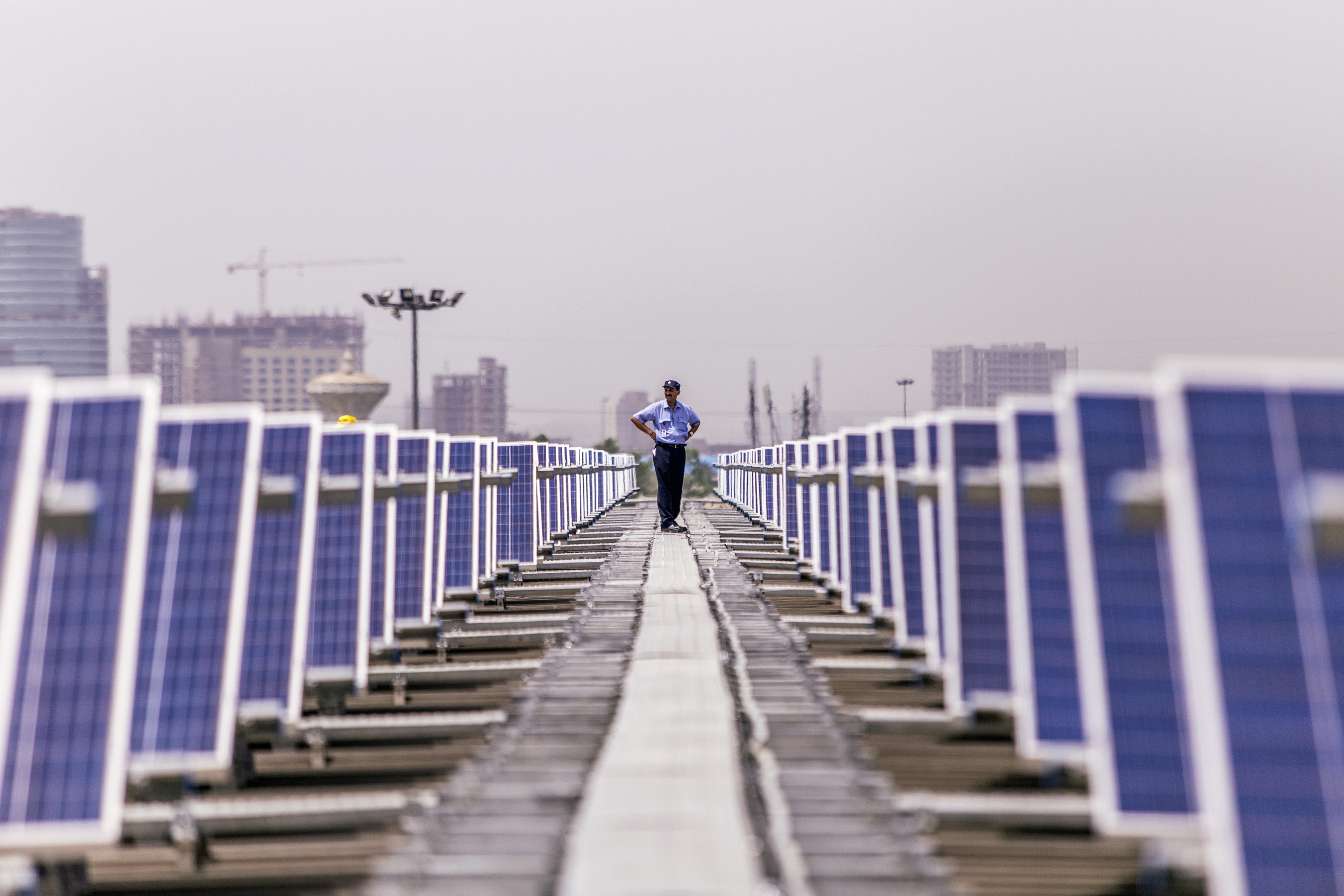
India will easily meet its goal of installing 175 gigawatts of renewable capacity by 2022 given the rate at which clean energy tariffs—especially solar—are falling, according to NITI Aayog's Chief Executive Officer Amitabh Kant.
A couple of years ago a vast supply of coal led us to think our energy requirements would be greatly met by thermal power, Kant said at the Bloomberg New Energy Finance Summit. But with cheaper cleaner energy prices, solar energy could account for close to 330 GW by 2030, he said. “This is because India's unique strength lies in its ability to harvest the sun's power.”
He, however, said that the road ahead for the electricity sector faces challenges. Distribution companies must become commercially viable, he said. “If they aren't, and we start cross-subsidising power and load tariffs on manufacturing, it will be very difficult for discoms to be commercially viable.”
He favoured radical reform in the power sector, with emphasis on transmission and grid management.
On India's EV Roadmap
Kant said India has only 25-26 cars per thousand, freeing the nation of a legacy issue. “The level of destruction in Europe and America will be very high and thus, India will be able to smoothly transit toward electric vehicles.”
That comes as the Goods and Services Tax Council lowered tax on electric vehicles and charging stations earlier this week. Kant said such measures are aimed at bettering quality of life. “The government will be the facilitator and catalyst to put the ecosystem for the EV model but it's for the private sector to drive it.”
“We lost out on the mobile revolution, the photovoltaic revolution and the telecom equipment revolution but we'll not allow that to happen in the EV world,” Kant said.
Key Highlights:
- Payments to generators must be made on time.
- Discoms must be commercially strengthened—a huge task for the administration and political system.
- India very often gets into the sunset sector of industries, and not the sunrise sectors.
- Regulators must do away with regulatory assets. They must work towards financial discipline and ensure price escalation takes place on an annual basis, ensuring commercial viability of power projects.
Huge challenges as far as coal and gas projects are concerned. Many were taken without a power purchase agreement.
- We need to clean up air and provide a better quality of life, for which government measures are necessary.
- The future of electric vehicles lies in India and we must focus on pushing electric bikes and three-wheelers.
- We must ensure that EVs are charged with renewable, clean power.
- Next round of reforms must revolve around sectors like oil and coal and gas, mining. We must commercialise these areas, including railways to drive growth.
Growth Slowing Down In India
The NITI Aayog CEO also spoke about the economy slowing down, admitting candidly that one of the reasons for the drop are the structural reforms introduced by the government in quick succession. He said its crucial that the next round of reforms focus on sectors like oil and gas, mining and coal.
Watch the full interaction here:

-
A New Samvat Wishlist: Inclusive Prosperity And Human Development

India has strengthened its economic foundations through infrastructure, digital access and enterprise. Its next growth chapter must deepen productivity, create better livelihoods and widen participation in prosperity.
-
Love, Sex Aur Dhokha: The Audacious Plot To Spy On Jensen Huang
A Taipei dinner, a Singapore chip buyer and a suspected Chinese asset: inside the alleged spy operation that got close to NVIDIA's Jensen Huang.
-
Ten Things I Learnt This Samvat
Patience can be a trap. Cheap stocks can stay cheap. Leverage can wipe you out. What did Samvat 2082 teach us? Niraj Shah writes on 10 lessons from the year gone by.
-
Talking Points This Week: Tech Nerves, FII Buying, And A Faraway Banking Shock
The global markets are not shining this Diwali. The exception in the large markets is, India.
-
Midterm Rally Lasted A Day. The Hard Reality Of A Divided US May Last Two Years | Opinion
Between a contested AI boom, a debt ceiling that arrives in 2027 and a president with every incentive to act alone, the next two years may prove more volatile than the first day's rally suggests.
-
Blue Wave Will Derail the AI Trade but Won't Dismantle the AI Era | Unhedged Position
The Democrats' sweep of the US Congress will see politics collide with economic forces both over the long and short term.
-
It's Time To Take The GST Council's Bet On Trust Global
Payment records can prove India's services exports, and clear, proportionate rules can bring foreign digital sellers into the tax net.
-
Opinion | India at 38: From Innovation Overperformer to Innovation Powerhouse
India now has 453 VC-backed deep science startups, 18 of them late-stage, after 117 percent growth since 2020. Laurus Labs, at USD 9.3 billion, is the most valuable deep science company in any middle-income economy outside China.
-
Navigating Energy Crossroads: S Jaishankar's Call For Diversified Supply Chains At G20 Ministerial Meeting
As geopolitical fault lines continue to test maritime trade routes and commodity flows, Jaishankar's message remains pertinent: true economic resilience requires open markets, protected transit lines, and a genuine commitment to multilateral cooperation rather than coercion.









