Falling Global Crude Prices Bolster India's Economic Outlook
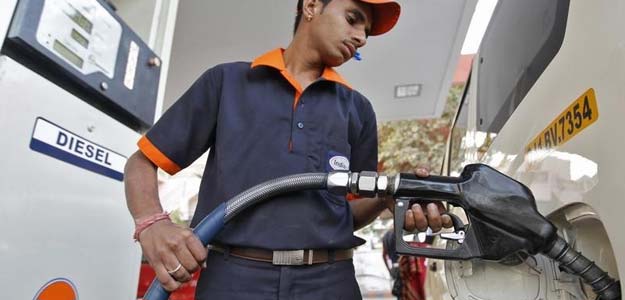
New Delhi: Falling crude oil prices have helped Indian lawyer Pratik Mehra get off the bus and back behind the wheel of his car, cutting his travel time to work by a third.
In China, a short hop across the Himalayas, slumping consumer demand has sparked fears of deflation as it wrestles with flagging global economic growth.
But in India, where inflation has dropped to multi-year lows, softer fuel and food prices are allowing consumers like Mr Mehra who drive much of the economy to open their wallets after years of fierce inflation.
It is a welcome change for the 41-year-old father of two, who disliked using the crowded and erratic bus service to get to work in Gurgaon, a business city near New Delhi. Until a few months ago, rising petrol prices had left him with no choice.
"While cars were becoming cheaper, petrol prices were skyrocketing," he said as he refuelled his car in downtown New Delhi. "We would joke that banks should also start offering loans to buy petrol."
As well as making the lives of millions of middle class Indians easier, the sharp drop in Brent crude prices since June is a boon for Prime Minister Narendra Modi in his fight to revive an economy growing at its slowest rate since the 1980s.
Signs of a strong pickup in hiring by companies are adding to the rosier outlook for Indian households.
The biggest external vulnerability the Indian economy has is its exposure to fluctuations in oil prices, given that it imports more than 70 per cent of its crude needs. Falling prices have quickly cooled inflation and boosted foreign reserves.
Cheaper oil allowed PM Modi to end government price caps on diesel without it hurting consumers. In fact, the decision on Saturday led to an immediate 5.7 per cent fall in pump prices for the fuel that drives rural tractors and urban SUVs.
The move was aimed at cutting subsidy costs and attracting energy investment and it is expected to bring down road and rail freight costs at a time when the summer harvest is arriving into markets, helping further cool price pressures.
India is also among the world's biggest importers of coal and gold, both of which have become cheaper this year.
"Overall, lower commodity prices further support our view that India is entering a 'goldilocks period' of lower inflation and higher growth," said Sonal Varma, an economist at Nomura.
Consumers like Mehra seem to agree, as they pack out India's shops and malls during the festival season of Diwali, a time for buying new cars, jewellery and electronic goods.
A poll published in a local newspaper on Tuesday said 61 per cent of urban middle-class consumers felt they had more money than last year, and 50 per cent planned to spend more.
That's good for Asia's third-largest economy: private spending accounts for 60 per cent of gross domestic product, so getting consumers to spend more is essential to end its longest spell of sub-5 per cent growth in a quarter of a century.
Exports
Not every aspect of the global economy bodes well for India.
Weak growth among many of the world's largest economies is bad news for Indian exporters, who contribute less to the economy than in China, for example, but are nonetheless an important pillar of growth.
For now, the upside appears to offset damage done to exports by weaker global demand.
The oil rout has strengthened the outlook for the country's current account and fiscal balances, auguring well for the rupee at a time when speculation about US interest rates has triggered volatility in many emerging currencies.
Every $10 fall in the price of a barrel of oil is estimated to narrow India's current account gap by 0.5 per cent of GDP and improve the fiscal deficit by 0.1 per cent, making it easier to trim the spending gap to a seven-year low this fiscal year.
"This should go a long way to help insulate India against swings in external conditions," said HSBC economist Frederic Neumann.
A crucial test of Modi's willpower will come if crude prices recover.
Copyright: Thomson Reuters 2014

-
High US Salaries, No Green Card Certainty: The Financial Calculation Facing Indian H-1B Families

The suspension of PERM processing at eight technology employers does not cancel existing H-1B visas. What it does is force a question many Indian families have been avoiding: is the US salary worth tying your career and family plans to one employer?
-
Unhedged Position: Can India See An Indonesia-Style Time Correction?
The Nifty is trading below levels it first clocked in 2024. Is there, then, as I have suggested in the headline, potential that the current time correction drags on painfully for the next three-five, even ten years?
-
Navigating Friction And Energy Realities: An Analysis Of Marco Rubio's October Visit To India
Occurring at a critical juncture marked by stalled trade negotiations and escalating geopolitical pressures over global energy supplies, the visit offers a profound window into modern US-India relations.
-
India Exports Capital. Why Not Export Trusteeship?
The big question, then, is whether India can build an institution that global borrowers, investors, banks, and lawyers can trust, even without an Indian connection.
-
France's Economy & Politics Are In Crisis | The Reason Why
Let's look at how the French economy and politics evolved under Nicolas Sarkozy, Franois Hollande and Emmanuel Macron.
-
You May Inherit The Business. You Must Earn Its Credibility.
Succession tests the founder's ability to share authority as much as it tests the next generation's readiness to assume it.
-
Signing Deals Is One Thing; Making Them Work Is Another | The Week In Whys
Sometimes, things don't turn out as planned. Indian companies have lost some bids to rivals, some projects won't produce until 2030.
-
FOMC Wall, PERM Suspension, Hospital Stocks | Talking Points This Week
A PERM suspension would directly affect green-card sponsorship rather than H-1B visas, so the near-term earnings impact could remain relatively limited. The key question is whether this marks a new phase in US scrutiny of Indian IT.
-
Everything, Everywhere, All At Once: Dalal Street's Week To Forget | Joining The Dots
Visa curbs, a Starlink spat and cancer drug caps: what connects this week's shocks for Indian markets
-
India Is Going Abroad For Critical Minerals. But It May Take Years To Pay Off | The Reason Why
Although India's steps are in the right direction, they remain modest compared with India's growing dependence.









