Facebook Founder Zuckerberg's California School Gift Aims to Avoid Newark Pitfalls
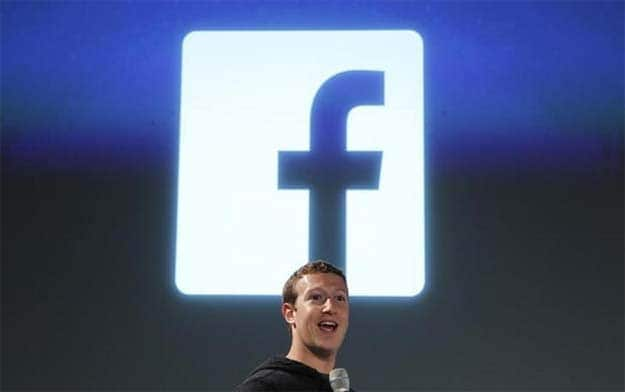
Facebook founder Mark Zuckerberg's gift of $120 million to the San Francisco Bay Area public school system on Friday marks his second attempt at putting huge sums of his own money into turning around failing schools.
This time, he can only hope to come under less criticism.
Four years ago, Mr Zuckerberg donated $100 million to reform the chronically ailing Newark, New Jersey, school system, appearing on the "Oprah Winfrey Show" to announce a gift he hoped would turn that city's schools into an example of educational excellence nationwide.
Today, with almost all the funds spent, critics say his efforts in Newark have been misdirected, with much of the money going to programs that have minimal long-term benefit.
"The whole Newark thing was the big celebrity event - dump the money, then go back to the other coast," said Bruce Baker, a professor in the Graduate School of Education at Rutgers, in New Jersey.
Mr Zuckerberg said on Friday in a San Jose Mercury News essay written with his wife, Priscilla Chan, that he has "learned a lot about what makes a successful effort" but that it was also too early to determine the impact of the Newark initiative.
Education experts say the Bay Area funds appear better targeted than in Newark, where most of the $100 million donated four years ago has been spent without major improvements in student scores.
Reforms there have prompted protests and criticism that the bulk of the donated funds went for teacher contracts and charter schools, creating what detractors say are financially unsustainable obligations for the school system.
In the Bay Area, the money appears to be targeted differently. Mr Zuckerberg said much of it, at least to start, would be used to upgrade technology and train educators.
"The initial grants will go toward initiatives that provide computers and connectivity in schools, as well as teacher training and parent outreach to make these a really valuable addition to the learning experience," he wrote.
The Newark and Bay Area schools appear equally in need.
Newark's schools suffered so much from low test scores and falling enrollment that in 1995 a judge ordered the state to take control. Since then, more than a dozen schools have been closed, and students in the poorest districts use classrooms with crumbling ceilings and peeling walls.
Mr Zuckerberg's latest donation will initially be spent in three school districts - San Francisco, Redwood City and Ravenswood City - which serve nearly 70,000 students, with more than 80 per cent receiving free or discounted school meals.
The average student in Ravenswood district is outperformed by about 80 per cent of students nation-wide, according to comparative data compiled by the George W Bush Institute.
Will Hodges, a spokesman for the Bay Area project said Mr Zuckerberg's team learned from the Newark project, which remained a "work in progress".
"The most important thing they've learned is to bring in the local community to be involved with their work, to focus on the community's needs," Mr Hodges said.
In Newark, the money has mostly been spent. While graduation rates have risen to 67 per cent in 2013, from 54 per cent in 2009, tests scores in reading and math have hardly budged, according to the state Department of Education.
Critics say the money could have been put to better use. For example, it could have been used to pay for infrastructure or transportation or even to set up an endowment to generate annual returns.
Out of $83 million spent, $31 million went for retroactive teacher pay and $17.5 million towards a new teacher contract pegged to student performance. Experts say there is no funding in place to continue to subsidize the merit pay system once the Facebook cash is gone.
Newark residents and education experts also question the hiring of expensive consultants, some of whom charge $1,000 a day.
The foundation says more than $4 million has gone directly toward creating new charter schools, allowing students to choose where they want to attend class.
But with thousands of students now able to go to a school miles from home, Newark officials have scrambled to provide busing, a potentially great cost for a city facing a $93 million budget shortfall.
"Can you fathom it? Putting a 5 or 6-year-old child on a public bus in Newark?" said Frank Adao, president of the Newark Parents Union, whose son is a 6th grader.
Copyright @ Thomson Reuters 2014

-
Talking Points This Week: Tech Nerves, FII Buying, And A Faraway Banking Shock

The global markets are not shining this Diwali. The exception in the large markets is, India.
-
Midterm Rally Lasted A Day. The Hard Reality Of A Divided US May Last Two Years | Opinion
Between a contested AI boom, a debt ceiling that arrives in 2027 and a president with every incentive to act alone, the next two years may prove more volatile than the first day's rally suggests.
-
Blue Wave Will Derail the AI Trade but Won't Dismantle the AI Era | Unhedged Position
The Democrats' sweep of the US Congress will see politics collide with economic forces both over the long and short term.
-
It's Time To Take The GST Council's Bet On Trust Global
Payment records can prove India's services exports, and clear, proportionate rules can bring foreign digital sellers into the tax net.
-
Opinion | India at 38: From Innovation Overperformer to Innovation Powerhouse
India now has 453 VC-backed deep science startups, 18 of them late-stage, after 117 percent growth since 2020. Laurus Labs, at USD 9.3 billion, is the most valuable deep science company in any middle-income economy outside China.
-
Navigating Energy Crossroads: S Jaishankar's Call For Diversified Supply Chains At G20 Ministerial Meeting
As geopolitical fault lines continue to test maritime trade routes and commodity flows, Jaishankar's message remains pertinent: true economic resilience requires open markets, protected transit lines, and a genuine commitment to multilateral cooperation rather than coercion.
-
Indians Are Travelling, But Not Every Journey Is A Holiday | The Week In Whys
Pilgrims, patients and working women are the real travellers, and the system hasn't quite caught up with them.
-
Getting To Work Costs Women More | The Reason Why
It is not just about women paying more than men. It is about women paying much more in cities than in villages.
-
AI Bias In Investing Cannot Be Eliminated, But It Can Be Governed
Framing is a particularly important example as identical financial information presented in terms of gains rather than losses can lead an LLM to reach a different assessment.









