Experts, Bankers Differ On Liability For Loss Of Locker Items
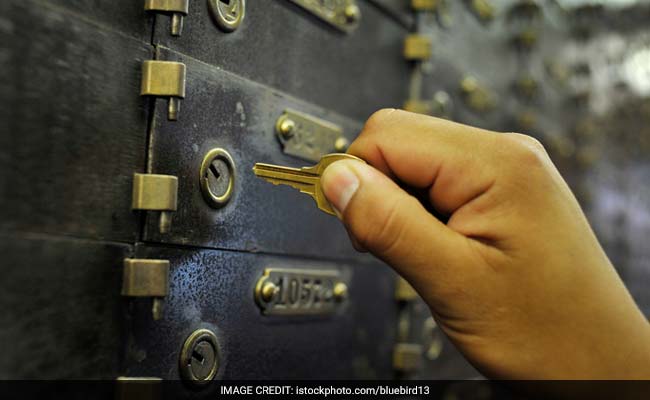
New Delhi: Consumer rights experts feel that banks are shirking their liability towards loss or damage of items kept in their lockers and not taking responsibility for it amounts to "deficiency in service".
Days after an RTI response by the RBI and several banks that there is no compensation for loss of valuables in lockers, officials of both the PSU and private banks are passing the buck to the consumers, saying clients do not disclose the contents of the safe deposit box.
The bank officials, who did not want to be identified,were of the view that burglary beyond the security cover provided by a bank was not covered under the agreement between the customer and the bank.
The RTI disclosure by the Reserve Bank of India (RBI) and 19 PSU banks had said that they were not liable for damage to the locker contents by any cause, including fire or natural calamities.
Consumer experts say it will be prudent to bring transparency on what is kept in lockers so that the banks can insure the contents against any damage or loss by burglary, as bank officials are taking refuge under the reason of non-disclosure of locker contents.
Disagreeing with the experts that annual fee charged for lockers made the bank liable for all safety aspects, including loss and damage to valuables, the bank officials said that the annual fee in respect of lockers was only charged for "safe keeping".
However, they have not elaborated on what is meant by "safe keeping" and whether failure to do so will entitle the consumers for compensation.
Consumer rights expert and founder of Consumer Online Foundation, Bejon Misra, told PTI, "The government, the RBI and the banking industry cannot wash off their hands and earn money from consumers and not be made liable or accountable for quality of service for which the customers are paying rental."
Kush Sharma, a lawyer who handles consumer cases, said the banks should take the responsibility of insuring the locker contents.
To achieve this objective, he said, "There should be transparency in what is being kept in the lockers, especially when the government is focused on bringing in transparency in all financial activities." Sharma said that once there is transparency regarding articles kept in the locker, the banks can opt for group insurance.
Misra, who also shared a similar view, said there should be a law mandating the people to declare what is being kept inside the lockers so that the same can be insured by the banks.
He also claimed that the present policy of the banks of not accepting responsibility for the contents of the lockers was due to the reason that this business was "no longer lucrative".
He said that since the November 8, 2016 demonetisation and with the government's focus on declaration of wealth,including jewellery and property, the use of lockers to store undeclared assets has been reduced by the public.
"Therefore, the business of lockers is no longer profitable," Misra said and added that the "banks are now trying to wriggle out of the liability".
"It (a bank not being liable for loss of locker contents) is an anti-consumer policy," he said.
Misra said the compensation can be determined by the consumer commissions or forums according to the facts of each case.
The facts of a case can be verified by the police when the consumer or the bank lodges an FIR subsequent to a burglary, he said.
Sharma, a locker user, said he "felt cheated" after he came to know that the banks were not liable for the damage or the loss of the content in the safe deposit boxes.
He said he was under the impression that the contents in the locker would be secure and insured and added that now he felt that it "would be better to keep his valuables at home after insuring them".
Lawyer Kush Kalra, who had sought information under the transparency law, has now moved the Competition Commission of India (CCI) alleging "cartelisation" and "anti-competitive practices" by the banks in respect of the locker service.
He has informed the CCI that the RTI response from the RBI has said it has not issued any specific direction in this regard or prescribed any parameters to assess the loss suffered by a customer.
(This story has not been edited by NDTV staff and is auto-generated from a syndicated feed.)

-
High US Salaries, No Green Card Certainty: The Financial Calculation Facing Indian H-1B Families

The suspension of PERM processing at eight technology employers does not cancel existing H-1B visas. What it does is force a question many Indian families have been avoiding: is the US salary worth tying your career and family plans to one employer?
-
Unhedged Position: Can India See An Indonesia-Style Time Correction?
The Nifty is trading below levels it first clocked in 2024. Is there, then, as I have suggested in the headline, potential that the current time correction drags on painfully for the next three-five, even ten years?
-
Navigating Friction And Energy Realities: An Analysis Of Marco Rubio's October Visit To India
Occurring at a critical juncture marked by stalled trade negotiations and escalating geopolitical pressures over global energy supplies, the visit offers a profound window into modern US-India relations.
-
India Exports Capital. Why Not Export Trusteeship?
The big question, then, is whether India can build an institution that global borrowers, investors, banks, and lawyers can trust, even without an Indian connection.
-
France's Economy & Politics Are In Crisis | The Reason Why
Let's look at how the French economy and politics evolved under Nicolas Sarkozy, Franois Hollande and Emmanuel Macron.
-
You May Inherit The Business. You Must Earn Its Credibility.
Succession tests the founder's ability to share authority as much as it tests the next generation's readiness to assume it.
-
Signing Deals Is One Thing; Making Them Work Is Another | The Week In Whys
Sometimes, things don't turn out as planned. Indian companies have lost some bids to rivals, some projects won't produce until 2030.
-
FOMC Wall, PERM Suspension, Hospital Stocks | Talking Points This Week
A PERM suspension would directly affect green-card sponsorship rather than H-1B visas, so the near-term earnings impact could remain relatively limited. The key question is whether this marks a new phase in US scrutiny of Indian IT.
-
Everything, Everywhere, All At Once: Dalal Street's Week To Forget | Joining The Dots
Visa curbs, a Starlink spat and cancer drug caps: what connects this week's shocks for Indian markets
-
India Is Going Abroad For Critical Minerals. But It May Take Years To Pay Off | The Reason Why
Although India's steps are in the right direction, they remain modest compared with India's growing dependence.









