Expert Views On Union Budget 2017-18
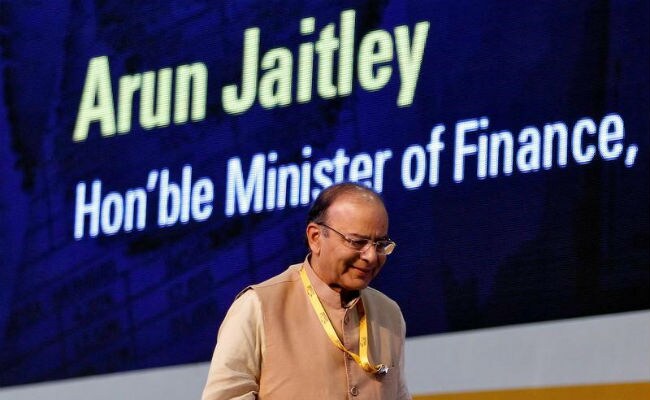
India will ramp up spending on rural areas, infrastructure and fighting poverty, Finance Minister Arun Jaitley said as he unveiled his annual budget on Wednesday, adding the impact on growth from the government's cash crackdown would wear off soon.
Addressing parliament, Jaitley called his fourth budget one for the poor. Yet, while vowing prudent fiscal management, he also raised his 2017-18 federal deficit target to 3.2 percent of gross domestic product to cover his spending promises.
COMMENTS
SAMRAT DASGUPTA, CEO, ESQUIRE CAPITAL INVESTMENT ADVISORS:
"He (Jaitley) focused on the rural side more, and he has recognised that demonetisation had brought some hardship to people. So he's trying to mitigate that as much as possible, with some rural schemes and reduction in taxation for low income people."
"Also, it will be a challenge to meet the fiscal deficit target because next year will be challenging. I think they have recognised that there are difficulties in meeting them. If he meets the target, it will be a commendable exercise."
VARUN KHANDELWAL, MANAGING DIRECTOR, BULLERO CAPITAL:
"The fiscal deficit bit does not seem very credible. Jaitley is leaving room to exceed it at a later time. I think people will question the fiscal math over the next few days."
"On tax reforms, the only worthy mention, and an intelligent one, is the selective reduction of corporate tax rate for companies below 500 million rupee turnover. This will encourage higher compliance at the lower level of the corporate pyramid where percentage of tax leakages is usually much higher."
TIRTHANKAR PATNAIK, INDIA STRATEGIST, MIZUHO BANK:
"The fiscal deficit of 3.2 percent missed the target, but laudable efforts nonetheless. Markets should love the lower net borrowing figure of 3.4 trillion rupees.
"On tax reforms, the reduction of the corporate tax for SMEs to 25 percent is very welcome."
DEVENDRA KUMAR PANT, CHIEF ECONOMIST, INDIA RATINGS:
"Fiscal deficit of 3.2 percent is in-line with expectations. Bond markets or the debt markets will take it favourably. The quality of deficit has improved marginally."
SHAKTI SATAPATHY, FIXED-INCOME STRATEGIST, AK CAPITAL:
"The tone remains neutral with not so drastic surprises in terms of maintaining a sustainable fiscal consolidation roadmap. The 3.2% fiscal deficit target for FY 17-18 is largely in line with the expectation & the same has already been factored in the bond yields.
AMIT JAIN, PARTNER, M&A, BMR & ASSOCIATES LLP:
"If FIPB (Foreign Investment Promotion Board) is abolished it really means that there would be no sector under the approval route and everything will be under the automatic route. I think that's a great move. Even in sensitive sector like defense, where approval route is required, would be under the automatic sector in some shape or form. Effectively, there is no government approval required even in the sensitive sectors, which is a great development. It will clearly speed up the process."
"I hope there's no other authority that they set up because then it will just be a re-nomenclature of FIPB with something else."
HEMAL MEHTA, PARTNER, DELOITTE HASKINS & SELLS LLP:
"Affordable housing is a priority for this government and it was expected to get infrastructure status. With infrastructure status, developers can access foreign funds at a cheaper cost by way of debt and it will be a priority lending for banks as well. This should result into a progress in the sector. The fine print shall provide higher clarity."
(Except for the headline, this story has not been edited by NDTV staff and is published from a syndicated feed.)

-
High US Salaries, No Green Card Certainty: The Financial Calculation Facing Indian H-1B Families

The suspension of PERM processing at eight technology employers does not cancel existing H-1B visas. What it does is force a question many Indian families have been avoiding: is the US salary worth tying your career and family plans to one employer?
-
Unhedged Position: Can India See An Indonesia-Style Time Correction?
The Nifty is trading below levels it first clocked in 2024. Is there, then, as I have suggested in the headline, potential that the current time correction drags on painfully for the next three-five, even ten years?
-
Navigating Friction And Energy Realities: An Analysis Of Marco Rubio's October Visit To India
Occurring at a critical juncture marked by stalled trade negotiations and escalating geopolitical pressures over global energy supplies, the visit offers a profound window into modern US-India relations.
-
India Exports Capital. Why Not Export Trusteeship?
The big question, then, is whether India can build an institution that global borrowers, investors, banks, and lawyers can trust, even without an Indian connection.
-
France's Economy & Politics Are In Crisis | The Reason Why
Let's look at how the French economy and politics evolved under Nicolas Sarkozy, Franois Hollande and Emmanuel Macron.
-
You May Inherit The Business. You Must Earn Its Credibility.
Succession tests the founder's ability to share authority as much as it tests the next generation's readiness to assume it.
-
Signing Deals Is One Thing; Making Them Work Is Another | The Week In Whys
Sometimes, things don't turn out as planned. Indian companies have lost some bids to rivals, some projects won't produce until 2030.
-
FOMC Wall, PERM Suspension, Hospital Stocks | Talking Points This Week
A PERM suspension would directly affect green-card sponsorship rather than H-1B visas, so the near-term earnings impact could remain relatively limited. The key question is whether this marks a new phase in US scrutiny of Indian IT.
-
Everything, Everywhere, All At Once: Dalal Street's Week To Forget | Joining The Dots
Visa curbs, a Starlink spat and cancer drug caps: what connects this week's shocks for Indian markets
-
India Is Going Abroad For Critical Minerals. But It May Take Years To Pay Off | The Reason Why
Although India's steps are in the right direction, they remain modest compared with India's growing dependence.









