Expect Quicker Transmission Of Rate Cut By Banks, Says RBI Governor
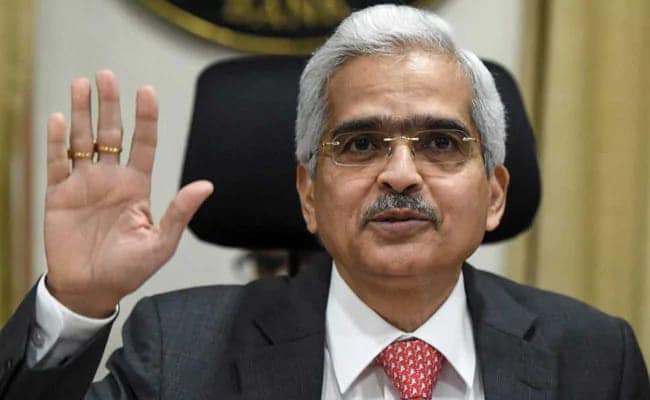
After delivering three back-to-back rate cuts, the Reserve Bank Monday said it expects a quicker transmission of the interest rate cuts by banks to consumers by way of cheaper home, auto and personal loans.
During this year, the RBI reduced the key policy rate thrice with an aggregate reduction of 0.75 percentage point in the repo rate, the rate at which RBI lends to banks.
"In the last MPC meeting (June 6) I had said that by that time 50 basis points of repo rate cut had been announced, and out of this 21 basis points had been transmitted. And one positive thing that is happening now is, earlier it used to take six months for transmission, now the transmission is taking a much shorter period of 2-3 months," RBI Governor Shaktikanta Das said.
"Thereafter we announced 25 basis points cut. So, it's now entirely 75 basis point cut. We are collecting the data and also you have to keep in mind that right from the month of June, in fact, June 1, the system is more than adequately surplus in liquidity," he said while addressing media after the customary post-budget meeting with Finance Minister Nirmala Sitharaman.
He further said overall the system liquidity is hugely in surplus and if individual banks have liquidity issue, the RBI will provide liquidity support to them.
The Budget has announced a 10 per cent backstop for the banks to implement NBFC package as part of a series of steps to give relief to non-banking financial companies facing cash crunch following the collapse of IL&FS last year.
In a bid to address the stress in the sector, the government in the Budget proposed that public sector banks would purchase high-rated pooled assets of financially sound NBFCs, amounting to a total of Rs 1 lakh crore during the current financial year.
For this, the government will provide one time six months'' partial credit guarantee to public sector banks for first loss of up to 10 per cent.
With regard to the shadow banking sector, the governor said the RBI is monitoring NBFCs based on their size and based on their past repayment behaviour.
"We are monitoring their operations very closely and at regular intervals," he added.
On the impact on fuel price hike on inflation, Mr Das said it will take time for transmission to happen.
The Monetary Policy Committee will meet in the first week of August, and will assess this, he said, adding that "there could be a marginal increase, but it's not that, next day itself, it will impact inflation. It takes time for transmission."
Post the rise in fuel taxes announced by the government in the Budget for 2019-20, prices of petrol and diesel rose by at least Rs 2.4 and Rs 2.36 a litre respectively across metro cities.
The prices increased after the Finance Minister raised excise duty and road and infrastructure cess by Rs 2 per litre on both the fuels.
Asked about the government move to infuse Rs 70,000 crore in the PSBs, Mr Das said it is a very positive development because it not only enables banks to maintain the capital they need to comply with the regulatory requirements.
It will also give enough capital to the banks to step up their lending and credit disbursement and auger well for the banking system, he added.

-
Unhedged Position | Blue Wave Will Derail the AI Trade but Won't Dismantle the AI Era

The Democrats' sweep of the US Congress will see politics collide with economic forces both over the long and short term.
-
It's Time To Take The GST Council's Bet On Trust Global
Payment records can prove India's services exports, and clear, proportionate rules can bring foreign digital sellers into the tax net.
-
Opinion | India at 38: From Innovation Overperformer to Innovation Powerhouse
India now has 453 VC-backed deep science startups, 18 of them late-stage, after 117 percent growth since 2020. Laurus Labs, at USD 9.3 billion, is the most valuable deep science company in any middle-income economy outside China.
-
Navigating Energy Crossroads: S Jaishankar's Call For Diversified Supply Chains At G20 Ministerial Meeting
As geopolitical fault lines continue to test maritime trade routes and commodity flows, Jaishankar's message remains pertinent: true economic resilience requires open markets, protected transit lines, and a genuine commitment to multilateral cooperation rather than coercion.
-
Indians Are Travelling, But Not Every Journey Is A Holiday | The Week In Whys
Pilgrims, patients and working women are the real travellers, and the system hasn't quite caught up with them.
-
Getting To Work Costs Women More | The Reason Why
It is not just about women paying more than men. It is about women paying much more in cities than in villages.
-
AI Bias In Investing Cannot Be Eliminated, But It Can Be Governed
Framing is a particularly important example as identical financial information presented in terms of gains rather than losses can lead an LLM to reach a different assessment.
-
Joining The Dots | Dark Skies, Steady Diya: Why Hope Holds This Diwali
With war, a weak rupee and foreign outflows weighing on sentiment, policymakers at the NDTV World Summit and market veterans at NDTV Profit Ignite: Diwali Edition offered the same advice: stay invested and filter out the noise.
-
The Curious Case of Equitas Small Finance Bank And A CEO Who Quit For Stock
PN Vasudevan believes persistent investor concerns over a perceived conflict of interest had become a governance overhang on Equitas Small Finance Bank's stock, even as the lender improved profitability and asset quality.










