Overseas Listing Plan For Domestic Entities Put In Deep Freeze: Report
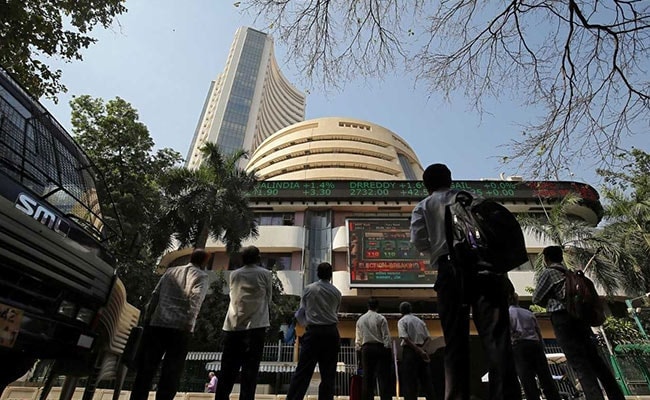
Government has frozen plans to allow local firms to list overseas as it seeks to bolster its own capital markets, government officials and industry sources said, in a blow to foreign funds and stock exchanges seeking to tap into the country's tech boom.
The decision marks a sudden reversal in policy after officials said late last year that the new rules for overseas listings would be announced in February.
Three senior government officials with direct knowledge of the decision told Reuters the plan had been put on hold as India believes there is enough depth in local capital markets for firms to raise funds and get good valuations. They declined to be named as the move has not been made public.
Finance ministry did not respond to a request for comment.
Indian equity markets have boomed as enthusiastic retail investors and a pandemic-induced flood of easy money pushed prices to record highs, encouraging a slew of Indian tech founders to go local with their initial public offerings (IPOs).
More than 60 companies made their market debut in India in 2021 and raised a total of more than $13.7 billion, which was more than the previous three years combined. Like other global markets, Indian stocks have been rattled by Russia's invasion of Ukraine, and the volatility has delayed IPO plans.
But the outlook for such listings dimmed after digital payments app Paytm, backed by China's Alibaba and Ant and Japan's Softbank, plunged on its debut in November, raising questions about valuations. Its shares have slumped 75 per cent from its issue price.
Even before Paytm's rout, US venture capitalists such as Tiger Global and Sequoia Capital had lobbied Prime Minister Narendra Modi to allow Indian firms to list abroad to achieve better valuations, Reuters has reported.
A second government official said the overseas listing rules were now in "limbo" and both the officials cited the stock market debut of food-delivery giant Zomato, which clocked a high valuation, as contributing to the change of view.
When Zomato went public on Mumbai's exchange in July, its offer was 38 times oversubscribed and its stock jumped 66 per cent. And Indian cosmetics-to-fashion platform Nykaa surged 96 per cent on its debut, achieving a valuation of nearly $14 billion.
Both have given up much of those gains in recent months.
Two industry sources briefed by government officials also said they had been told the plan was on hold, which also marks a setback for exchanges in New York and London, which had been vying for a slice of India's rapidly growing start-up economy.
LOBBYING
Global investors have pushed for India to allow overseas listings, saying foreign markets would give Indian companies better access to liquidity and capital. But such a move, which has been under consideration since at least 2020, has deeply divided policy makers.
Nationalist group Swadeshi Jagran Manch, the economic wing of the ideological parent of Narendra Modi's ruling Bhartiya Janata Party (BJP), opposed the plan, saying such listings would mean less Indian oversight of domestic firms, while Indian investors would find it more difficult to trade in shares of companies listing abroad.
Despite intense lobbying against the change, Revenue Secretary said in August last year that overseas listing rules could be announced by February.
A source with direct knowledge told Reuters on Wednesday that representatives of Swadeshi Jagran Manch lobbied Finance Minister in a closed-door meeting in January to not proceed with the policy announcement.
Though the group is widely seen as having strong influence on India's policy making, it is not clear if that particular meeting contributed to the government's decision.
One senior industry executive who has lobbied New Delhi to allow foreign listings said its decision could result in pressure for other changes by Indian companies.
"Some (investor) funds may want Indian companies to register outside the country," the executive said, adding that such a move could allow them to list overseas more easily.

-
Talking Points This Week: Tech Nerves, FII Buying, And A Faraway Banking Shock

The global markets are not shining this Diwali. The exception in the large markets is, India.
-
Midterm Rally Lasted A Day. The Hard Reality Of A Divided US May Last Two Years | Opinion
Between a contested AI boom, a debt ceiling that arrives in 2027 and a president with every incentive to act alone, the next two years may prove more volatile than the first day's rally suggests.
-
Blue Wave Will Derail the AI Trade but Won't Dismantle the AI Era | Unhedged Position
The Democrats' sweep of the US Congress will see politics collide with economic forces both over the long and short term.
-
It's Time To Take The GST Council's Bet On Trust Global
Payment records can prove India's services exports, and clear, proportionate rules can bring foreign digital sellers into the tax net.
-
Opinion | India at 38: From Innovation Overperformer to Innovation Powerhouse
India now has 453 VC-backed deep science startups, 18 of them late-stage, after 117 percent growth since 2020. Laurus Labs, at USD 9.3 billion, is the most valuable deep science company in any middle-income economy outside China.
-
Navigating Energy Crossroads: S Jaishankar's Call For Diversified Supply Chains At G20 Ministerial Meeting
As geopolitical fault lines continue to test maritime trade routes and commodity flows, Jaishankar's message remains pertinent: true economic resilience requires open markets, protected transit lines, and a genuine commitment to multilateral cooperation rather than coercion.
-
Indians Are Travelling, But Not Every Journey Is A Holiday | The Week In Whys
Pilgrims, patients and working women are the real travellers, and the system hasn't quite caught up with them.
-
Getting To Work Costs Women More | The Reason Why
It is not just about women paying more than men. It is about women paying much more in cities than in villages.
-
AI Bias In Investing Cannot Be Eliminated, But It Can Be Governed
Framing is a particularly important example as identical financial information presented in terms of gains rather than losses can lead an LLM to reach a different assessment.









