European Union Warns Of WTO Challenge If China-US Deal Creates ''Distortions''
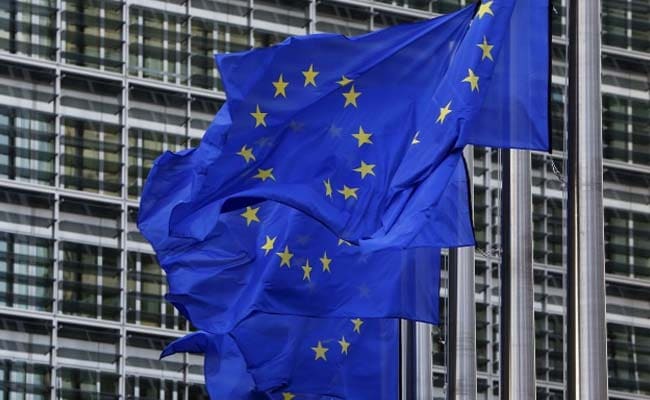
The European Union will challenge the China-US trade agreement at the World Trade Organisation if it creates "distortions" in the market that harm EU companies, the bloc's envoy to Beijing said on Friday.
Ambassador Nicolas Chapuis told reporters the 28-nation EU "will monitor the implementation" of the "phase one" deal that was signed on Wednesday by President Donald Trump and Chinese Vice Premier Liu He.
"In our opinion, quantitative targets are not WTO-compatible if they lead to trade distortions," Mr Chapuis said. "If it were to be the case, we will go to the WTO to settle this matter."
He said that during a meeting at the Chinese foreign ministry, he was given "formal assurances that in absolutely no way would European businesses be affected by the US-China deal".
The WTO's principle of most-favoured-nation treatment says countries cannot discriminate between trading partners.
Under the deal, China agreed to import an additional USD 200 billion in US products over two years, above the levels purchased in 2017, including an additional USD 32 billion in agricultural goods.
Beijing also pledged to improve protections of US intellectual property.
The US has pledged to slash in half tariffs of 15 per cent that were imposed on about USD 120 billion worth of Chinese consumer goods such as clothing in September.
But punitive border taxes will remain on two-thirds of more than USD 500 billion in imports from China.
Paul Tan of Rajah & Tann law firm in Singapore, who specialises in international dispute resolution, told AFP the deal "may not violate WTO rules because the type of goods being bought from the US could be different from other countries'', or even unavailable".
"I don't think the trade deal reversed the increase in tariffs on US goods after the trade war broke out, for example, so I doubt this could be read as more preferential treatment," he said.
China's agreement to buy more from the US in effect cushions some of the impact from increased tariffs over the past two years, he added.
He noted, however, that such bilateral trade deals seem to be the US administration's preferred method of developing economic relations with its major trading partners, rather than through the WTO -- meaning further trade disputes with the US will have to be resolved outside the global trading system.
Kerstin Braun, president of Stenn Group, said on Thursday, "With a weakened WTO and the general trend away from multilateral trade agreements, we're only going to see more trade squabbles."

-
Ten Things I Learnt This Samvat

Patience can be a trap. Cheap stocks can stay cheap. Leverage can wipe you out. What did Samvat 2082 teach us? Niraj Shah writes on 10 lessons from the year gone by.
-
Talking Points This Week: Tech Nerves, FII Buying, And A Faraway Banking Shock
The global markets are not shining this Diwali. The exception in the large markets is, India.
-
Midterm Rally Lasted A Day. The Hard Reality Of A Divided US May Last Two Years | Opinion
Between a contested AI boom, a debt ceiling that arrives in 2027 and a president with every incentive to act alone, the next two years may prove more volatile than the first day's rally suggests.
-
Blue Wave Will Derail the AI Trade but Won't Dismantle the AI Era | Unhedged Position
The Democrats' sweep of the US Congress will see politics collide with economic forces both over the long and short term.
-
It's Time To Take The GST Council's Bet On Trust Global
Payment records can prove India's services exports, and clear, proportionate rules can bring foreign digital sellers into the tax net.
-
Opinion | India at 38: From Innovation Overperformer to Innovation Powerhouse
India now has 453 VC-backed deep science startups, 18 of them late-stage, after 117 percent growth since 2020. Laurus Labs, at USD 9.3 billion, is the most valuable deep science company in any middle-income economy outside China.
-
Navigating Energy Crossroads: S Jaishankar's Call For Diversified Supply Chains At G20 Ministerial Meeting
As geopolitical fault lines continue to test maritime trade routes and commodity flows, Jaishankar's message remains pertinent: true economic resilience requires open markets, protected transit lines, and a genuine commitment to multilateral cooperation rather than coercion.
-
Indians Are Travelling, But Not Every Journey Is A Holiday | The Week In Whys
Pilgrims, patients and working women are the real travellers, and the system hasn't quite caught up with them.
-
Getting To Work Costs Women More | The Reason Why
It is not just about women paying more than men. It is about women paying much more in cities than in villages.









