Euro Under The Gun, Asian Shares Hit After Italy Votes 'No' On Reform
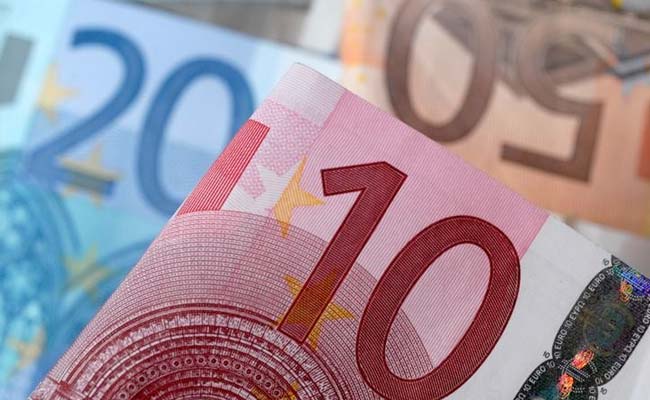
Singapore/Sydney: The euro was under the gun on Monday, skidding to a 20-month low after Italian Prime Minister Matteo Renzi said he would resign following a stinging defeat on constitutional reform that could destabilise the country's shaky banking system.
Renzi's defeat deals a body blow to the European Union already reeling under anti-establishment anger that led to the shock exit of UK from the club in June this year.
The single currency, which slumped as much as 1.4 percent to $1.0505 after opening at around $1.0685, recovered a bit to $1.056.
The drop to its session low was the sharpest fall since June and opened the way to a retest of the March 2015 trough around $1.0457.
"The 'no' vote was priced in to a certain extent in advance. So I do not expect a freefall in the euro in the near term," said Minori Uchida, chief currency analyst at the Bank of Tokyo-Mitsubishi.
"But in the long run, this will delay progress in Italy's efforts to get rid of banks' bad debt and is likely to widen the yield spread of German Bunts and the Italian bonds," he added.
The euro slid as much as 2.1 percent to 118.71 yen, but pared some of the losses to trade down 0.9 percent at 120.08 yen.
The dollar was supported by expectations of a U.S. rate increase this month and gained 0.2 percent to 113.78 yen.
The dollar index, which tracks the greenback against a basket of six global peers, jumped 0.6 percent to 101.44.
The New Zealand dollar slipped 0.8 percent to $0.7074 after Prime Minister John Key unexpectedly announced his resignation on Monday, saying it was the "right time" to leave politics.
Key, a former foreign exchange dealer who worked at firms including Merrill Lynch, won office for the National Party in 2008, ending the nine-year rule of Labour's Helen Clark.
New Zealand stocks extended losses to trade 0.6 percent lower.
MSCI's broadest index of Asia-Pacific shares outside Japan eased 0.3 percent, while E-mini futures for the S&P 500 narrowed losses to 0.2 percent.
Japan's Nikkei slid 0.5 percent.
While the long-awaited opening of the Shenzhen-Hong Kong Stock Connect went live on Monday, global risk aversion weighed on China's and Hong Kong's main indices.
China's CSI 300 index tumbled 1.2 percent. Hong Kong's Hang Seng index reversed earlier losses to trade flat.
The link between China's booming Shenzhen stock market and neighbouring Hong Kong allows foreign investors first-time access to some of the fastest growing technology companies in the world's second-biggest economy.
Back in Europe, dealers said Italian bonds were set to come under pressure as top-rated U.S. Treasuries and German bunds gained. Futures for U.S. 10-year Treasury notes added 5 ticks.
Investors and Europe's politicians fear victory for the opposition 'No' camp could cause political instability and renewed turmoil for Italy's banking sector, which has been hit by fears over its huge exposure to bad loans built up during years of economic downturn.
Renzi's resignation represents a fresh blow to the European Union, the euro zone's heavily indebted third-largest economy which is struggling to overcome a raft of crises.
"For markets, the risks posed by Italy's 'no' vote are about the potential for political instability and the possibility of an election in Italy rather than with any missed opportunity for long term constitutional reform," Ric Spooner, chief market analyst at CMC Markets in Sydney, wrote in a note.
"The real concern for markets is whether this situation may ultimately lead to election of the Five Star Movement whose policy is to hold a referendum on whether Italy should remain in the Eurozone."
Analysts at RBCCM argued that, based on what happened in 2012 at the height of the Greek crisis, such a risk could see the euro trade as low as $0.8000.
"It may sound extreme, but if a second euro zone crisis were to hit, with the U.S. dollar at a much stronger starting point, EUR/USD could arguably trade lower still," they wrote.
Markets had earlier taken some encouragement when Austria's far-right presidential candidate was soundly defeated by a pro-European contender, confounding forecasts of a tight election.
The European Central Bank also meets Thursday amid much speculation it will announce a six month extension of its asset buying program and widen the type of bonds it can purchase.
"There has been some speculation that the ECB would step and front load purchases of Italian bonds if markets became unsettled by a 'No' result, so perhaps it is the thoughts of a central bank liquidity sugar pill driving things again," said ANZ economist Jo Masters.
OIL PULLS BACK
Wall Street ended last week on a cautious note, with the Dow off 0.11 percent, while the S&P 500 rose 0.04 percent and the Nasdaq gained 0.09 percent.
While Friday's U.S. payroll report was firm enough to cement expectations of a rate hike by the Federal Reserve this month, a surprise pullback in wages helped bonds pare a little of their recent losses.
In commodity markets, oil ran into risk aversion and some profit-taking after boasting its best week in at least five years following OPEC's decision to cut crude output.
Markets are now focused on the implementation and impact of OPEC's first output cuts since 2008, to be joined by Russia and possibly other non-OPEC producers.
Brent crude was down 55 cents at $53.95 a barrel, while U.S. crude lost 47 cents to $51.21.
(Except for the headline, this story has not been edited by NDTV staff and is published from a syndicated feed.)

-
Opinion | India at 38: From Innovation Overperformer to Innovation Powerhouse

India now has 453 VC-backed deep science startups, 18 of them late-stage, after 117 percent growth since 2020. Laurus Labs, at USD 9.3 billion, is the most valuable deep science company in any middle-income economy outside China.
-
Navigating Energy Crossroads: S Jaishankar's Call For Diversified Supply Chains At G20 Ministerial Meeting
As geopolitical fault lines continue to test maritime trade routes and commodity flows, Jaishankar's message remains pertinent: true economic resilience requires open markets, protected transit lines, and a genuine commitment to multilateral cooperation rather than coercion.
-
Indians Are Travelling, But Not Every Journey Is A Holiday | The Week In Whys
Pilgrims, patients and working women are the real travellers, and the system hasn't quite caught up with them.
-
Getting To Work Costs Women More | The Reason Why
It is not just about women paying more than men. It is about women paying much more in cities than in villages.
-
AI Bias In Investing Cannot Be Eliminated, But It Can Be Governed
Framing is a particularly important example as identical financial information presented in terms of gains rather than losses can lead an LLM to reach a different assessment.
-
Joining The Dots | Dark Skies, Steady Diya: Why Hope Holds This Diwali
With war, a weak rupee and foreign outflows weighing on sentiment, policymakers at the NDTV World Summit and market veterans at NDTV Profit Ignite: Diwali Edition offered the same advice: stay invested and filter out the noise.
-
The Curious Case of Equitas Small Finance Bank And A CEO Who Quit For Stock
PN Vasudevan believes persistent investor concerns over a perceived conflict of interest had become a governance overhang on Equitas Small Finance Bank's stock, even as the lender improved profitability and asset quality.
-
Talking Points This Week: AI Cash Burn, A Tiger Comeback And An India That Still Finds Its Own Path
India is not immune to higher oil or tighter global liquidity, yet its earnings base is broader, its domestic policy levers are still available.
-
Foreign Investors Own Half Of HDFC Bank and ICICI Bank. An LTCG Cut Could Matter Most Here
Foreign portfolio investors have US$115 billion parked in HDFC Bank, ICICI Bank. If the government cuts long-term capital gains tax, Jefferies says returning foreign money could land here first.










