Ethereum's Energy-Saving Merge Upgrade
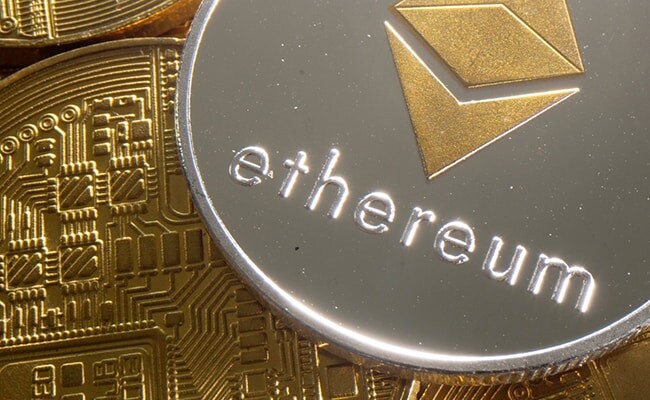
Ethereum, the blockchain that underpins the world's second-largest crypto token ether, on Thursday underwent a major software upgrade that slashes the amount of energy needed to create new coins and carry out transactions.
Here's what you need to know about the "Merge" as the shift is known.
WHAT IS ETHEREUM?
Like other blockchains, Ethereum is essentially a digital database shared across a network of computers. It records ownership of the cryptocurrency ether, and other Ethereum-based digital assets such as non-fungible tokens.
Proponents say Ethereum will form the backbone of much of the widely hyped but still unrealised "Web3" vision of an internet where crypto takes centre stage in applications and commerce.
SO WHAT IS THE MERGE?
The "Merge" is a change to the way Ethereum processes transactions and how new ether tokens are created.
It involved the Ethereum blockchain combining with a new separate blockchain. The new system, known as "proof-of-stake", slashes the Ethereum blockchain's energy consumption by 99.9%, developers say.
Most blockchains, including bitcoin's, devour large amounts of energy, sparking criticism from some investors and environmentalists.
The Ethereum Foundation, a prominent non-profit organisation that says it supports Ethereum, says the upgrade will pave the way for further blockchain updates that will facilitate cheaper transactions.
HOW BIG OF A DEAL IS THIS?
Ethereum backers say the Merge is a monumental moment for the $1 trillion crypto sector.
Proponents believe the Merge will make Ethereum more favourable compared to arch-rival bitcoin - the world's top cryptocurrency - in terms of price and usability.
That could see Ethereum applications become more widely used.
Some investors are betting the change will be significant for the price of ether, which has gained more than 50% since the end of June, compared to bitcoin's minimal gains.
Ether's price showed little reaction to the Merge's completion on Thursday, trading at around $1,624.
PROOF-OF-STAKE? SOUNDS TECHNICAL
It is. But it's also important.
There are different ways transactions on the blockchain - the software that underpins most crypto - can be verified. In the "proof-of-work" system previously used by Ethereum, new transactions were checked by crypto miners.
Miners used powerful computers that solved complex maths puzzles and updated the blockchain, earning new crypto tokens. While this made records on the blockchain secure, it was highly energy-intensive.
In the "proof-of-stake" system, ether owners will lock up set amounts of their coins to check new records on the blockchain, earning new coins on top of their "staked" crypto.
SOUNDS LIKE A NO-BRAINER, RIGHT?
Maybe. While Ethereum developers say the "proof-of-stake" model has safeguards to ward off hackers, others say criminals could attack the blockchain under the new system.
If a single entity accumulated the majority of ether staked to validate new transactions, they could alter the blockchain and steal tokens. Crypto experts also say there is a risk that technical glitches could mar the Merge, and that scammers could take advantage of confusion to steal tokens.
It may also become easier for developers to build programmes on the Ethereum network, potentially boosting adoption. Still, those updates are likely months, if not years, away.
(This story has not been edited by NDTV staff and is auto-generated from a syndicated feed.)

-
Navigating Energy Crossroads: S Jaishankar's Call For Diversified Supply Chains At G20 Ministerial Meeting

As geopolitical fault lines continue to test maritime trade routes and commodity flows, Jaishankar's message remains pertinent: true economic resilience requires open markets, protected transit lines, and a genuine commitment to multilateral cooperation rather than coercion.
-
Indians Are Travelling, But Not Every Journey Is A Holiday | The Week In Whys
Pilgrims, patients and working women are the real travellers, and the system hasn't quite caught up with them.
-
Getting To Work Costs Women More | The Reason Why
It is not just about women paying more than men. It is about women paying much more in cities than in villages.
-
AI Bias In Investing Cannot Be Eliminated, But It Can Be Governed
Framing is a particularly important example as identical financial information presented in terms of gains rather than losses can lead an LLM to reach a different assessment.
-
Joining The Dots | Dark Skies, Steady Diya: Why Hope Holds This Diwali
With war, a weak rupee and foreign outflows weighing on sentiment, policymakers at the NDTV World Summit and market veterans at NDTV Profit Ignite: Diwali Edition offered the same advice: stay invested and filter out the noise.
-
The Curious Case of Equitas Small Finance Bank And A CEO Who Quit For Stock
PN Vasudevan believes persistent investor concerns over a perceived conflict of interest had become a governance overhang on Equitas Small Finance Bank's stock, even as the lender improved profitability and asset quality.
-
Talking Points This Week: AI Cash Burn, A Tiger Comeback And An India That Still Finds Its Own Path
India is not immune to higher oil or tighter global liquidity, yet its earnings base is broader, its domestic policy levers are still available.
-
Foreign Investors Own Half Of HDFC Bank and ICICI Bank. An LTCG Cut Could Matter Most Here
Foreign portfolio investors have US$115 billion parked in HDFC Bank, ICICI Bank. If the government cuts long-term capital gains tax, Jefferies says returning foreign money could land here first.
-
'Never Seen This Level Of Negativity': Sandeep Tandon Says The Next Rally May Be Closer Than You Think
Veteran investor Sandeep Tandon says foreign selling is easing, large-caps are due a comeback and mid-caps are crowded, while he turns positive on gold, power and pharma this Diwali.










