EPF Return At 8.5% This Year, But To Be Paid In Parts. Here's What It Means For You
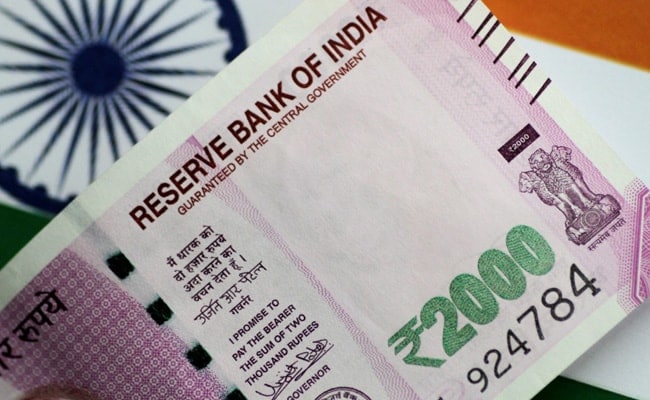
Your Employees' Provident Fund (EPF) corpus will fetch a return of 8.5 per cent this year. This is same as the interest rate paid for financial year 2018-19, however, the return this year will be paid in parts. Retirement fund body EPFO or Employees' Provident Fund Organisation's top decision making body, the Central Board of Trustees, has where on hand kept the rate of return at the existing level, it has divided the payment of interest into two instalments, equivalent to 8.15 per cent and 0.35 per cent.
According to the official statement, the 8.15 per cent return will be paid using debt income, whereas the remaining 0.35 per cent will be cleared using proceeds from the sale of ETFs or exchange-traded funds "subject to their redemption by 31st December".
That has left many wondering whether the remainder, being linked to equity markets, is guaranteed.
(Read More Here: You'll Get 8.5% Interest On Provident Fund - But In 2 Tranches)
The provident fund bond will pay the majority of return upfront, which is based on guaranteed instruments, and although the government has assured an overall rate of return of 8.5 per cent for the year, the remainder is based on ETF-linked redemption.
The government has said that the splitting of interest payment is mainly on account of liquidity issues arising out of the coronavirus pandemic-related situation. The EPFO's intent to liquidate some of its investment to meet the shortfall to pay the subscribers has been delayed due to volatility in markets over past few months, in tandem with the COVID-19-triggered turmoil in global equities.
What it means is that EPFO plans to clear the dues, or the 0.35 per cent part of your EPFO return this year, by December 31 once it liquidates certain ETF investments.
"This announcement has left many investors puzzled, however we believe that there is no need to panic as the government has already committed to honour its decision of paying a total of 8.5 per cent interest," Rahul Agarwal, director of Delhi-based Wealth Discovery, a financial services firm, told NDTV.
"EPF is a longer-term investment; therefore the credit of interest payments in multiple instalments does not make a huge difference," he added.
However, some say the ratification of this recommendation by the finance ministry may bring some clarity on this aspect.
"If the recommendation is accepted as it is then 0.35 per cent may become contingent in nature because its outcome will depend on the value EPFO fetches on redemption of ETF. In that event, 0.35 per cent may be received or may not, and guaranteed interest will be only 8.15 per cent," said Gopal Bohra, partner at NA Shah Associates LLP, A Mumbai-based professional services firm.
What are ETFs?
An ETF or exchange-traded fund is a financial instrument linked to a basket of equities, similar to an index. But contrary to a mutual fund, in which the price is settled only once every day, the price of an ETF keeps changing throughout a session, similar to a stock or a stock index, such as Nifty.
While retirement fund body EPFO has been investing in ETFs since August 2015, it has gradually increased its allocation of investible deposits from the initial 5 per cent, to 10 per cent in 2016-17, and 15 per cent in 2017-18. And it invests in ETFs based on indicators such as equity benchmarks Sensex and Nifty 50.
Experts say EPF continues to be one of an effective tools for the salaried to accumulate their savings for retirement.
"In the context of the interest rate environment, even the 8.15 per cent interest rate is very high... Ideally, the fund should pay for itself and the rate should be kept at 8.15 per cent only," said Sandip Sabharwal, a Mumbai-based investment advisor and fund manager. "I am sure no one will be unhappy at this rate," he said.
Echoing similar views, Mr Agarwal said: "From a return on investment point of view, EPF returns are one of the highest in the current market scenario, where the returns on fixed income securities and other safe investment opportunities are languishing around 5-6 per cent."

-
Opinion | India at 38: From Innovation Overperformer to Innovation Powerhouse

India now has 453 VC-backed deep science startups, 18 of them late-stage, after 117 percent growth since 2020. Laurus Labs, at USD 9.3 billion, is the most valuable deep science company in any middle-income economy outside China.
-
Navigating Energy Crossroads: S Jaishankar's Call For Diversified Supply Chains At G20 Ministerial Meeting
As geopolitical fault lines continue to test maritime trade routes and commodity flows, Jaishankar's message remains pertinent: true economic resilience requires open markets, protected transit lines, and a genuine commitment to multilateral cooperation rather than coercion.
-
Indians Are Travelling, But Not Every Journey Is A Holiday | The Week In Whys
Pilgrims, patients and working women are the real travellers, and the system hasn't quite caught up with them.
-
Getting To Work Costs Women More | The Reason Why
It is not just about women paying more than men. It is about women paying much more in cities than in villages.
-
AI Bias In Investing Cannot Be Eliminated, But It Can Be Governed
Framing is a particularly important example as identical financial information presented in terms of gains rather than losses can lead an LLM to reach a different assessment.
-
Joining The Dots | Dark Skies, Steady Diya: Why Hope Holds This Diwali
With war, a weak rupee and foreign outflows weighing on sentiment, policymakers at the NDTV World Summit and market veterans at NDTV Profit Ignite: Diwali Edition offered the same advice: stay invested and filter out the noise.
-
The Curious Case of Equitas Small Finance Bank And A CEO Who Quit For Stock
PN Vasudevan believes persistent investor concerns over a perceived conflict of interest had become a governance overhang on Equitas Small Finance Bank's stock, even as the lender improved profitability and asset quality.
-
Talking Points This Week: AI Cash Burn, A Tiger Comeback And An India That Still Finds Its Own Path
India is not immune to higher oil or tighter global liquidity, yet its earnings base is broader, its domestic policy levers are still available.
-
Foreign Investors Own Half Of HDFC Bank and ICICI Bank. An LTCG Cut Could Matter Most Here
Foreign portfolio investors have US$115 billion parked in HDFC Bank, ICICI Bank. If the government cuts long-term capital gains tax, Jefferies says returning foreign money could land here first.










