Energy Prices Should Retreat By Early 2022: IMF Chief Economist Gita Gopinath
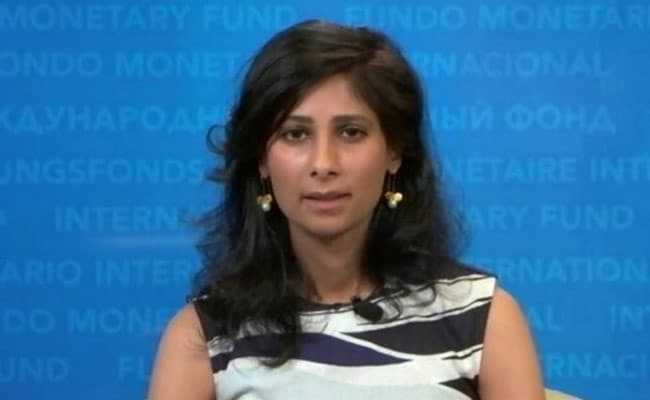
Rising energy prices are weighing on households but the recent spike is unlikely to fuel a 1970s-style oil crisis and should retreat early next year, IMF chief economist Gita Gopinath told AFP on Tuesday. Energy prices collapsed last year amid the shutdowns imposed to contain the Covid-19 pandemic, but 2021 has brought a sharp rebound in demand as the global economy recovered, Ms Gopinath said.
In the energy market, a long, cold winter followed by a particularly hot summer led to greater demand and depleted stocks, especially gas reserves in Europe.
"This recovery is really quite unique," she said, speaking on the sidelines of the annual meetings of the International Monetary Fund and World Bank.
Supplies of many other goods have not been able to rebound as quickly as demand, hampered in part by the spread of the Delta variant of Covid-19, which has made workers reluctant to return to their jobs and snarled supply chains.
Those labor shortages are "feeding into price pressures" in countries such as Germany, the United States and Japan, she said.
"We are in a difficult situation where we've seen prices go up very sharply," and the key question is whether that will persist, she said.
Worst case scenario?
While energy prices "will be elevated" for the next couple of months, "We expect that to come back down by the end of the first quarter next year and into the second quarter," she said.
"Once we get past the winter months, we will be in a better place."
Oil prices have soared in recent weeks, jumping to multi-year highs on Monday, with the benchmark WTI crude jumping above $80 a barrel for the first time since October 2014 and up 30 percent since August, which sent major stock markets tumbling.
The increase in energy prices has ramped up fears that overall inflation could tick even higher and hinder the global economic recovery.
Ms Gopinath cautioned that the weather will play a factor, since a very severe winter could lead to broader power outages "that will have a much bigger effect on the world."
The worst outcome would be 'an extremely severe winter in the Northern Hemisphere," driving up demand for energy, combined with a failure of producers including the OPEC+ to respond with increased output, which could feed into headline inflation, she said.
In February 2021, severe weather marked by polar temperatures and snowstorms caused a surge in electricity consumption in the southern United States.
Texas, with a population of nearly 29 million, was unable to meet the explosion in demand, and blackouts affected hundreds of thousands of homes.
However, Ms Gopinath does not expect a crisis like the one seen in the 1970s because the world relies much less on energy relative to the size of the economy.
"It would take a much bigger ratcheting up in gas prices, for instance, to have a kind of a stagflationary event," she said, referring to the economic crisis in the 1970s when inflation spiraled due to high oil prices as growth stalled.
The IMF's latest forecasts call for inflation to return to pre-pandemic levels by the middle of 2022, but warn of "high uncertainty" and upside risks in the United States.

-
Navigating Energy Crossroads: S Jaishankar's Call For Diversified Supply Chains At G20 Ministerial Meeting

As geopolitical fault lines continue to test maritime trade routes and commodity flows, Jaishankar's message remains pertinent: true economic resilience requires open markets, protected transit lines, and a genuine commitment to multilateral cooperation rather than coercion.
-
Indians Are Travelling, But Not Every Journey Is A Holiday | The Week In Whys
Pilgrims, patients and working women are the real travellers, and the system hasn't quite caught up with them.
-
Getting To Work Costs Women More | The Reason Why
It is not just about women paying more than men. It is about women paying much more in cities than in villages.
-
AI Bias In Investing Cannot Be Eliminated, But It Can Be Governed
Framing is a particularly important example as identical financial information presented in terms of gains rather than losses can lead an LLM to reach a different assessment.
-
Joining The Dots | Dark Skies, Steady Diya: Why Hope Holds This Diwali
With war, a weak rupee and foreign outflows weighing on sentiment, policymakers at the NDTV World Summit and market veterans at NDTV Profit Ignite: Diwali Edition offered the same advice: stay invested and filter out the noise.
-
The Curious Case of Equitas Small Finance Bank And A CEO Who Quit For Stock
PN Vasudevan believes persistent investor concerns over a perceived conflict of interest had become a governance overhang on Equitas Small Finance Bank's stock, even as the lender improved profitability and asset quality.
-
Talking Points This Week: AI Cash Burn, A Tiger Comeback And An India That Still Finds Its Own Path
India is not immune to higher oil or tighter global liquidity, yet its earnings base is broader, its domestic policy levers are still available.
-
Foreign Investors Own Half Of HDFC Bank and ICICI Bank. An LTCG Cut Could Matter Most Here
Foreign portfolio investors have US$115 billion parked in HDFC Bank, ICICI Bank. If the government cuts long-term capital gains tax, Jefferies says returning foreign money could land here first.
-
'Never Seen This Level Of Negativity': Sandeep Tandon Says The Next Rally May Be Closer Than You Think
Veteran investor Sandeep Tandon says foreign selling is easing, large-caps are due a comeback and mid-caps are crowded, while he turns positive on gold, power and pharma this Diwali.










