Elon Musk Speaks To Media Tycoons On Mars, Birth Rates, But Not Twitter
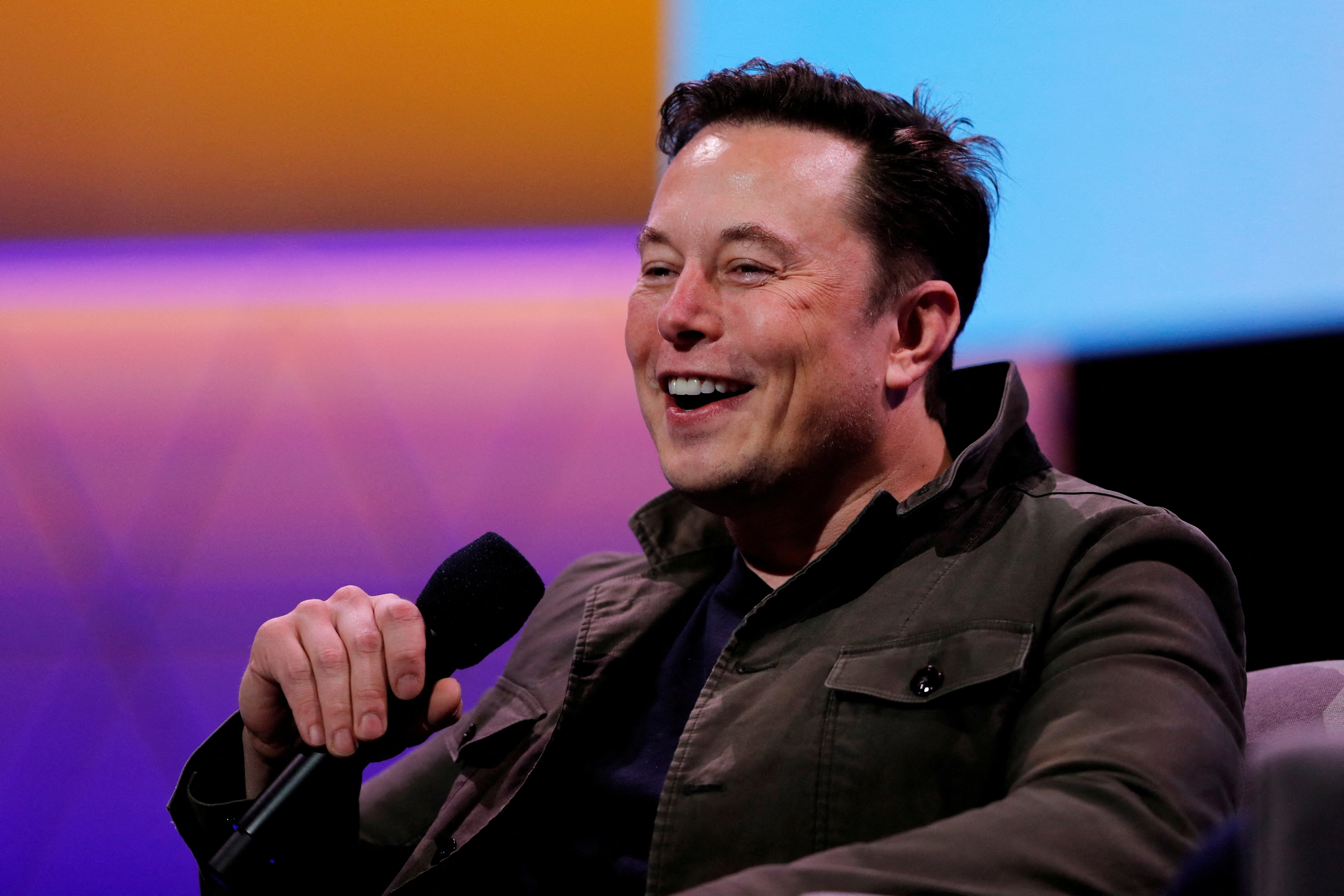
Elon Musk avoided discussing the collapsed Twitter deal as he addressed an audience of Barons on Saturday in Sun Valley, two sources who attended the conference told Reuters.
In a wide-reaching interview, Mr Musk spent most of his time talking about colonizing Mars and extolling the virtues of boosting birth rates on Earth, said the sources. Musk, chief executive of Tesla Inc and rocket company Space X, has long advocated establishing a civilization on the red planet.
Mr Musk earlier this week said he will do his best to help what he called "the underpopulation crisis," following a media report that said he had twins with a top executive at his brain-chip start-up Neuralink.
He spoke about how birth rates are declining in wealthy countries, a subject he has explored extensively on Twitter.
The billionaire entrepreneur took the stage at the Allen & Co Sun Valley Conference, an annual gathering of media and technology executives in Idaho, less than 24 hours after he announced he was terminating his $44 billion deal to buy Twitter Inc.
The interview was conducted by Sam Altman, CEO of OpenAI, an artificial intelligence research company founded by Musk and several others.
Mr Musk's arrival at the Allen & Co Sun Valley Conference delivered a jolt to the off-record event this week, where the headline-making typically happens beyond the prying eyes of the media.
“It just seems like an absolute mess,” said one senior media executive, who spoke on condition of anonymity ahead of the interview. “The guy makes his own rules … I'd hate to be Twitter, where you have to take this guy seriously.”
Sun Valley is typically covered like an athleisure version of the Met Gala, with photographers capturing the arrivals of fleece-vested media moguls and reporters making note of power-lunches at the Konditorei cafe on the property.
One Hollywood power-broker Friday expressed hope that the Musk interview would enliven the conference's staid, cerebral atmosphere this year.
Hours later, Mr Musk's attorneys delivered an eight-page letter to Twitter, saying he planned to call off the deal to acquire the social network.
The document, filed with the Securities and Exchange Commission, alleged Twitter failed to respond to repeated requests for information over the past two months, or obtain his consent before taking actions that would impact its business, such as firing two key executives.
Up until that point, conversations in media circles focused on Wall Street's reappraisal of the streaming business in the wake of Netflix Inc's subscriber losses.
One digital media executive said Hollywood, which has typically been insulated from recessions, is suddenly worried about how a worsening economy will affect their multi-billion-dollar investments in streaming services.
“For the first time, people are aware the economy does impact the entertainment business, because inflation does impact churn,” the digital media executive said, referring to subscribers leaving a service. “People are now saying, ‘Wow, will people really pay for three of these things?'”
Following Mr Musk's announcement, one chief executive noted the elephant in the room, Saturday's remarks might well be uncomfortable to two conference attendees: Twitter CEO Parag Agrawal and Chief Financial Officer Ned Segal.
One of Musk's last public messages to Agrawal came in the form of a tweet of a poop emoji in response to the Twitter CEO's defense of how the company accounts for spam bots.
(Except for the headline, this story has not been edited by NDTV staff and is published from a syndicated feed.)

-
Navigating Energy Crossroads: S Jaishankar's Call For Diversified Supply Chains At G20 Ministerial Meeting

As geopolitical fault lines continue to test maritime trade routes and commodity flows, Jaishankar's message remains pertinent: true economic resilience requires open markets, protected transit lines, and a genuine commitment to multilateral cooperation rather than coercion.
-
Indians Are Travelling, But Not Every Journey Is A Holiday | The Week In Whys
Pilgrims, patients and working women are the real travellers, and the system hasn't quite caught up with them.
-
Getting To Work Costs Women More | The Reason Why
It is not just about women paying more than men. It is about women paying much more in cities than in villages.
-
AI Bias In Investing Cannot Be Eliminated, But It Can Be Governed
Framing is a particularly important example as identical financial information presented in terms of gains rather than losses can lead an LLM to reach a different assessment.
-
Joining The Dots | Dark Skies, Steady Diya: Why Hope Holds This Diwali
With war, a weak rupee and foreign outflows weighing on sentiment, policymakers at the NDTV World Summit and market veterans at NDTV Profit Ignite: Diwali Edition offered the same advice: stay invested and filter out the noise.
-
The Curious Case of Equitas Small Finance Bank And A CEO Who Quit For Stock
PN Vasudevan believes persistent investor concerns over a perceived conflict of interest had become a governance overhang on Equitas Small Finance Bank's stock, even as the lender improved profitability and asset quality.
-
Talking Points This Week: AI Cash Burn, A Tiger Comeback And An India That Still Finds Its Own Path
India is not immune to higher oil or tighter global liquidity, yet its earnings base is broader, its domestic policy levers are still available.
-
Foreign Investors Own Half Of HDFC Bank and ICICI Bank. An LTCG Cut Could Matter Most Here
Foreign portfolio investors have US$115 billion parked in HDFC Bank, ICICI Bank. If the government cuts long-term capital gains tax, Jefferies says returning foreign money could land here first.
-
'Never Seen This Level Of Negativity': Sandeep Tandon Says The Next Rally May Be Closer Than You Think
Veteran investor Sandeep Tandon says foreign selling is easing, large-caps are due a comeback and mid-caps are crowded, while he turns positive on gold, power and pharma this Diwali.










