Electronics Body Seeks GST Reduction on Mobile Phones, Duty Cut On Parts
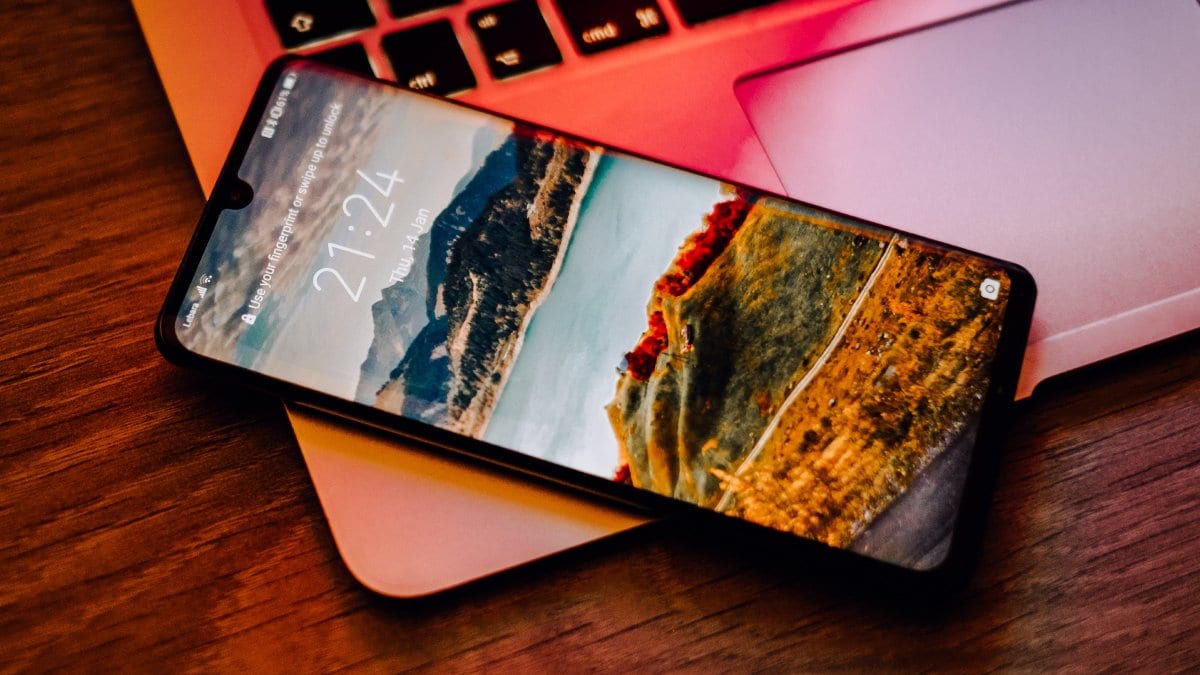
Seeking reduction in import duty on components used for making mobile phones, the India Cellular and Electronics Association (ICEA) has said that if taxes are hiked on such parts, then Indian made products under the government's ambitious production linked incentive (PLI) scheme, will become uncompetitive globally.
In its wish list for the forthcoming union budget, the ICEA has sought a roll-back of goods and services tax (GST) to 12 per cent from the current slab of 18 per cent, saying that it is a deterrent for domestic market growth and is also preventing adoption of mobile phones by disadvantaged sections in rural India.
ICEA chairman Pankaj Mohindroo in a letter to the ministry of electronics and IT said that the PLI scheme offers an incentive for meeting partial cost disability for manufacturing in India compared to other countries such as China and Vietnam that existed before January, 2020.
"Post the change in the duty structure in the union budgets for financial year 2020-21 and 2021-22 the cost disability gap has increased further. Increasing tariffs on inputs will lead to serious impact on the cost structures of PLI approved companies, rendering their product uncompetitively priced for global markets," Mr Mohindroo said.
Samsung and Apple's contract manufacturers are the biggest investors under the PLI scheme and both these brands dominate mobile phone exports from India.
The government expects mobile phones worth Rs 10.5 lakh crore to be manufactured under the PLI scheme.
Mr Mohindroo said that the government has introduced 15 per cent duty on camera lens and 2.5 per cent on rest of the parts which make the camera modules production in India competitive and called for rationalisation of taxes as complete camera modules used in mobile phones can be imported by paying 11 per cent import duty.
The industry body has called for rationalisation of duties on the mother boards (printed circuit board assembly), mechanics components, etc used in mobile phones as well on components used for making mobile phone accessories like Lithium ion cell for power banks, raw materials for wireless and audio devices etc.
ICEA said that the hike in GST by 50 per cent in March 2020 to 18 per cent from 12 per cent should be rolled back as it slows down the digital India campaign and deters growth of manufacturers.
"The GST increase of 50 per cent in March 2020 was a cruel blow to the mobile industry. The rationale presented to the GST Council was flawed. The sovereign assurance of no increase in cumulative tax was also given a go-by with this increase. In the pre-GST era, the excise duty plus VAT was 6 per cent (in most states), and the weighted average was 7.2 per cent. All components, parts and accessories were at zero duty for manufacturing," ICEA said in the budget wishlist separately.
According to industry body ICEA, whose members include Apple, Foxconn, Wistron, Lava and Vivo, mobile phone production in the country peaked at Rs 2.2 lakh crore in 2020-21 and is expected to cross Rs 2.75 lakh crore by March 2022 which will significantly meet demand of the domestic market.
"To achieve the goal of smartphones in the hands of every Indian, and to broaden a domestic mobile phone market of USD 55 billion (about Rs 4 lakh crore), it is imperative to restore the status quo ante with respect to the GST on mobile phones from 18 to 12 per cent. This will help put mobile phones in the hands of the disadvantaged sections in rural India, and the poor as well as among women and youth," ICEA said.
The share of Indian companies in the mobile productions has come down from 47 per cent in 2016 to around 8 per cent at present.
ICEA has recommended government to allocate Rs 1,000 crore to support Indian companies, provide them interest subvention of 5 per cent for loans up to Rs 1,000 crore, credit guarantee for up to Rs 500 crore (revolving) for fixed and working capital requirements and domestic companies falling under PLI scheme should be provided enhanced credit guarantee of Rs 1,000 crore.

-
Unhedged Position: Can India See An Indonesia-Style Time Correction?

The Nifty is trading below levels it first clocked in 2024. Is there, then, as I have suggested in the headline, potential that the current time correction drags on painfully for the next three-five, even ten years?
-
Navigating Friction And Energy Realities: An Analysis Of Marco Rubio's October Visit To India
Occurring at a critical juncture marked by stalled trade negotiations and escalating geopolitical pressures over global energy supplies, the visit offers a profound window into modern US-India relations.
-
India Exports Capital. Why Not Export Trusteeship?
The big question, then, is whether India can build an institution that global borrowers, investors, banks, and lawyers can trust, even without an Indian connection.
-
France's Economy & Politics Are In Crisis | The Reason Why
Let's look at how the French economy and politics evolved under Nicolas Sarkozy, Franois Hollande and Emmanuel Macron.
-
You May Inherit The Business. You Must Earn Its Credibility.
Succession tests the founder's ability to share authority as much as it tests the next generation's readiness to assume it.
-
Signing Deals Is One Thing; Making Them Work Is Another | The Week In Whys
Sometimes, things don't turn out as planned. Indian companies have lost some bids to rivals, some projects won't produce until 2030.
-
FOMC Wall, PERM Suspension, Hospital Stocks | Talking Points This Week
A PERM suspension would directly affect green-card sponsorship rather than H-1B visas, so the near-term earnings impact could remain relatively limited. The key question is whether this marks a new phase in US scrutiny of Indian IT.
-
Everything, Everywhere, All At Once: Dalal Street's Week To Forget | Joining The Dots
Visa curbs, a Starlink spat and cancer drug caps: what connects this week's shocks for Indian markets
-
India Is Going Abroad For Critical Minerals. But It May Take Years To Pay Off | The Reason Why
Although India's steps are in the right direction, they remain modest compared with India's growing dependence.
-
When Everyone Has AI, What Gives You An Edge?
India's young workforce is entering an uncertain world of work where powerful AI tools are becoming widely accessible. The advantage will belong to those who combine deep expertise with digital fluency, and the distinctly human capabilities that technology cannot manufacture.









