El Salvador- First To Adopt Bitcoin As Legal Currency, Eyes 'Greener' Crypto Mining
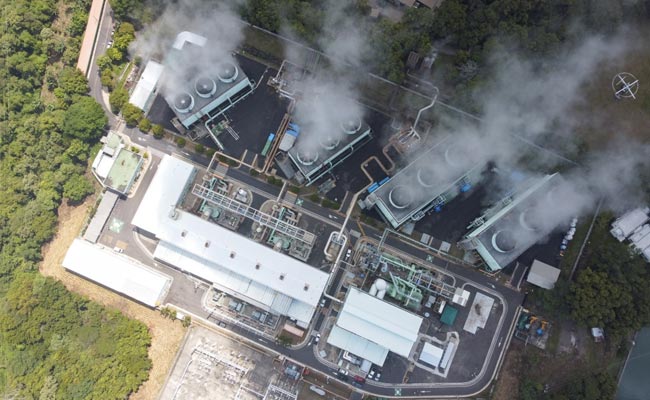
El Salvador's unfolding experiment as a first-adopter of the crytocurrency bitcoin could be increasingly powered by new streams of renewable energy, the chief of the country's hydroelectric commission told reporters on Friday.
Energy-intensive cryptocurrency "mining" is done by computers, and has come under criticism from environmentalists as a big source of demand for mostly fossil fuel derived electricity.
Last month, El Salvador became the first country to adopt bitcoin as legal tender alongside the U.S
dollar, which for years had served as the country's sole official currency. Daniel Alvarez, president of the state-run Lempa River Hydroelectric Executive Commission (CEL), said El Salvador has the potential to generate electricity through hydroelectric, solar, wind and tidal power projects
"The possibilities are endless here, it's just about willpower and that we have the means and the ability to start these projects," Alvarez said. The Salvadoran government in September began harnessing geothermal energy for bitcoin mining from a plant at the base of the Tecapa volcano, 106 kilometers (66 miles) east of the capital, that is owned by a company which is part of CEL
The plant generates about 102 megawatts, and the government plans to add another five megawatts next year
At present, 1.5 megawatts are being allocated for bitcoin. Alongside the plant, officials have set up a room inside a shipping container to house 300 computers that process cryptocurrency transactions
The Tecapa plant along with another geothermal plant in northwestern El Salvador supply between 23 per cent and 24 per cent of the national power grid, according to authorities

-
Unhedged Position: Can India See An Indonesia-Style Time Correction?

The Nifty is trading below levels it first clocked in 2024. Is there, then, as I have suggested in the headline, potential that the current time correction drags on painfully for the next three-five, even ten years?
-
Navigating Friction And Energy Realities: An Analysis Of Marco Rubio's October Visit To India
Occurring at a critical juncture marked by stalled trade negotiations and escalating geopolitical pressures over global energy supplies, the visit offers a profound window into modern US-India relations.
-
India Exports Capital. Why Not Export Trusteeship?
The big question, then, is whether India can build an institution that global borrowers, investors, banks, and lawyers can trust, even without an Indian connection.
-
France's Economy & Politics Are In Crisis | The Reason Why
Let's look at how the French economy and politics evolved under Nicolas Sarkozy, Franois Hollande and Emmanuel Macron.
-
You May Inherit The Business. You Must Earn Its Credibility.
Succession tests the founder's ability to share authority as much as it tests the next generation's readiness to assume it.
-
Signing Deals Is One Thing; Making Them Work Is Another | The Week In Whys
Sometimes, things don't turn out as planned. Indian companies have lost some bids to rivals, some projects won't produce until 2030.
-
FOMC Wall, PERM Suspension, Hospital Stocks | Talking Points This Week
A PERM suspension would directly affect green-card sponsorship rather than H-1B visas, so the near-term earnings impact could remain relatively limited. The key question is whether this marks a new phase in US scrutiny of Indian IT.
-
Everything, Everywhere, All At Once: Dalal Street's Week To Forget | Joining The Dots
Visa curbs, a Starlink spat and cancer drug caps: what connects this week's shocks for Indian markets
-
India Is Going Abroad For Critical Minerals. But It May Take Years To Pay Off | The Reason Why
Although India's steps are in the right direction, they remain modest compared with India's growing dependence.
-
When Everyone Has AI, What Gives You An Edge?
India's young workforce is entering an uncertain world of work where powerful AI tools are becoming widely accessible. The advantage will belong to those who combine deep expertise with digital fluency, and the distinctly human capabilities that technology cannot manufacture.









